A Community for Stud High/Low

The Beauty of
Stud H/L Poker

If you spend some time with the game, you'll quickly realize how deep and complex Stud H/L really is. The interplay of low draws, made high hands, blockers, dead cards, pot odds, and opponent behavior turns almost every situation into something unique.

And before long, you can't help but admire the quiet, natural beauty built into the game.

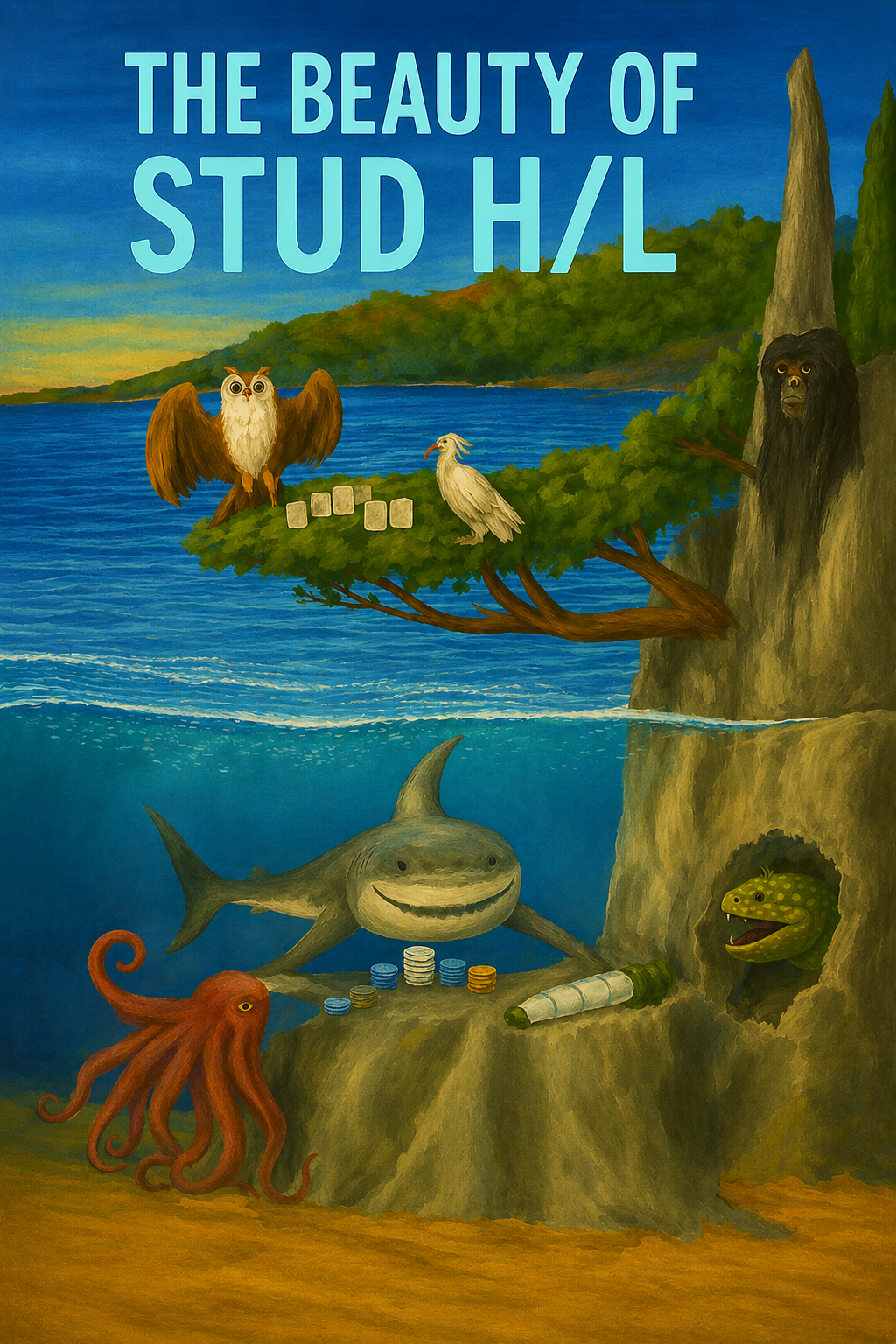
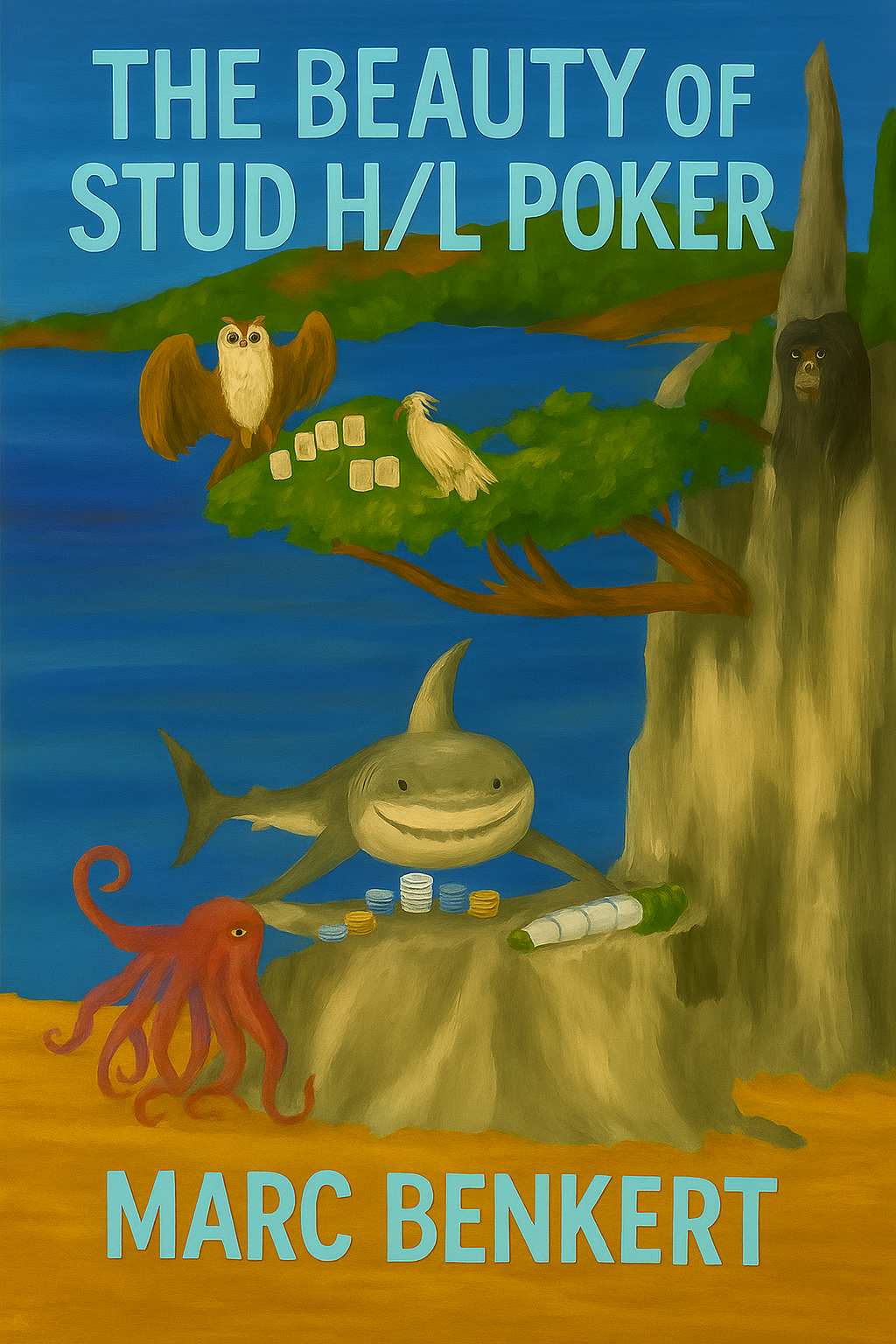
The Beauty of Stud H/L Poker - whimsical illustration of animals playing poker

But Stud H/L isn't for everyone.

This isn't for you if:

  • you're looking to memorize solver outputs and follow standard lines
  • you love running huge bluffs
  • you're chasing big tournament scores (they barely exist in Stud H/L)

You'll love Stud H/L if:

  • you pay attention to every piece of information available
  • you think independently and adapt on every street
  • you value real decision-making over solver-driven play
  • you want to truly understand range construction — and improve across all poker variants

Most players approach the game casually — and repeat the same structural mistakes over and over. That's where the edge comes from.

If you're looking for a game that challenges you and rewards real understanding, Stud H/L is one of the most valuable formats in poker.

The player pool is shrinking, and the community is fading.

One goal of this site is to change that — to bring players together and keep this game alive.

The Book

The Beauty of Stud H/L Poker — A workbook for mastering the game

The Beauty of Stud H/L Poker - A workbook for mastering the game

Arriving September 2026

Mark your calendar — the book can be in your hands from September 2026 onwards.

It's Almost Done

I could not be prouder of where this project stands. Every chapter is written, every hand analyzed, every concept worked through — the substance is all there.

Right now the manuscript is in its final stage: a careful revision where I refine the prose, sharpen the diagrams, and polish each page until it is truly publish-ready. The hard thinking is finished; what remains is making it shine.

Table of Contents

While the final polishing is underway, here is a complete look at what awaits you inside.

  • 1.Introduction
    • —Audience
    • —Foreword
      • —What is Aces cracked (NLHE) in Stud H/L?
      • —The 100,000 hands
      • —Current situation of Stud H/L
  • 2.Probabilities
    • —The Low
    • —Flushes
    • —Straights
    • —Pairs
  • 3.Starting hand categories
    • —Generally playable
    • —Speculative hands
    • —At your own risk
  • 4.Statistics
    • —Methods & Conventions
    • —Buy-ins
    • —The biggest contributors to the database
    • —Showdown rates
    • —How the pots were won
    • —Is there a merit in completing from the bring-in
    • —Steal success rates on 3rd street
    • —The winning high hands
    • —The winning low hands
  • 5.A guide to reading hands
    • —1-bet and 2-bet pots on 3rd street
    • —Is our opponent going low or high
    • —Conclusion
    • —Quiz
  • 6.Defending the bring-in
    • —Optimal defense frequencies
    • —How often should we steal?
    • —The cards — which combos do we use for defending?
      • —against a K-9 steal
      • —against a 2-8 steal
      • —against an Ace steal
    • —Playing against limpers / calling stations in post 3rd-play
    • —Playing against Bullies in post 3rd-play
  • 7.Common Mistakes
    • —Being too transparent on 3rd street with an open Ace
    • —Playing a low pair + low card hand in a multiway pot
    • —Not reraising when on a freeroll
    • —Not knowing the dead cards
    • —Not value-betting two pairs on the river (heads-up) — with exceptions
    • —Chasing half of the pot only
      • —Chasing a low draw against an obvious high hand
      • —Calling with a weak high hand against a potential made low
    • —Missing Iso-raises
      • —Introduction and sample hand
      • —Iso-raises on 4th street — appropriateness of hand types?
        • —Trips
        • —Two pairs
        • —A pair and three distinct low cards
        • —Extension: High pairs only
        • —Four low cards of different rank
        • —Open-ended straight and flush draws with at most two low cards
        • —Other four card structures
        • —Conclusion
      • —Iso-raises on 5th street
        • —Differences to 4th street
        • —Sample hand
      • —General conclusion
  • 8.Miscellaneous
    • —Quiz solution (from A guide to reading hands)
    • —When a mathematician becomes philosophical
      • —Pot odds control
      • —Problems with the godplay
      • —Aggression in Stud H/L
    • —Aggression rate vs. profitability in $16.50 Daily tournaments
    • —Cash game / tournament adjustments — Playing a Low Stack Stud H/L
    • —Sample hands
  • 9.The Final Masterclass: Playing Pairs in Stud H/L
  • 10.NL 3-Card Stomaha H/L — Single Shot
    • —Rules
    • —A quick discussion on starting hands
    • —Conclusion
  • 11.Add-in: Poster — Overview on Starting Hand Categories

Like what you see? Reserve your copy and be the first to read it.

Why I Wrote This Book

"The book I wanted didn't exist — so I wrote it."

In mid-2023, I felt that familiar urge to level up — not just playing, but learning. And Stud H/L was calling my name. So I looked for resources.

What I found was… nothing.

No modern book.
No data-driven analysis.
Just scattered forum posts and outdated fragments.

So I decided to write the book I wished existed.

The plan was simple: Collect 100,000 Stud H/L hands on PokerStars, analyze them deeply, and build a modern strategy framework from real data — not folklore.

Writing this book has been a blast. I loved digging into the math behind concepts I'd previously played by instinct. And the deeper I went, the more surprises I found — about ranges, frequencies, category strengths, and how the game really works today.

One thing I know for sure: Writing this book made me a better Stud H/L player.

And I'm confident that reading it will do the same for you.

Read a Sample Chapter

Get a taste of the book's content with a free sample chapter on hand reading in Stud H/L.

A Guide to Reading Hands

Sample chapter • 20+ pages

Learn how to read your opponents' hands in Stud H/L by paying attention to board texture and playing styles. This chapter teaches you the essential skills of observation and hand analysis.

This sample chapter covers:

  • The fundamental skills for hand reading
  • Reading opponents with Aces and high doorcards
  • Board texture analysis and range restriction
  • Multi-street hand reading examples
  • Practice quiz to test your understanding

Most Stud H/L Players Score Lower Than Expected

Can you avoid the mistakes that cost players thousands of bets?

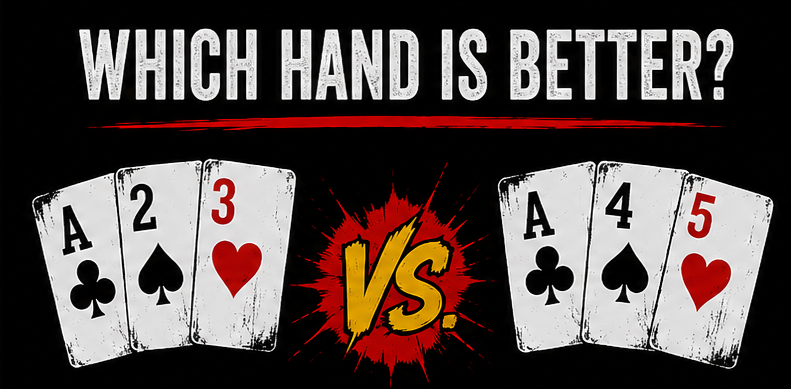
Which hand is better: A-2-3 versus A-4-5?

Choose Your Difficulty

78 Questions  •  3 Difficulty Levels  •  Randomized Every Time

3-Card NL Stomaha H/L

A fresh take on split-pot poker

The "slowness" of Stud H/L, characterized by its up to five betting rounds and fixed-limit betting structure, deters many of the action-oriented and trigger-happy players from engaging in this variant. Whereas a simplistic game like 2-7 NL Single draw and even 5-card PLO H/L attract much larger crowds due to their faster pace and unlimited betting.

To address this, I propose a new game that captures the essence of Stud H/L while offering a more dynamic and fast-paced experience:

As the name suggests, this variant combines elements of Stud, Omaha, and Hold'em, creating a unique and exciting poker experience. The most significant change is that players now build both their high and low hands using three cards. Unlike the first hand in Chinese poker, 3-card flushes and 3-card straights do count.

Here are the key features of 3-Card NL Stomaha H/L:

Betting Structure

Unlike traditional Stud H/L, this game is played with a small and big blind, similar to Texas Hold'em, instead of antes and a bring-in. The first betting round occurs after all players have been dealt three cards, one of which is face-up. The player to the left of the big blind initiates the betting, and there are no bet size restrictions—players can go all-in at any time. The usual reraise-has-to-be-as-big-as-the-last-raise rule is in place (except for All-ins).

Community Cards

After the first betting round, two community cards are dealt face-up. A final betting round follows, starting with the small blind or the first active player to their left.

Hand Construction and Pot Distribution

The pot is split in the same manner as in Stud H/L: the best low hand and the best high hand each take half. If there's no qualifying low hand, the best high hand scoops the entire pot. Players must construct both their high and low hands using exactly two of their own cards and one community card. Importantly, different community cards as well as different own cards can be used for constructing the high and low poker hand.

Low Hand Qualification

A qualifying low hand consists of three different ranks, all 6 or lower. Thus, the best possible low hand is A-2-3, and the worst is 4-5-6. For the high hand, players choose the 3-card combination that gives them the strongest hand.

Hand Ranking

The hand rankings have been slightly adjusted to reflect the new probabilities. In this variant, trips are now ranked higher than a straight, and a straight is ranked higher than a flush. The revised hand rankings are as follows:

TypeProbabilityCumulative
1.Straight flush1.1%1.1%
2.Three of a kind1.4%2.5%
3.Straight13.7%16.2%
4.Flush20.1%36.3%
5.Pair31.5%67.8%
6.High card32.2%100.0%

This new game retains part of the strategic depth of Stud H/L while offering a more engaging and faster-paced alternative for players who prefer higher action and greater variability.

Basic Probabilities

Here are some more basic probabilities to help you start out. In 45.1% we will have a pair by the time all cards are dealt. The above probability just shows the cases where a pair is indeed our best high hand but often we have both: a pair and an even better high hand.

The likelihoods of making a qualifying low when we are arbitrarily dealt five cards and must combine our hand from 2 out of the first three cards and 1 from the last two cards are:

TypeProbabilityCumulative
3-Low1.6%1.6%
4-Low4.1%5.7%
5-Low7.0%12.7%
6-Low9.8%22.5%

Which is less than every fourth time. However, bear in mind that if we apply start hand selection, the numbers look a lot different: ~30.4% is the likelihood that we get dealt exactly two low cards of different ranks with our first three cards. Without knowing any other cards, the chances that another, different low card appears on the board are ~55.1%.

When we start with three distinct low cards – which we do ~5.8% of the time - our chances of making a low by the river increases to ~67.9%.

A quick discussion on starting hands

Obvious strong starting hands are perfect rundowns and even more so 2-3-4, 3-4-5 and 4-5-6. We can draw 17 cards to make a straight and have good chances to make a low as well. A paired hand with another low card like 6-6-4 seems to gain value compared to Stud H/L. For sure, A-2-3 is a premium start hand. If we make a low, it will be the locked nut low, and we still can draw 13 cards to complete a straight. Aces with a low card, especially A-A-2, are strong, but prefer to play against few opponents to maximize the chances of winning high – just like in Stud H/L.

Aces with a high, on the other hand, are weaker than Stud H/L. Particularly in a multiway pot they will be outdrawn almost always. Perfect rundowns with high cards are speculative but have real scoop potential if everyone fails to make a qualifying low. When it comes to suits, we prefer to be two-suited as to not block our own flush chances. The same logic applies to being rolled-up: in this game they are unfortunately not worth much – just like in Razz.

Conclusion

Every hand is essentially a drawing hand. This creates a nice balance between start hands that are already strong (like Aces) and powerful drawing hands. The ultimate value of the hand is only decided after the two community cards are dealt.

With community cards on the table and one card from each player face up, the game also creates very good bluffing opportunities. For example, someone’s door card is the 3♥, and one of the community cards is now the 2♥, while the A♥ and 4♥ are nowhere to be seen. Will you happily call a big bet from this player?

This is one of the key reasons why the game really wants a no-limit (or at least pot-limit) betting structure. In a fixed-limit format, the bluffs simply can't be big enough to make opponents seriously consider folding.

We tried NL Stomaha H/L in our private home game - and once everyone got used to evaluating 3-card hands, it turned out to be a lot of fun.

Share Your Thoughts

Have you tried Stomaha H/L? We'd love to hear your experiences, ideas, and feedback. Join our Discord community to discuss strategy, share hands, and connect with fellow enthusiasts.

Join the Discord
Iso-Raise Equity Calculator

Crunch the Numbers

Build three hands by clicking a seat, then tapping cards from the deck. No typing required.

Cards per player:
Now filling: Hero · card 1 — click a placed card to remove it.
Villain A
Villain B
Hero
Dead Cards (optional)
Stud H/L Percentile Calculator

Where Do You Rank?

Enter your three starting cards and the villain's doorcard to estimate how your holding ranks against a villain playing a given top percentile of hands.

Hero's three starting cards. The last card is the doorcard.

Villain's open doorcard.

Known dead/open cards. If none are known, use "-".

Estimated top percentile the villain is playing.

Samples for the range equity calculation. Must be numeric.

Latest

WCOOP 2026

Following my journey through the World Championship of Online Poker.

Razz Short-Stack Party in the Side Event

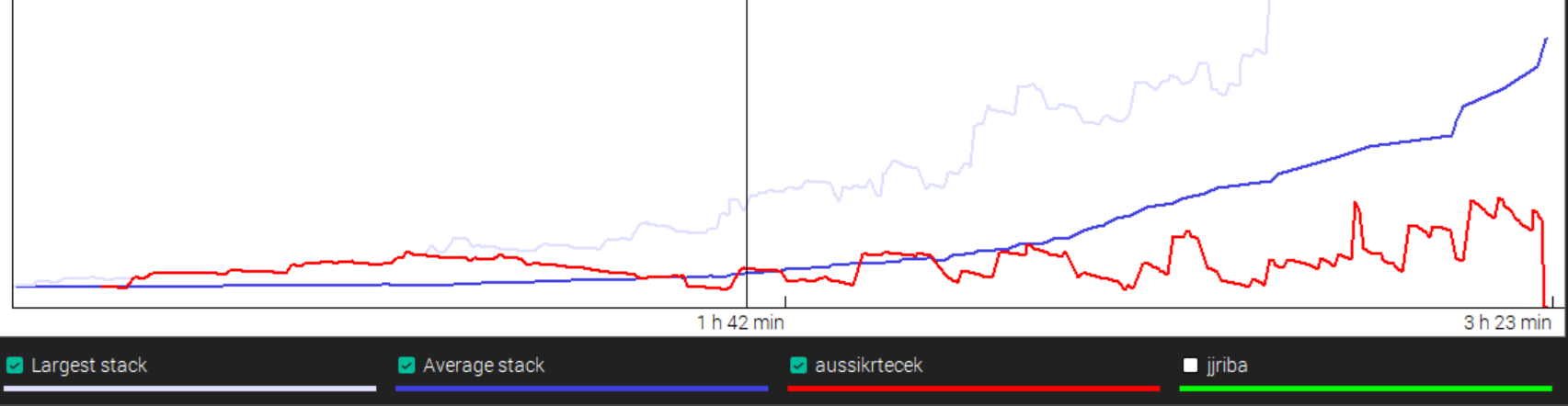
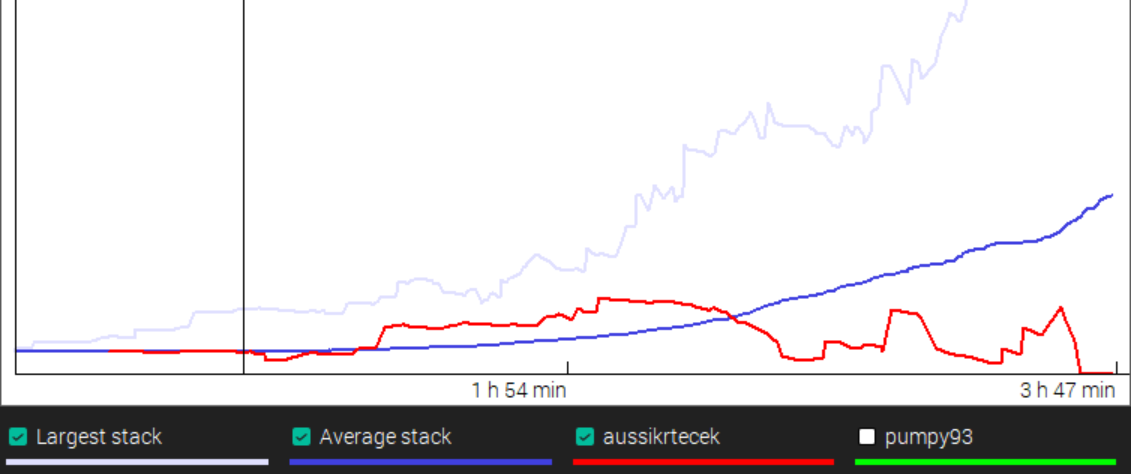
Chip-count graph from the $55 Razz Side Event: aussikrtecek's stack (red) climbs above average in the first hour, then rides a short-stack roller coaster below the average until the bust at 3h23m

This time the poker gods (or was it the PokerStars Variance Control Department?) gave me a heater. Naturally, they scheduled it when it matters least: in the first hour. I couldn't lose a hand and was chip leader almost throughout THAT FIRST hour.

Then I fell from 131K to below the 50K starting stack, and the short-stack roller coaster began. It finally dropped me off in 10th place out of 112, for a cash of $156.46.

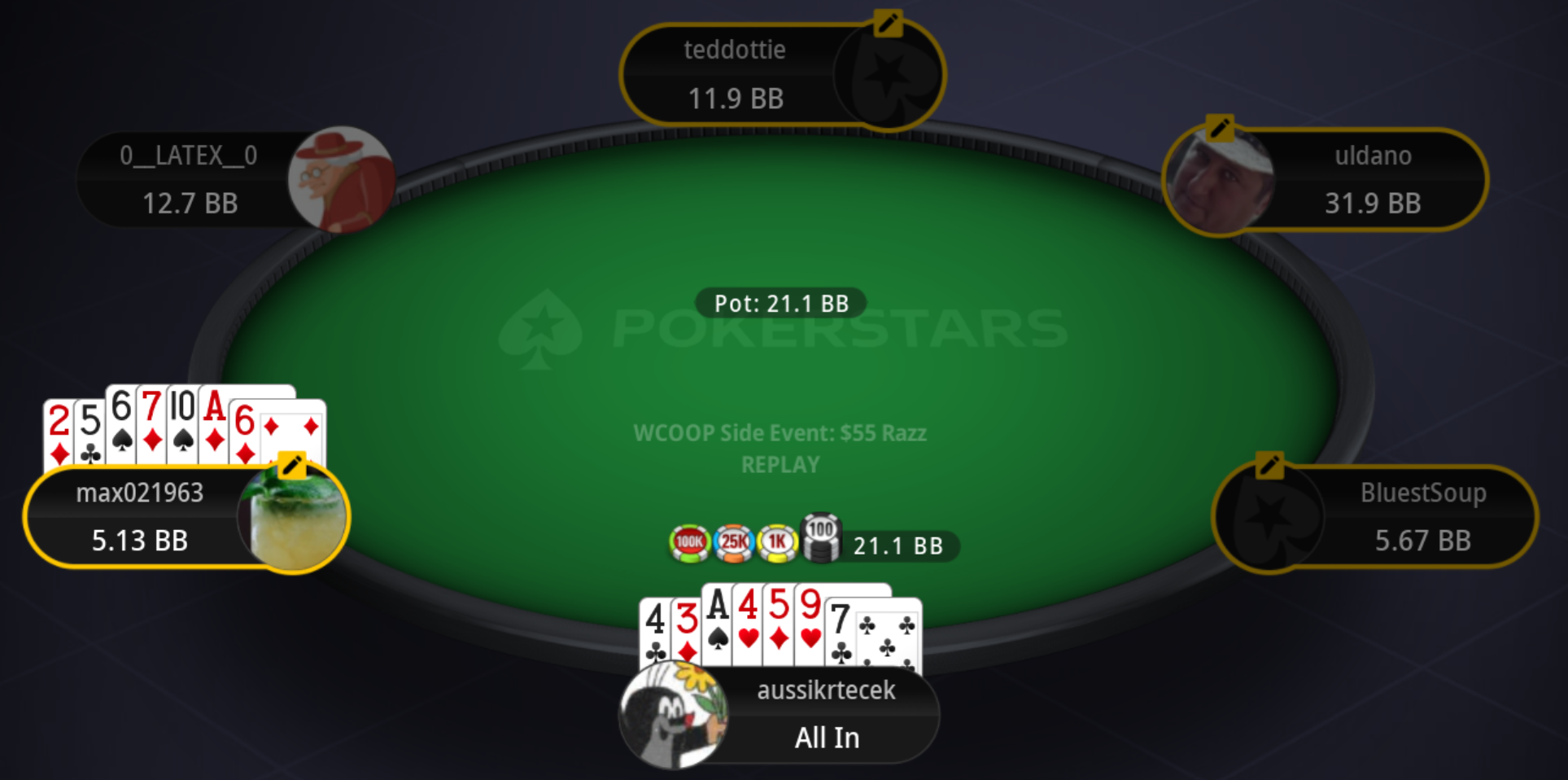
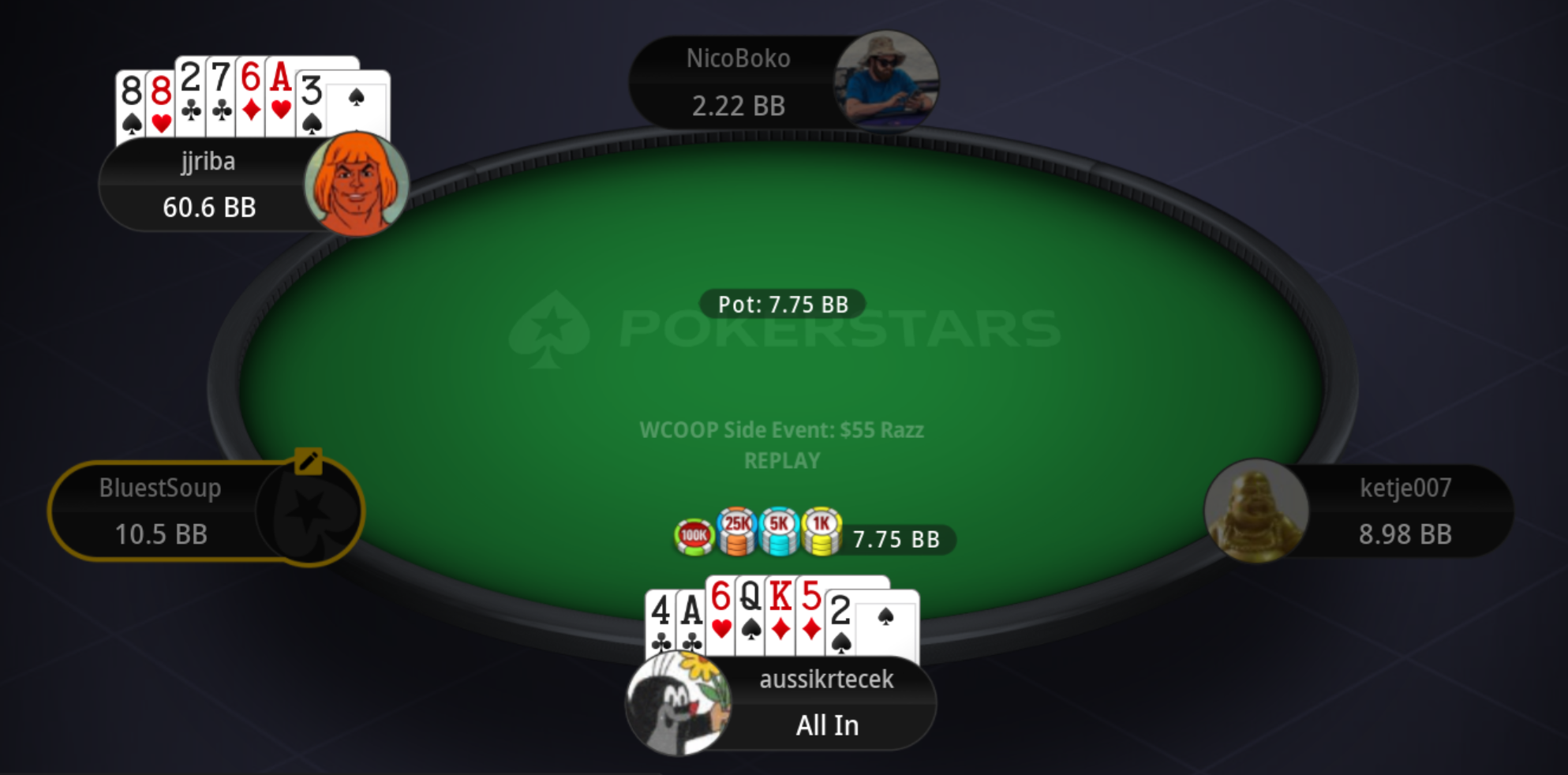
Twice, the last card even bailed me out:

Razz table in the WCOOP Side Event $55 Razz: aussikrtecek All In with 4-3-A-4-5-9-7, the river 7 making a 7-low against max021963's 2-5-6-7-10-A-6, pot 21.1 BB
Razz table on the bubble of the WCOOP Side Event $55 Razz: aussikrtecek All In with 4-A-6-Q-K-5-2, the river 2 making a 6-low against jjriba's 8-8-2-7-6-A-3, pot 7.75 BB

Maybe I should just go all-in more often. Apparently that's how I realize my equity!

That was the $55. In the $5.50, I was off to a good start too and built my stack to almost six times the starting stack. But then DOOM.

Cartoon brawl dust cloud with flying cards, chips and fists, covered by a black CENSORED bar

the aussikrtecek-cannot-win-a-single-hand switch was activated - at least in this tournament!

Anyway, this time I wasn't folding my way to a $9-something payday. I kept taking every marginal +EV spot (or what I considered one) and DOOM busted shortly before the stone-cold bubble.

WCOOP 2026 Running Tally
Total buy-ins
$1,823.50
Total cashes
$1,196.62
Balance
-$626.88

Another normal Day of Poker — this time even without faking

The $215 was the second highest buy-in tourney that I played after the $530 Stud H/L ... I didn't even last as long as in the Stud H/L ...

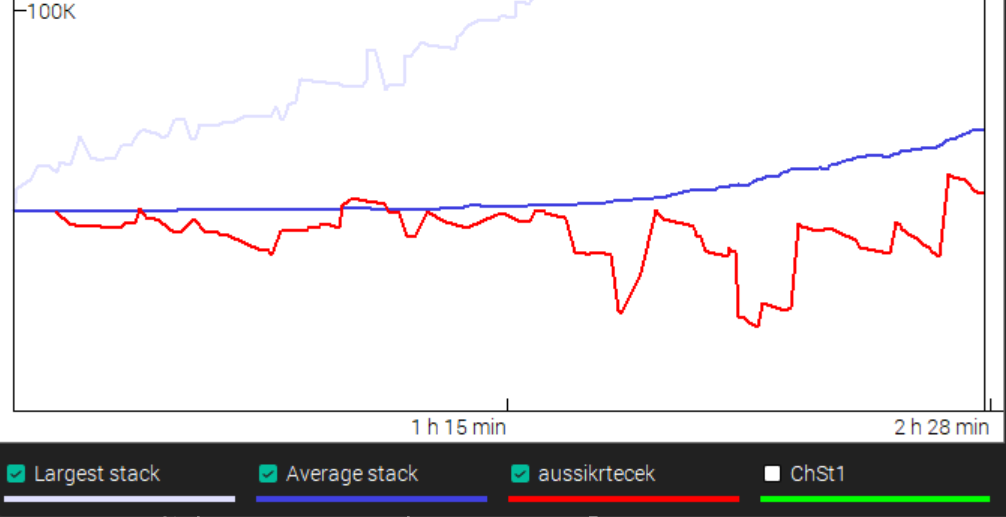
Chip-count graph from the $215 8-Game: aussikrtecek's stack (red) tracks the average, spikes up mid-way, then falls off a cliff at the very end

but HEIY! I won the first two hands!!!

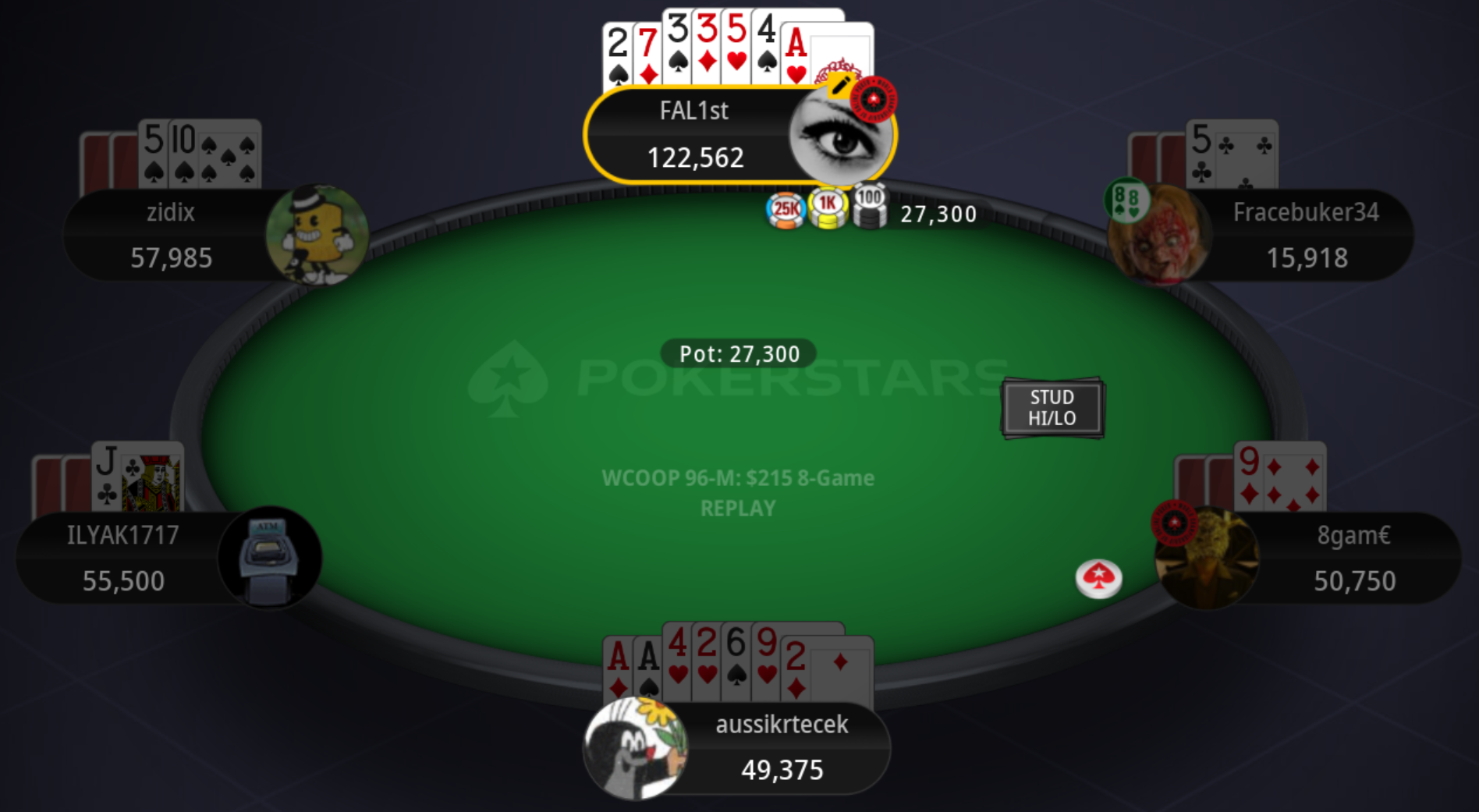
Here's my inevitable hand losing to FAL1st in Stud H/L, this time against runner-runner-runner wheel:

Stud Hi/Lo table in the WCOOP 96-M $215 8-Game: aussikrtecek's A-A-4-2-6-9-2 loses to FAL1st's 2-7-3-3-5-4-A runner-runner-runner wheel, pot 27,300

Since he played 4th and 5th passively — which makes it very likely that he does not have trip 3s — I wonder whether I even have a value reraise on the river with all my blockers (I only called his bet).

Well, there were two hands in which I made a debatable play. A 3-barrel bluff in the $215 in Limit Triple Draw — which in hindsight was clearly over the top as I have even been missing the right blockers. And I called a huge bet in a PLO hand ($55) with the Nutstraight on a flush board with a Queen-flush blocker against an opponent for which I had a player note that suggested that he'd very well pull off the Lone-Ace bluff here — of course, he had the Nut flush.

My opponents simply always had it. But the crowning moment of the evening was this hand:

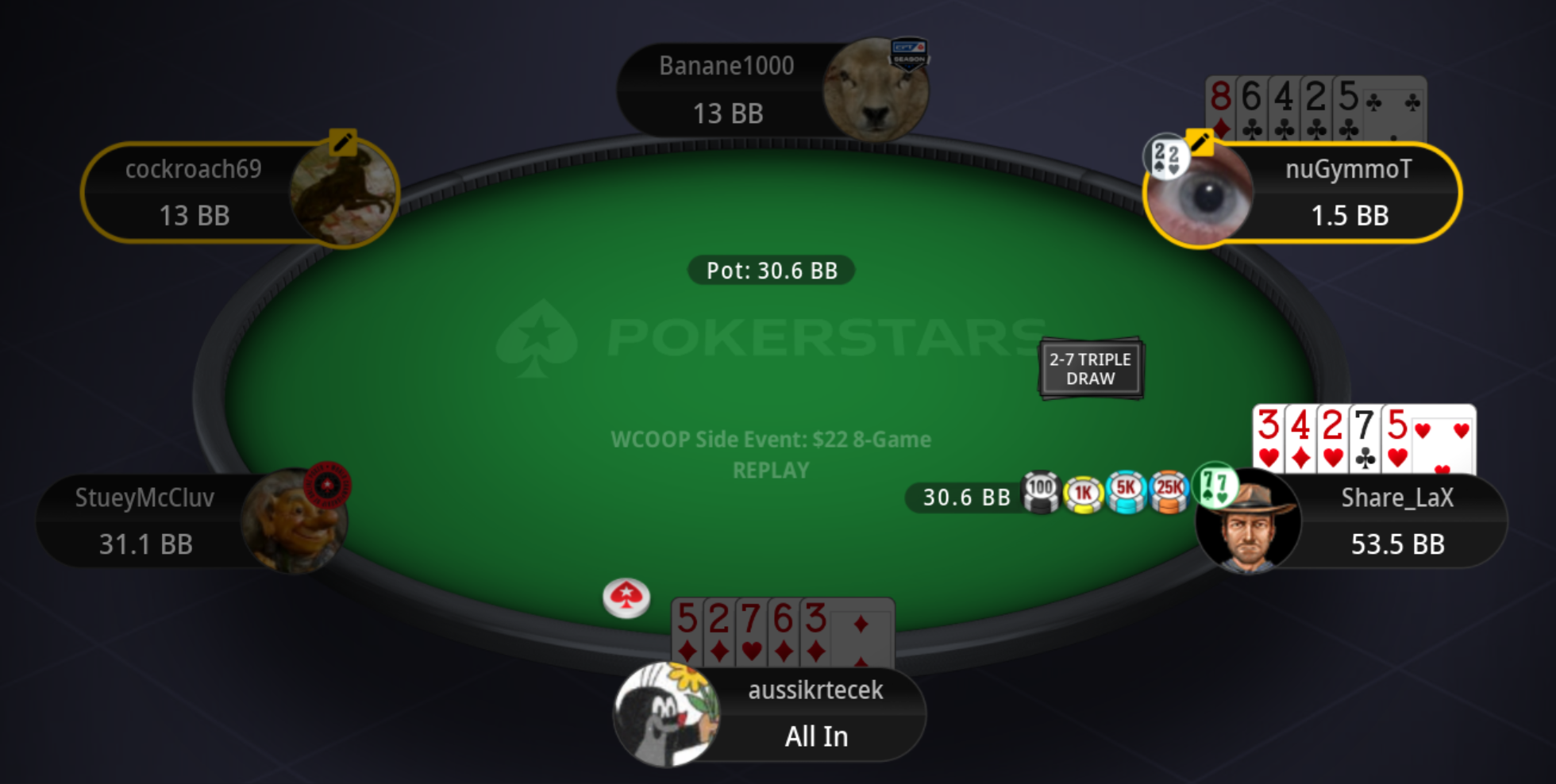
2-7 Triple Draw table in the WCOOP Side Event $22 8-Game: aussikrtecek All In with a made 5-2-7-6-3 against Share_LaX's 3-4-2-7-5, pot 30.6 BB

I made my hand after the first draw, while the opponent with the 8-6-5-4-2 also patted after the first draw. I mean ... WHAT THE FUCK ... how many low cards were even still in the deck for Share_LaX to draw?

Well, instead of a triple-up this was the bust of my last bullet and concluded the total loss of all five bullets I played (1x$215, 2x$55, 2x$22 8-Game Mystery Bounty, Side event).

I love Poker!

WCOOP 2026 Running Tally
Total buy-ins
$1,763.00
Total cashes
$1,040.16
Balance
-$722.84

Just Another NORMAL Day of Poker — or: When PokerStars Fakes You Out Twice

Ah yes. The $11 and $109 HORSE were on the schedule today.

Let's start with what happened in the big one ... for almost three hours, it looked like this:

Chip-count graph from the $109 HORSE: aussikrtecek's stack (red) hovers flat, slightly below the average stack (blue), for the first two and a half hours

I've rarely had three hours of poker this uneventful, with my stack just hovering slightly below the starting stack pretty much the entire time. Three times I got worryingly short, although one of those was actually self-inflicted: In Stud, I called down with two pair against open Aces. No idea what I was thinking! Well ... I do know what I was thinking, but it was just completely wrong ... and I got shown Trip Aces.

Then, all of a sudden, PokerStars decided to fake me out in my favorite variant and make it look like maybe something could actually happen today.

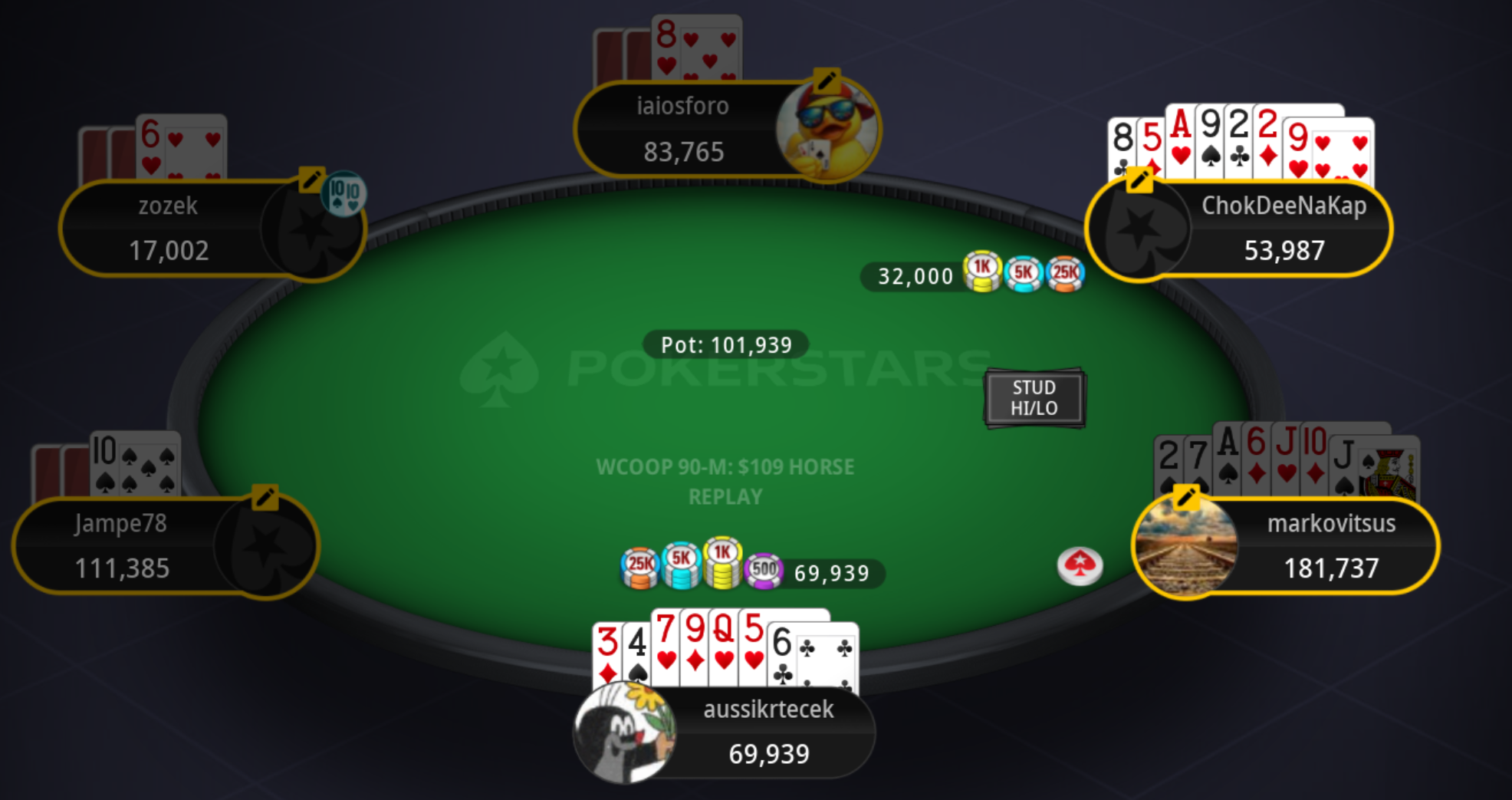
First hand: triple-up with a runner-runner straight for the scoop! Actually realized my equity for once!

Stud Hi/Lo table in the WCOOP 90-M $109 HORSE: aussikrtecek showing 3-4-7-9-Q-5-6 for a runner-runner straight, pot 101,939

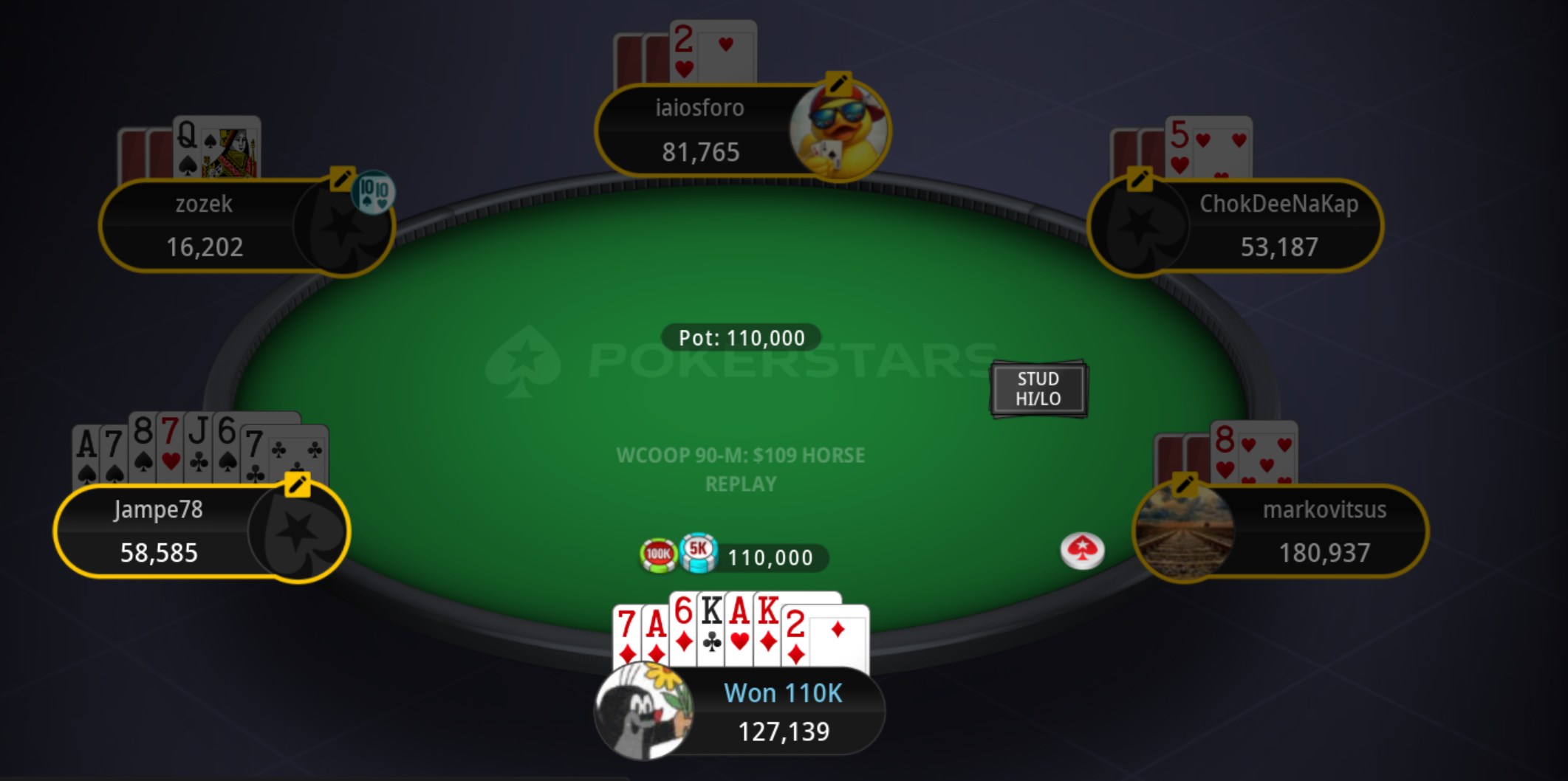
And in the very next hand, another almost-double-up scoop with a flush:

Stud Hi/Lo table in the WCOOP 90-M $109 HORSE: aussikrtecek won a 110K pot holding 7-A-6-K-A-K-2 with a flush

Yeah ... and that was about enough good hands for four hours of poker. After that, I went back to treading water and my stack started heading down again. The end finally came in a Stud hand where, short-stacked, I got everything in on 3rd with KQ9 against a T complete (the T was duplicated), and lost because the bring-in behind me not only happened to have a monster with (QQ)4, but naturally also blocked almost all the Queens I needed to improve my hand - still managed to catch the case Queen though. LOL.

Four hours of poker ... 51st with 35 places paid. Return: Nothing!

Yep, and that brings us to the story of the $11, which carries the label: How Much Can You Take?

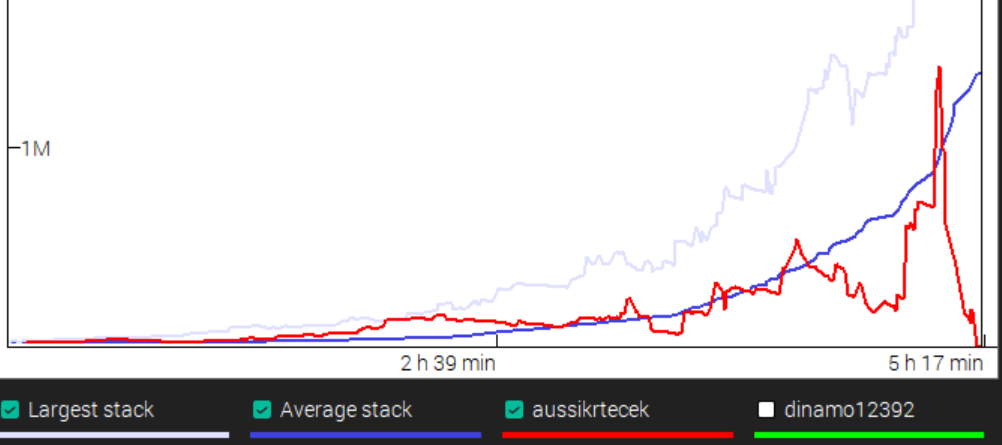
Chip-count graph from the $11 HORSE over five hours: aussikrtecek's stack (red) climbs and spikes past one million near the end, then drops straight off a cliff

Not long ago, I read that a cash-game player said he hates tournaments because you might as well just buy a lottery ticket. Somehow, he's not wrong. Well, after 4.5 hours of grinding, it actually looked as if I might finally have a winning ticket for once: After winning a monster pot with AA vs. JJ in FLHE, I was sitting on 1.4 million chips, 7th out of the 21 remaining players at that point.

Only to have it brutally ripped away from me immediately! Still in the very same FLHE orbit, I lost almost two-thirds of my stack again in two hands. The first was a blind battle. I flopped two pair with Q8 and lost a monster pot when my opponent went on to make a flush.

In the second, I raised AK on the button and the BB defended. The flop came:

A-Q-T, no suits.

He check-raised me, I 3-bet, then bet both turn and river after the board ran out A-Q-T-4-7 without improving me but still holding TPTK against so many inferior pair + straight draw combos. He showed me AT. Okay, maybe I could have saved myself that last river bet, but apart from that, two absolute coolers.

Then I had to give up an O8 hand, got scooped in the next one — admittedly in a small pot, but at this stage of a tournament, nothing is small anymore — and in Razz I finally got it all in with 8-6-3, only to end up losing to a starting hand of 8-7-6.

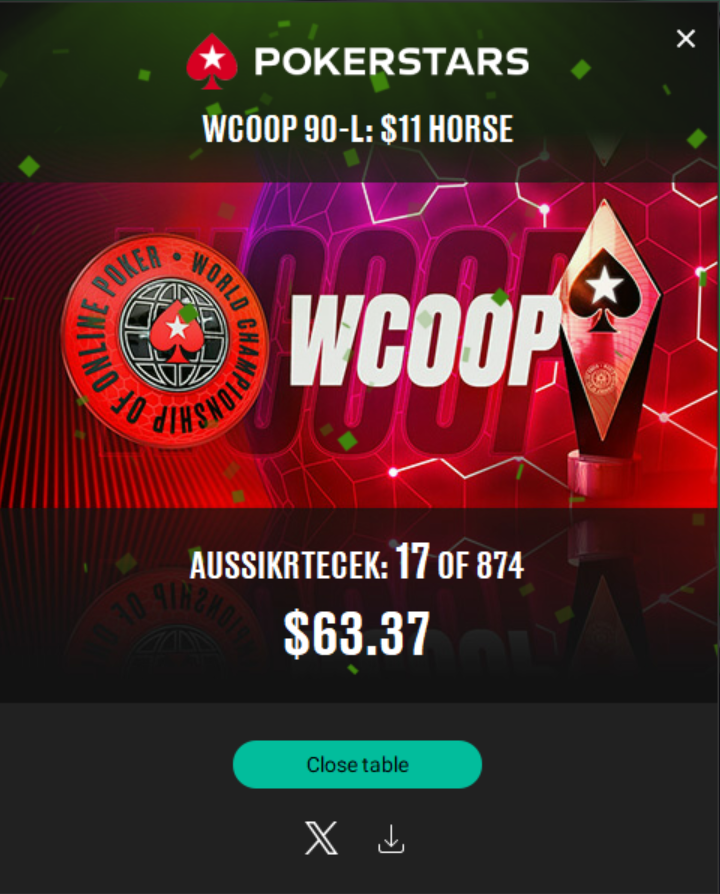
Great stuff! More than five hours played, 17th out of 874 players, and TA-DA! — I didn't even get six times my buy-in back. And after watching my chip graph fall out of the sky like a rocket, I really couldn't bring myself to be happy about that result.
WCOOP 90-L result card: $11 HORSE, aussikrtecek finished 17 of 874 for $63.37
WCOOP 2026 Running Tally
Total buy-ins
$1,394.00
Total cashes
$1,040.16
Balance
-$353.84

Three Tournaments - Three cashes ... three Min Cashes!

It was PLO Courchevel H/L time and that's high variance time. The day started started with a massive bad beat and ended in two unfortunate hands. In between I picked up some bounties.

In a satellite I lost a massive pot on the turn as 85% favorite. I had the Nutflush locked up and had the Nut low draw. My opponent had three pairs ... After that I still had a lot of chips that went in the very next hand where I had top set Aces und a low draw against the already made flush of my opponent. Still, I was 50.1% equity favorite. LOL ... after that hand I was out the satty.

I played the Courchevel $5.50 and $55 PKOs and also registered for the $5.50 PLO at the side. There I I quatrupled in the first hand, then I played loose, lost 70% of the stack, was fed up and folded to the min cash. LOL.

In the $5.50 Courchevel I never managed to accumulate a big stack, I was on two bullets picked up some small bounties and the min cash with the second bullet.

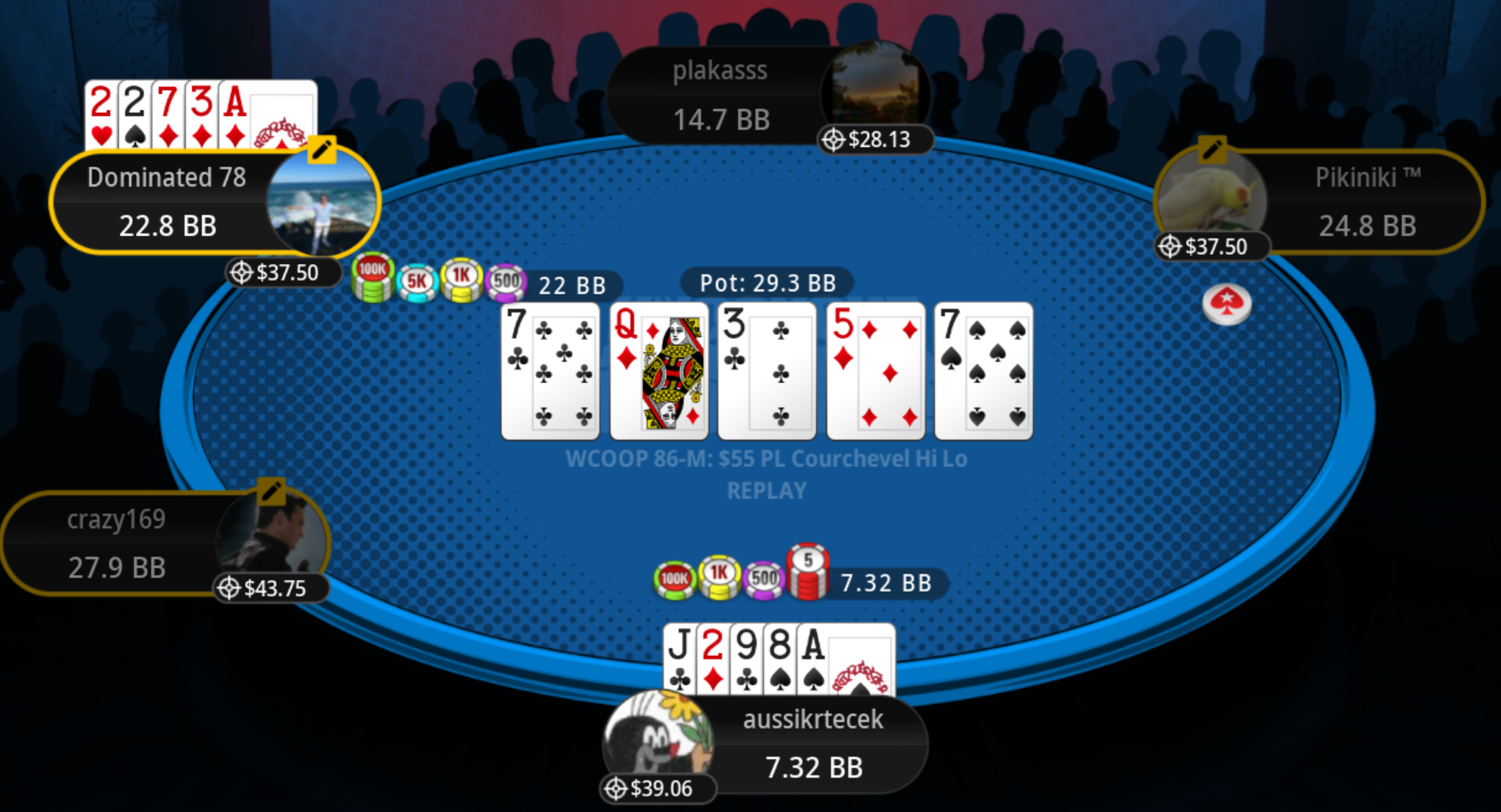
In the $55 I was in contention slipped through the bubble as a medium short stack and then these two hands destroyed my tournament:

The quartered hand in the $55 Courchevel: board 7 Q 3 5 7, aussikrtecek holds J-2-9-8-A against Dominated 78's 2-2-7-3-A, pot 29.3 BB

First I got quartered. Villain did not play the hand like he had A2 that's why I played and betted the hand as if I was on a freeroll. We were basically All-In on the turn. And HEIY any Clubs, any 6 make me win three quarters, any 4 splits evenly.

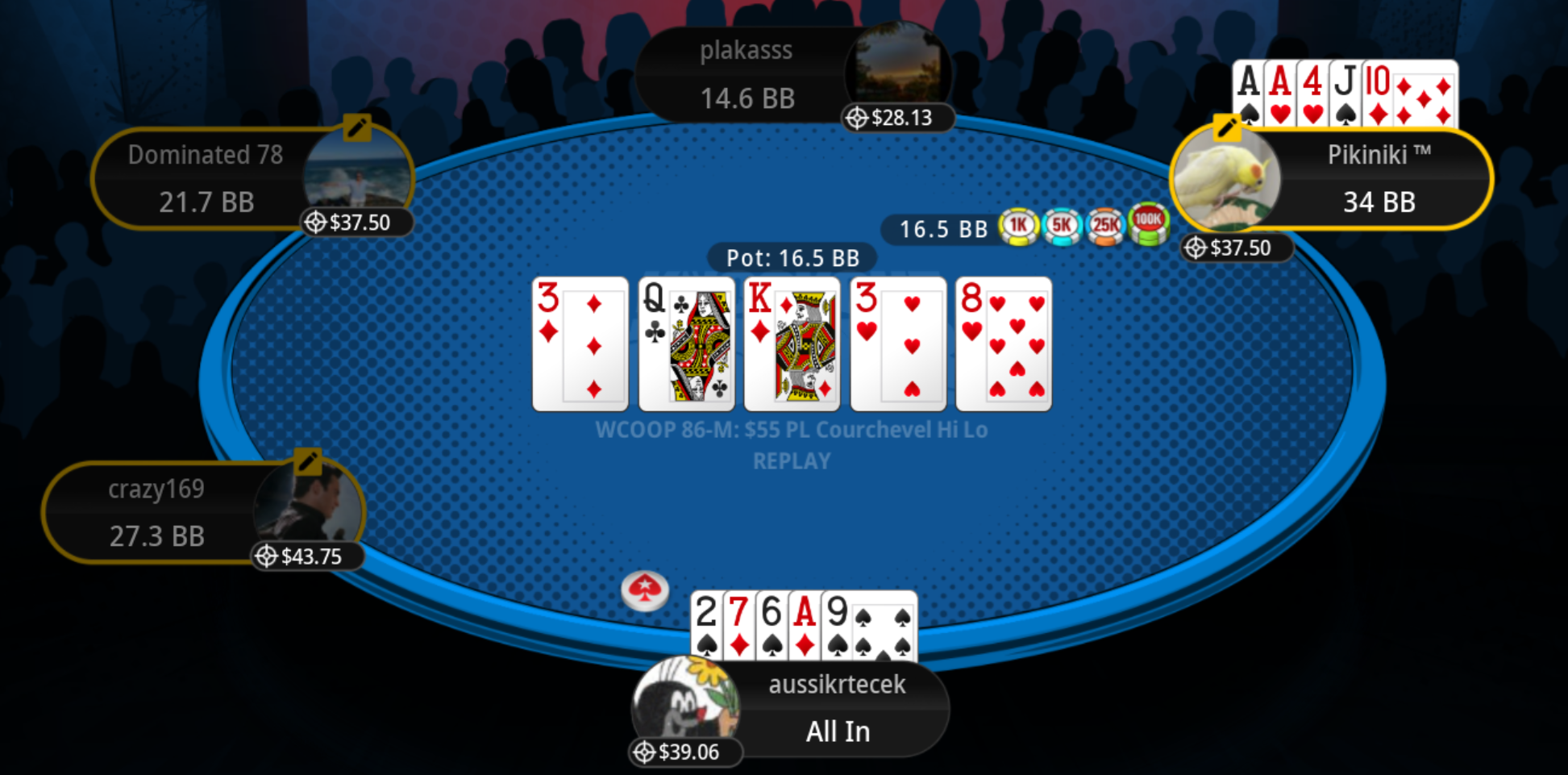
Yepp and if this was not enough the exodus right in the hand after that one:

The bust-out hand in the $55 Courchevel: aussikrtecek all in with 2-7-6-A-9 against Pikiniki's A-A-4-J-10, board 3 Q K 3 8, pot 16.5 BB

I didn't have so many chips anymore and this was an All-In before the flop. Managed to completely miss everything again. I picked up some bounties here as well and almost doubled my buy-in but after those two hands I couldn't be happy about it.

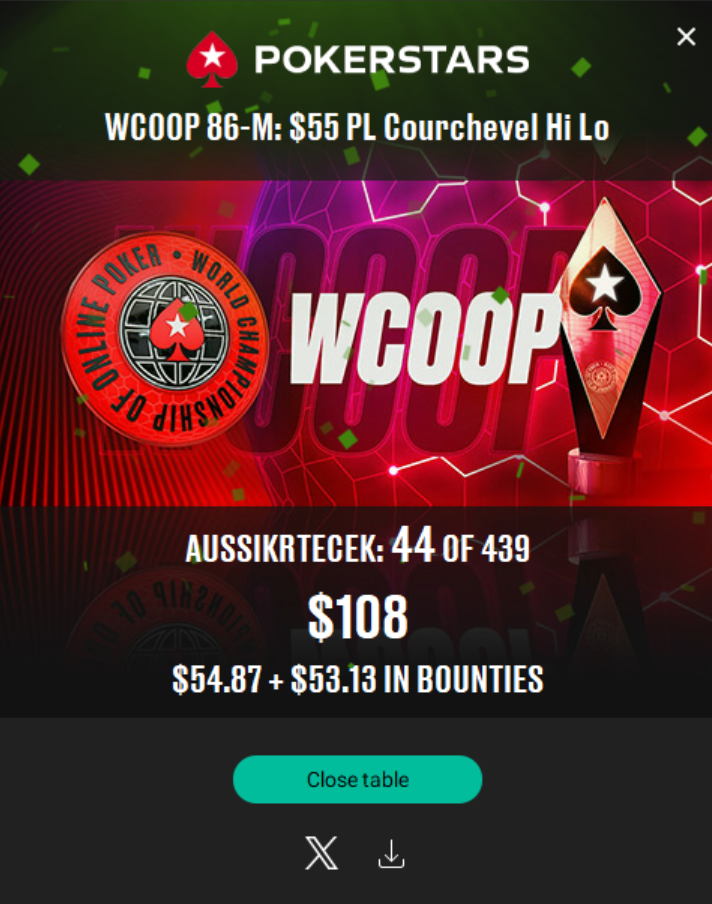
WCOOP 86-M result card: $55 PL Courchevel Hi Lo, aussikrtecek finished 44 of 439 for $108 ($54.87 plus $53.13 in bounties)
WCOOP 2026 Running Tally
Total buy-ins
$1,274.00
Total cashes
$976.79
Balance
-$297.21

Inside PokerStars' Variance Control Department — Part II

Supervisor 1:

We have another problem with aussikrtecek.

Supervisor 2:

Again?

Supervisor 1:

Yes. He has registered for the $11 WCOOP 5-Card PLO8.

Supervisor 2:

Big O?

Supervisor 1:

Big O.

Supervisor 2:

Excellent. We barely have to do anything in that game.

Supervisor 1:

True. But apparently he has forgotten why he hates it.

Supervisor 2:

Ah. Then we should remind him.

Supervisor 1:

Already started. First bullet: four-way pot. On the turn we gave him both nut-flush draws and a nut gutshot.

Supervisor 2:

That sounds dangerously strong.

Supervisor 1:

Don't worry. He can only play for the high half.

Supervisor 2:

Still. That's a lot of outs.

Supervisor 1:

Yes.

Supervisor 2:

Did any of them come?

Supervisor 1:

Of course not.

Supervisor 2:

Good. Bullet two?

Supervisor 1:

We let him get another big draw in, then bricked that one too.

Supervisor 2:

Efficient.

Supervisor 1:

After that, he got his remaining chips in as roughly a 70–30 favorite.

Supervisor 2:

Now you're making me nervous.

Supervisor 1:

Relax. We flopped the other guy a set.

Supervisor 2:

Excellent.

Supervisor 1:

Technically, aussikrtecek survived with 2,645 chips.

Supervisor 2:

That's untidy.

Supervisor 1:

We dealt him A-A-2 next.

Supervisor 2:

Wait. Why would you give him that?

Supervisor 1:

To make the elimination feel fair.

Supervisor 2:

Ah.

Supervisor 1:

He was about a 70–30 favorite again.

Supervisor 2:

And?

Supervisor 1:

Set for the other guy.

Supervisor 2:

Beautiful. Two bullets gone.

Supervisor 1:

Then he said, “All good things come in threes,” and fired bullet three.

Supervisor 2:

That's convenient.

Supervisor 1:

Very. Eventually we gave him A-3-4-5-Q and got the money in against A-2-4-7-J.

Supervisor 2:

Nice hand.

Supervisor 1:

The flop was 5-7-6.

Supervisor 2:

So he flopped a straight and a made low?

Supervisor 1:

Correct.

Supervisor 2:

That sounds a little generous.

Supervisor 1:

The other player already had the better low.

Supervisor 2:

Of course.

Supervisor 1:

Then we completed his flush on the turn.

Supervisor 2:

Whose flush?

Supervisor 1:

The other player's.

Supervisor 2:

Right. Sorry. Silly question.

Supervisor 1:

Bullet three eliminated.

Supervisor 2:

Excellent. Job done.

Supervisor 1:

Not quite.

Supervisor 2:

What now?

Supervisor 1:

He fired bullet four.

Supervisor 2:

But he specifically said all good things come in threes.

Supervisor 1:

Apparently he doesn't consider the first three good things.

Supervisor 2:

Fair enough.

Supervisor 1:

We immediately reduced him from 22,350 chips to 5,800.

Supervisor 2:

How?

Supervisor 1:

He turned trip Kings.

Supervisor 2:

And lost?

Supervisor 1:

Naturally. The same King gave his opponent a full house.

Supervisor 2:

Now that is proper variance management.

Supervisor 1:

Unfortunately, we then had a technical malfunction.

Supervisor 2:

What happened?

Supervisor 1:

He won a pot.

Supervisor 2:

He what?

Supervisor 1:

Three-way all-in. He got three quarters.

Supervisor 2:

This is unacceptable.

Supervisor 1:

It gets worse.

Supervisor 2:

Don't tell me.

Supervisor 1:

A few hands later, he scooped an entire pot.

Supervisor 2:

AN ENTIRE POT?

Supervisor 1:

High and everything.

Supervisor 1:

He went back above 24K and started sounding optimistic again.

Supervisor 2:

We need to shut this down.

Supervisor 1:

Agreed. But he has just announced that he won't fold premium hands to sneak into the money.

Supervisor 2:

Oh.

Supervisor 1:

And then he said—and I'm quoting here—“We should let nature take its course and bust the last bullet with a premium hand.”

Supervisor 2:

Seriously?

Supervisor 1:

Seriously.

Supervisor 2:

Well, don't keep the customer waiting.

Supervisor 1:

A-A-2-K-7, Ace-deuce suited. About ten big blinds.

Supervisor 2:

Perfect.

Supervisor 1:

He gets it in against 2-3-6-7-Q.

Supervisor 2:

How do we finish it?

Supervisor 1:

Pair the board so no low qualifies.

Supervisor 2:

Nice.

Supervisor 1:

Then put the third diamond on the river.

Supervisor 2:

Opponent has diamonds?

Supervisor 1:

Naturally.

Supervisor 2:

Scoop?

Supervisor 1:

Scoop.

Supervisor 2:

Final result?

Supervisor 1:

268th place. Four bullets.

Supervisor 2:

Excellent. So variance is back within parameters?

Supervisor 1:

Not exactly.

Supervisor 2:

What's wrong?

Supervisor 1:

I ran the audit.

Supervisor 2:

And?

Supervisor 1:

Across the all-ins, he's approximately 116,000 chips below expectation.

Supervisor 2:

How much is a starting stack?

Supervisor 1:

25,000.

Supervisor 2:

...

Supervisor 1:

That's about 4.6 starting stacks below all-in EV.

Supervisor 2:

But he only fired four bullets.

Supervisor 1:

Correct.

Supervisor 2:

So we've managed to make him run more than four bullets below expectation while he only bought four bullets?

Supervisor 1:

Yes.

Supervisor 2:

Outstanding work.

Supervisor 1:

There is one concern.

Supervisor 2:

What's that?

Supervisor 1:

He says he remembers now why he hates Big O.

Supervisor 2:

That's fine.

Supervisor 1:

Fine?

Supervisor 2:

Of course. Check the schedule.

Supervisor 1:

What am I looking for?

Supervisor 2:

HORSE.

Supervisor 1:

Ah.

Supervisor 2:

He'll be back.

WCOOP 2026 Running Tally
Total buy-ins
$1,197.00
Total cashes
$851.47
Balance
-$345.53

Inside PokerStars' Variance Control Department

After the disaster in Stud H/L, I did not feel much like playing poker. Still, I registered for the $16.50 PLO Courchevel H/L, as it is one of my favorite variants alongside Stud H/L and NL 2-7 Single Draw. When I did, this happened at PokerStars Tournament Control – Variance Department:

Supervisor 1:

We have a problem with aussikrtecek.

Supervisor 2:

What happened?

Supervisor 1:

After yesterday's WCOOP Stud Hi/Lo disaster, he says he doesn't feel like playing poker anymore.

Supervisor 2:

Ah. That's not good for business.

Supervisor 1:

Apparently, we accidentally withheld pretty much all playable cards from his account yesterday.

Supervisor 2:

Damn. Can we fix that?

Supervisor 1:

Sure. We have identified the issue. The outstanding cards can simply be credited to his $16.50 Courchevel Tournament account.

Supervisor 2:

Excellent. Let's make it convincing. Give him six bounties in quick succession and let him become the chip leader.

Supervisor 1:

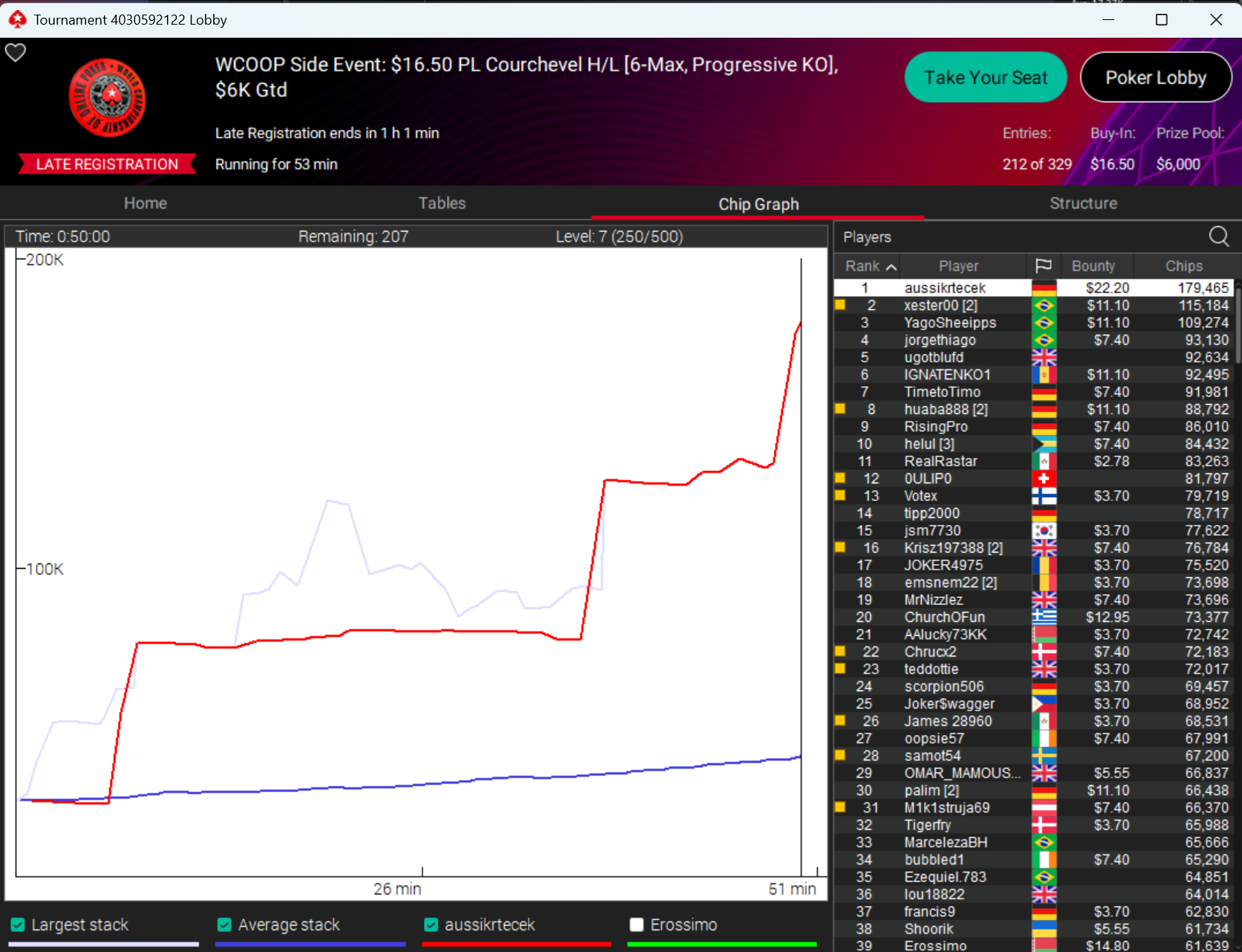
Done. 179,465 chips after 53 minutes. More than six times the average stack.

PokerStars tournament lobby chip graph for the $16.50 PL Courchevel H/L side event: aussikrtecek's red line spikes to the chip lead with 179,465 chips, rank 1 far above the field
Supervisor 2:

Perfect. He seems to be enjoying poker again.

Supervisor 1:

Very much so. He has already shouted “OVER 200K BABY!”

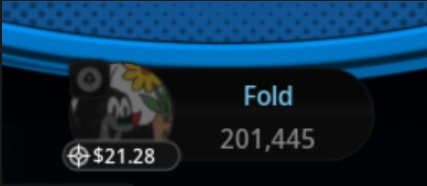
Close-up of aussikrtecek's seat showing a 201,445 chip stack with a $21.28 bounty and a Fold button
Supervisor 2:

Great. Shall we let him make the final table?

Supervisor 1:

Are you insane? No. This has to be enough.

Supervisor 2:

Right. We don't want him thinking this is the normal state of affairs.

Supervisor 1:

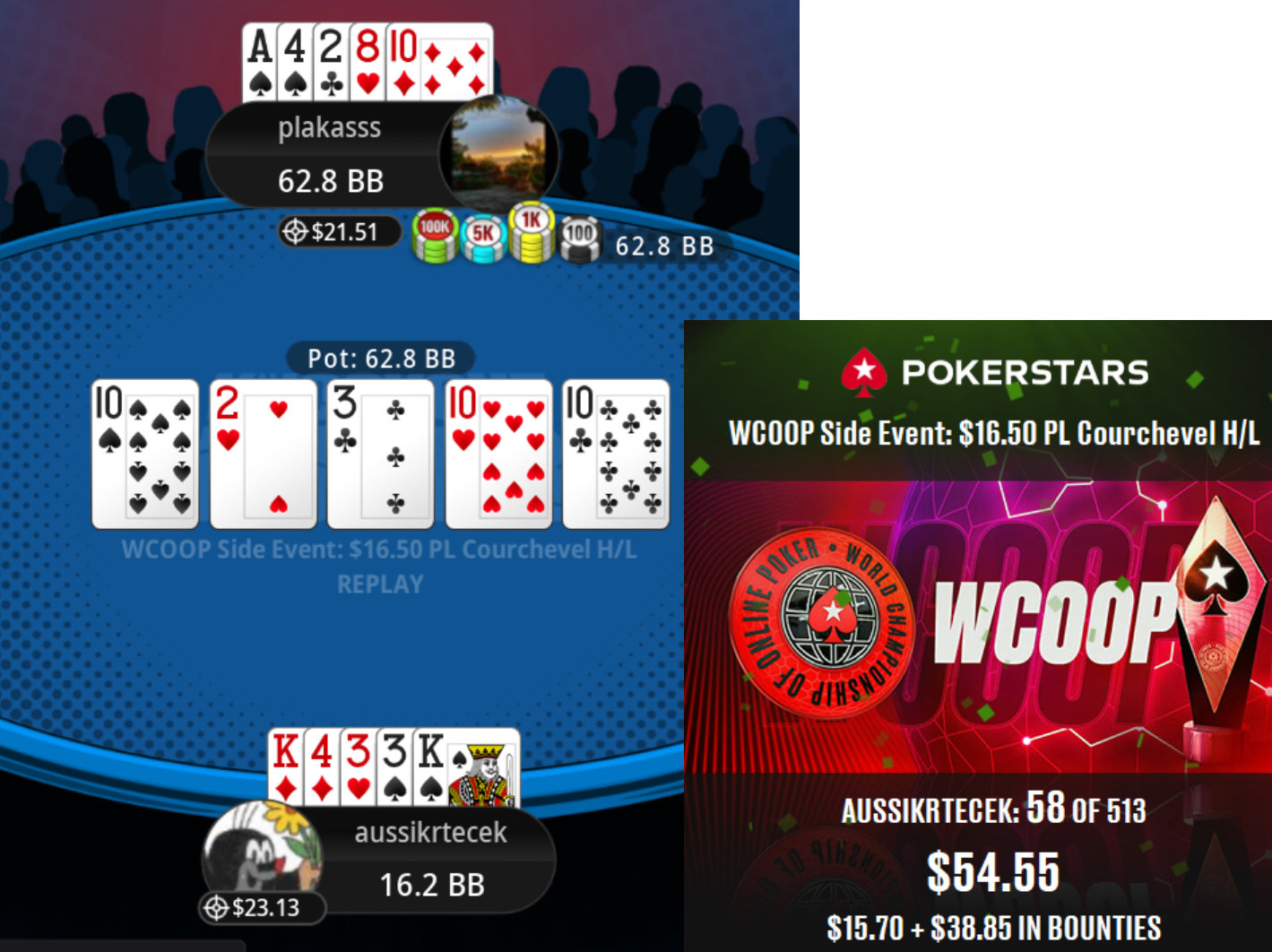
Exactly. Time for a cooler.

The cooler hand: board 10 2 3 10 10, opponent plakasss holds A428-10 while aussikrtecek holds K433-K, alongside the WCOOP result card showing 58 of 513 for $54.55
Supervisor 2:

Ouch.

Supervisor 1:

And just to make absolutely sure aussikrtecek understands the message, put another Ten on the river.

Supervisor 2:

Quads?

Supervisor 1:

Quads.

Supervisor 2:

Perfect. What does that do to his stack?

Supervisor 1:

About 235K to 81K in one hand.

Supervisor 2:

Excellent. Much more familiar territory.

Supervisor 1:

He'll still struggle on for a few minutes. Then we'll arrange an unavoidable blind-vs-blind situation.

Supervisor 2:

Let me guess. He loses both halves?

Supervisor 1:

Naturally. The other guy makes two pair and 6542A.

Supervisor 2:

Beautiful. Final result?

Supervisor 1:

58th of 513. $15.70 prize money plus $38.85 in bounties. $54.55 total.

Supervisor 2:

Sounds about right. Poker restored, expectations corrected.

Supervisor 1:

Think he'll play again tomorrow?

Supervisor 2:

Of course. That's why we let him win the bounties.

WCOOP 2026 Running Tally
Total buy-ins
$1,153.00
Total cashes
$851.47
Balance
-$301.53

Stud H/L - My Main Events were a total disaster

I played the $109 and $530 WCOOP Stud Hi/Lo events yesterday. There isn't much I feel like writing about this session. I busted both bullets of the $109 without ever getting significantly above the starting stack, and my $530 lasted only 76 hands.

It was expensive, frustrating and, after reviewing the important hands, I don't think I played badly. Sometimes that's all there is to say about a poker tournament.

Maybe –with some distance– I'll put up some hands on “What Would You Do?”

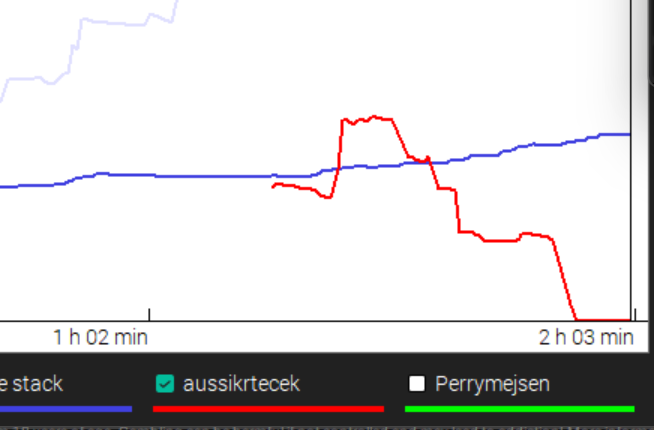
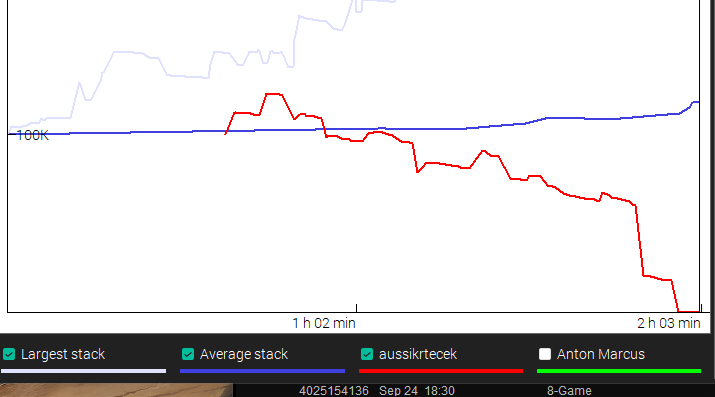
Chip graph of the $530 Stud H/L Main Event: aussikrtecek's red line spikes just above the average stack early, then declines steadily and drops to zero near the 2h03min bust
WCOOP 2026 Running Tally
Total buy-ins
$1,136.50
Total cashes
$796.92
Balance
-$339.58

NL 2-7 Singledraw - didn't draw much though

I played two bullets in the $11 target tourney and one $11 satellite to the $109. Didn't get much going anywhere. Almost late-regged the $109 ... but then decided to save my concentration for tomorrow's "Main Event"! :)

WCOOP 2026 Running Tally
Total buy-ins
$366.50
Total cashes
$796.92
Balance
+$430.42

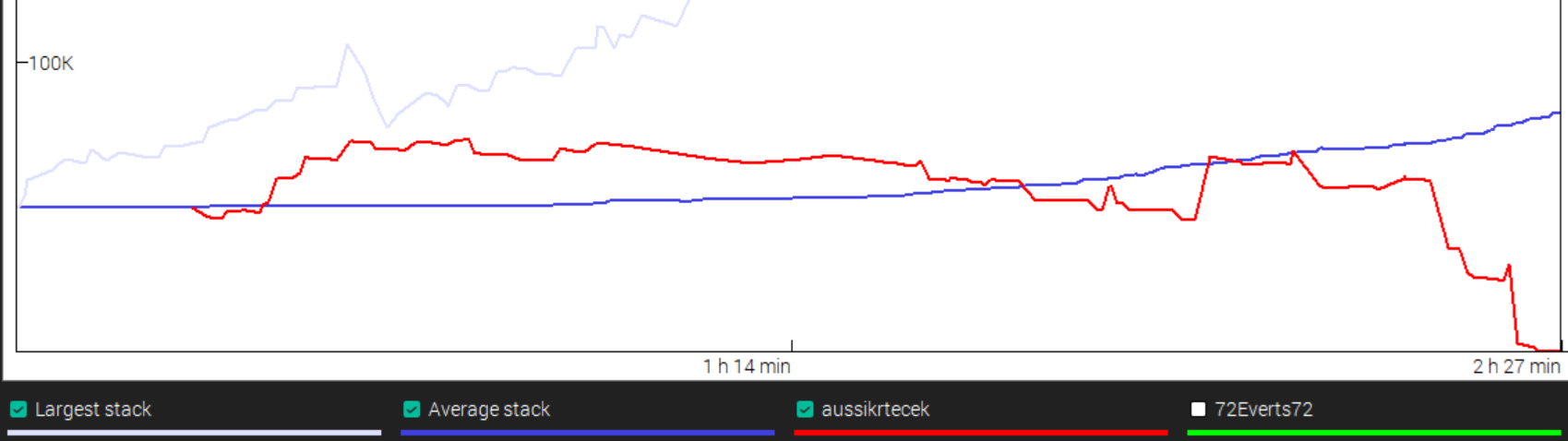
I played 8-Game and it went like this ...

$11 first bullet

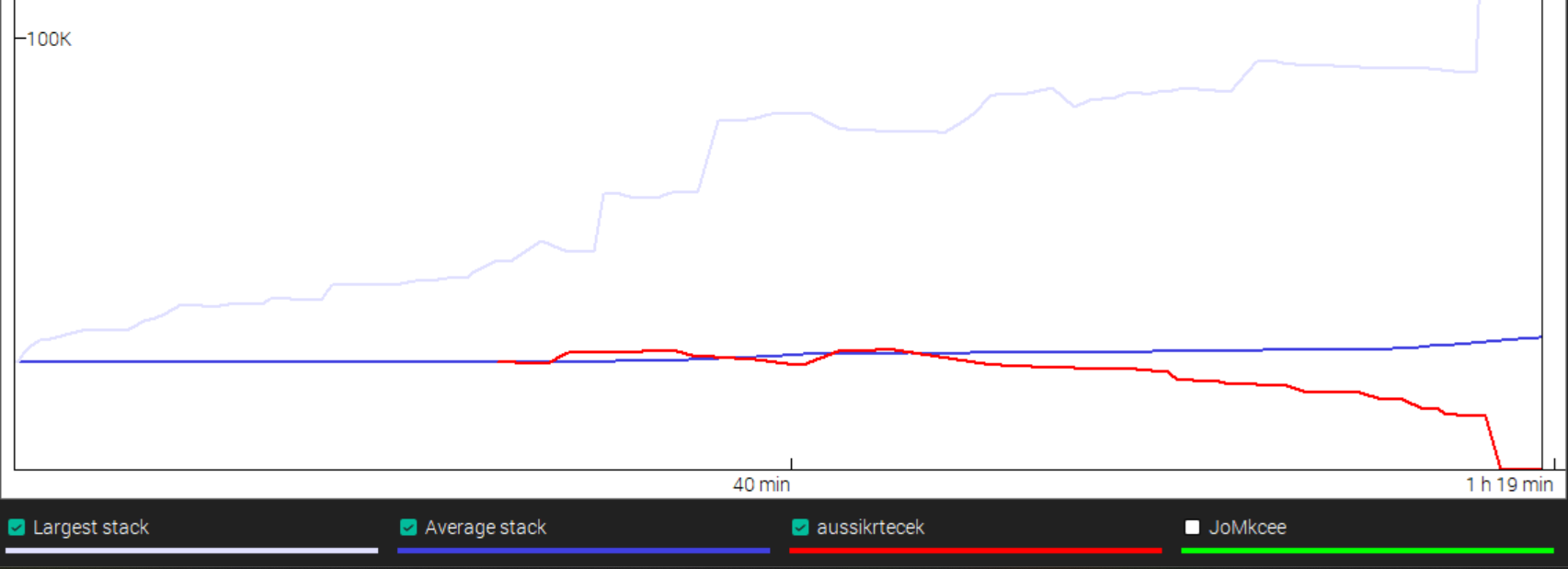
Chip graph of the $11 8-Game 44-L first bullet: aussikrtecek's red line tracks the average before dropping to zero at the 1h19min bust

$109

Chip graph of the $109 8-Game 44-M: aussikrtecek's red line runs above average through the middle before crashing near the 2h27min mark

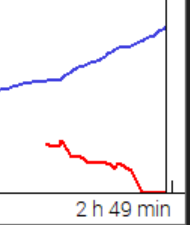
$11 second bullet

Cropped chip graph of the $11 8-Game 44-L second bullet: aussikrtecek's red line grinds down to zero around the 2h49min bust
WCOOP 2026 Running Tally
Total buy-ins
$333.50
Total cashes
$796.92
Balance
+$463.42

A Razz Night with Friends

The rungood continues – just not in the $11 Razz, where I busted two bullets rather uneventfully.

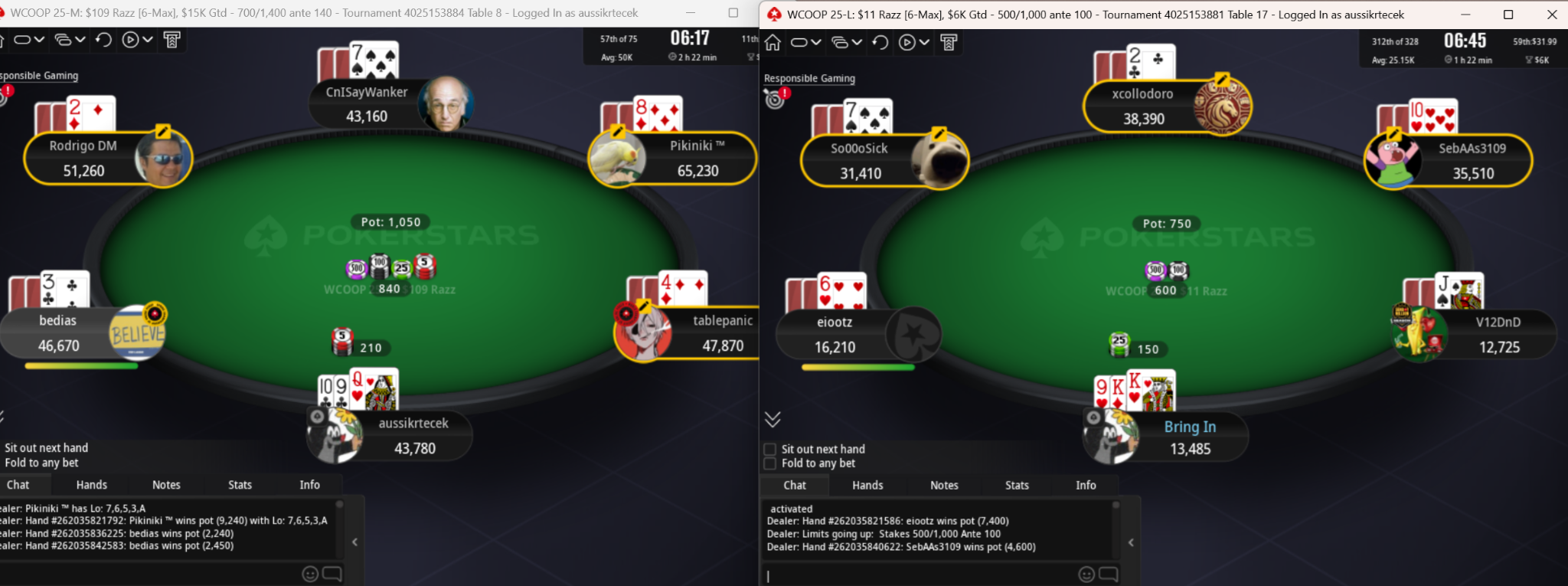
The $109 didn't exactly start great either, it mainly looked like this:

Two side-by-side PokerStars Razz tables, WCOOP 25-M $109 and 25-L $11, with aussikrtecek short-stacked on both

After my stack had dropped from 50K to 17K, the real rungood kicked in and catapulted me all the way up to a peak of 340K. At one point, I was sitting in 8th place with 37 players left and 29 spots paid.

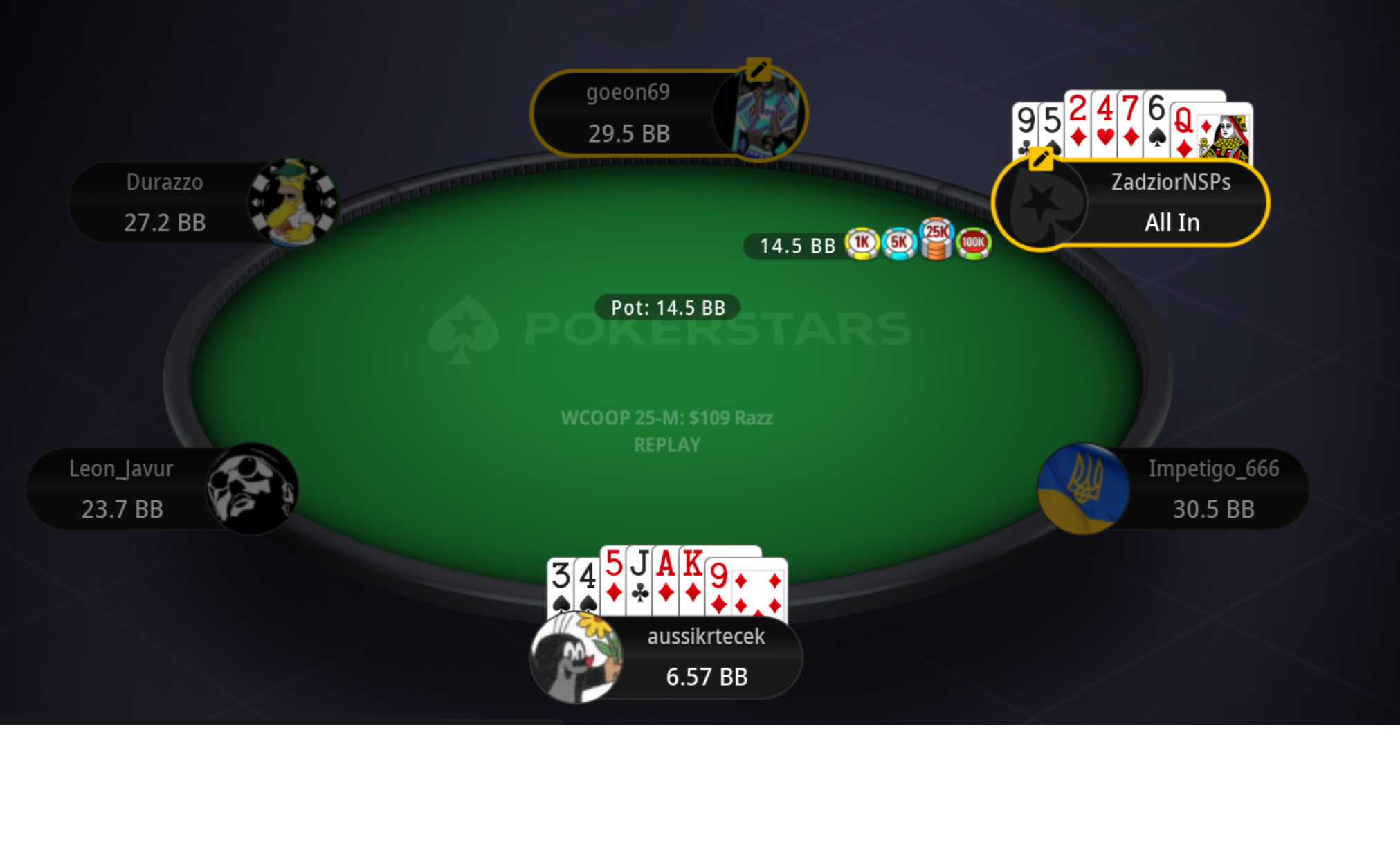
Yeah, then I lost about 100K just to antes and bring-ins while being completely card-dead, before this hand sent me straight into oblivion:

WCOOP 25-M $109 Razz replay: aussikrtecek all-in for 6.57 BB against ZadziorNSPs who is also all in

After that, I got lucky twice and managed to slide into the money relatively comfortably.

Eventually, Leon_Javur busted me with 267 > 358 for the $215.45 min-cash. I have no idea how many hands I've already lost against this guy – but it's a shitload!

Chip graph of the $109 Razz: aussikrtecek's red line climbs to a peak before crashing off a cliff near the 4h39min mark
WCOOP 2026 Running Tally
Total buy-ins
$202.50
Total cashes
$796.92
Balance
+$594.42

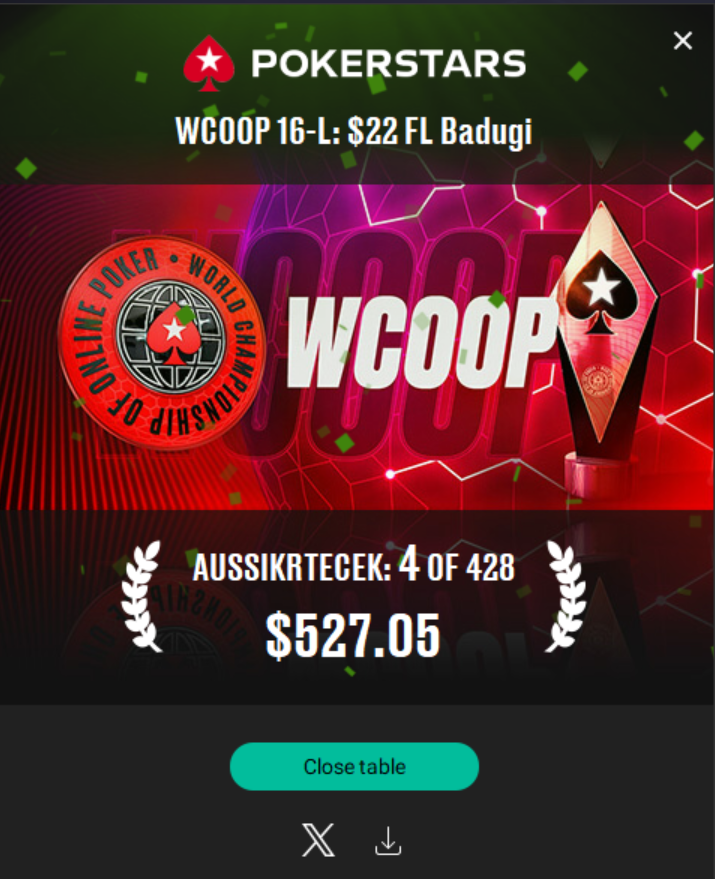
Nights are getting longer – 4th in the $22 Badugi

The first bullet went like shit and the second bullet went smooth as hell.

I cruised to the final table (out of 428 players) without much trouble. There, I was never a really big stack but always in contention.

I made two folds which I have to inspect in the replayer. Both of them could look silly, but I hope they're not. In the first hand, I folded a draw to a perfect 7 when the pot odds made it pretty much a toss-up. Since I had a feeling that I might be drawing dead, I folded with one to come.

The second hand was a blind-vs-blind duel with the chip leader, proving why position is so important in that game:

I was dealt a made KQ-Badugi in the small blind. It gets folded to me, I raise. Big blind 3-bets. I call and pat, big blind draws. Ok, I have just put my hand face up as a rough Badugi, but I don't think it matters much as I am still a favorite against someone who is drawing. I bet, he calls. I pat, he pats.

Yikes! I have the worst possible Badugi I could ever have here.

What is the likelihood that he is pulling off a sophisticated bluff here? I thought not very high, which is why I check-folded to his bet. He was probably rough as well, but smoother than me ;) — I will find out in the replayer.

Well, when we were four-handed, I ran out of stamina and hardly won any pots anymore. The end came in a hand where I was dealt a smooth 9-Badugi and lost to a player who drew a 7-Badugi on the last card.

It was a bit disappointing that the journey ended here, but I am not complaining: third tournament of the series, and with that cash I have already cashed for more than in the entire SCOOP 2026.

PokerStars result screen for WCOOP 16-L $22 FL Badugi: aussikrtecek finished 4 of 428 for $527.05
WCOOP 2026 Running Tally
Total buy-ins
$71.50
Total cashes
$581.47
Balance
+$509.97

Prolonged Suffering

WCOOP has started and my motivation to play poker was almost non-existent.

I max-late-regged the $5.50 NLO8, had my first all-in flip in the fifth hand and lost.

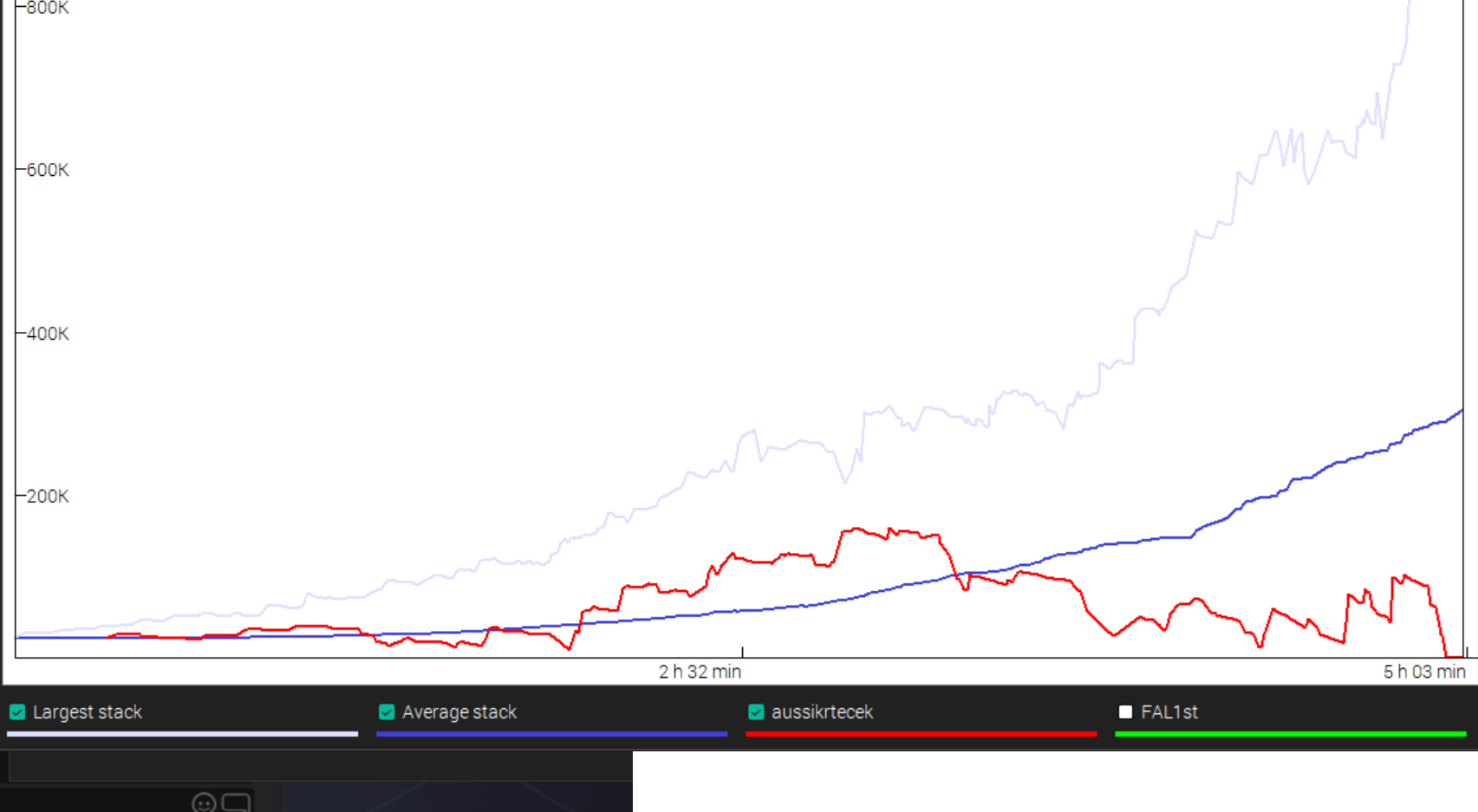
Well, at that point I had already registered for the $22 HORSE, and that should turn into a five-hour ordeal.

There was exactly one time in the tourney when I ran good and elevated my stack from 10K (25K starting stack) to 150K.

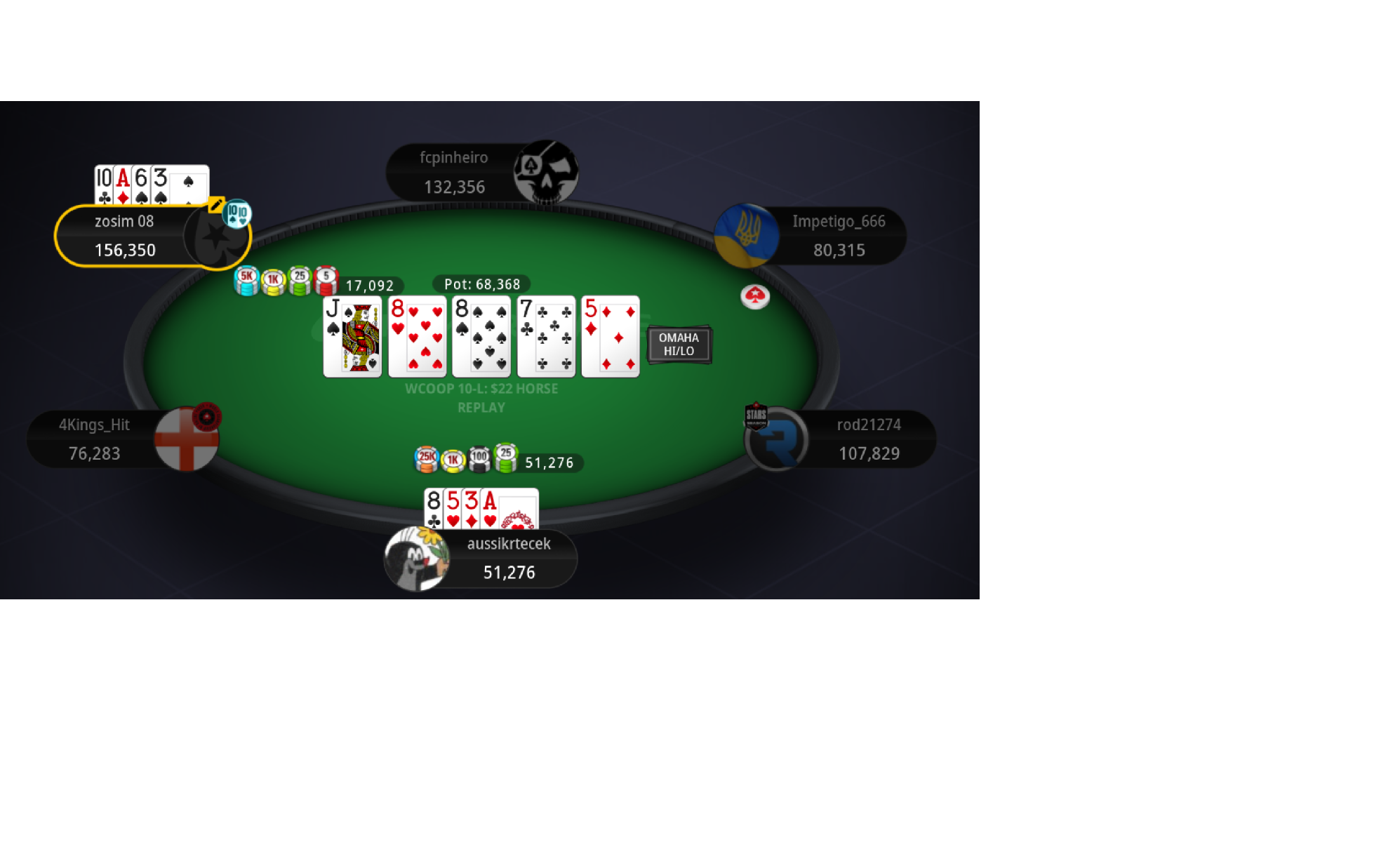
Then, the Doomswitch was enabled and it pretty much looked like I could bubble after 4.5 hours of play when this O8 hand saved me:

WCOOP 10-L $22 HORSE Omaha Hi/Lo table: board J-8-8-7-5, aussikrtecek holds 8-5-3-A with flopped trip eights, pot 68,368

Much to my delight, I did not even have to face a lot of risk here, as it was checked to me in the big blind and I flopped trips right away.

After the bubble burst, I seemed unbustable for quite some time until the end arrived, of all things, in my specialty game. In three almost consecutive hands, there was pretty much nothing I could have done differently, yet I ended up without any chips and with a cash of about 2.5x the buy-in.

Chip graph of the $22 HORSE: aussikrtecek's red line climbs to about 150K near 2h32min before bleeding down and busting to zero at 5h03min
WCOOP 2026 Running Tally
Total buy-ins
$27.50
Total cashes
$54.42
Balance
+$26.92

WCOOP 2026

PokerStars has published the WCOOP 2026 schedule.

The buy-in for the High-tier Stud H/L tournament was reduced from $1,050 to $530. I am torn about whether I should consider this a good change or not.

The same happened to the Omaha H/L tournament, and PokerStars set both guarantees at just $20K. I mean, c'mon! The 2025 WCOOP Stud H/L edition had 39 entries with a $40K guarantee.

With the lower buy-in, you would expect a few more players to register, so a $25K or $30K guarantee certainly wouldn't have hurt.

Anyway, here's my preliminary itinerary, starting on September 7:

DateTimeEventBuy-in
Sep 717:30NL Omaha H/L$5.50
Sep 719:30HORSE$22
Sep 719:30HORSE$215
Sep 818:30PL 5Card Omaha H/L$11
Sep 820:05Limit Badugi$22
Sep 1018:30Razz$11
Sep 1018:30Razz$109
Sep 1218:308-Game$22
Sep 1218:308-Game$109
Sep 1220:30Limit Omaha H/L$11
Sep 1220:30Limit Omaha H/L$109
Sep 1419:308-Game$11
Sep 1419:308-Game$109
Sep 1520:05Limit Triple Draw$22
Sep 1619:30NL 2-7 SingleDraw$11
Sep 1619:30NL 2-7 SingleDraw$109
Sep 1720:30Stud H/L$11
Sep 1720:30Stud H/L$109
Sep 1720:30Stud H/L$530
Sep 2220:05PL Courchevel H/L$55
Sep 2220:05PL Courchevel H/L$215
Sep 2318:05HORSE$11
Sep 2318:05HORSE$109
Sep 2418:308-Game$55
Sep 2418:308-Game$215
Sep 2617:30Stud$11
Sep 2919:30PL Badugi$5.50
Online Blog

Online Grind

The day-to-day battles from the virtual felt.
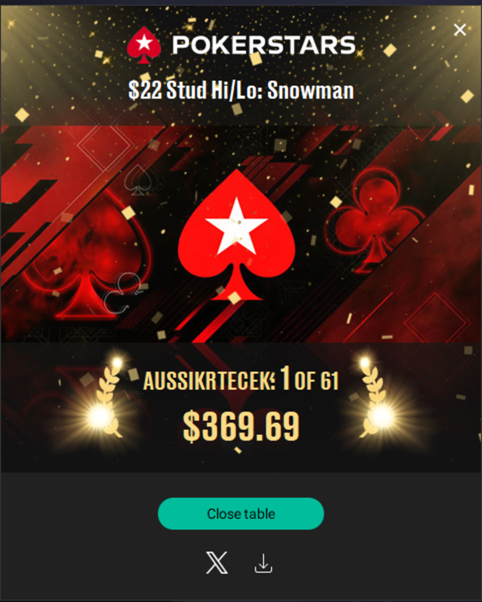
Weekly $22 Stud H/L on PokerStars – Champion!

After a year in which I have run pretty badly so far — including the SCOOP and the WSOP — it was a welcome surprise to win the Weekly $22 Stud H/L on PokerStars.

PokerStars victory screen for the Weekly $22 Stud Hi/Lo, finishing 1 of 61 for $369.69

Technically, we agreed to an ICM deal at the start of heads-up play, with me holding roughly a 3:2 chip lead.

And guess what? I got lucky a few times — because, as we all know, you usually don't win a poker tournament without running well in some key spots. For example, I completed a gutshot wheel draw on the river twice to win huge pots.

However, I also faced several tricky decisions, which gave me the idea for this new section: “What Would You Do?”

To get things started, I've already added two of the most interesting hands from yesterday's tournament. I'll continue updating the section whenever I encounter a hand that I think is worth discussing.

Live Blog

WSOP 2026

Following my journey to the World Series of Poker in Las Vegas.

WSOP Event #75 – $10,000 Stud Eight or Better Championship

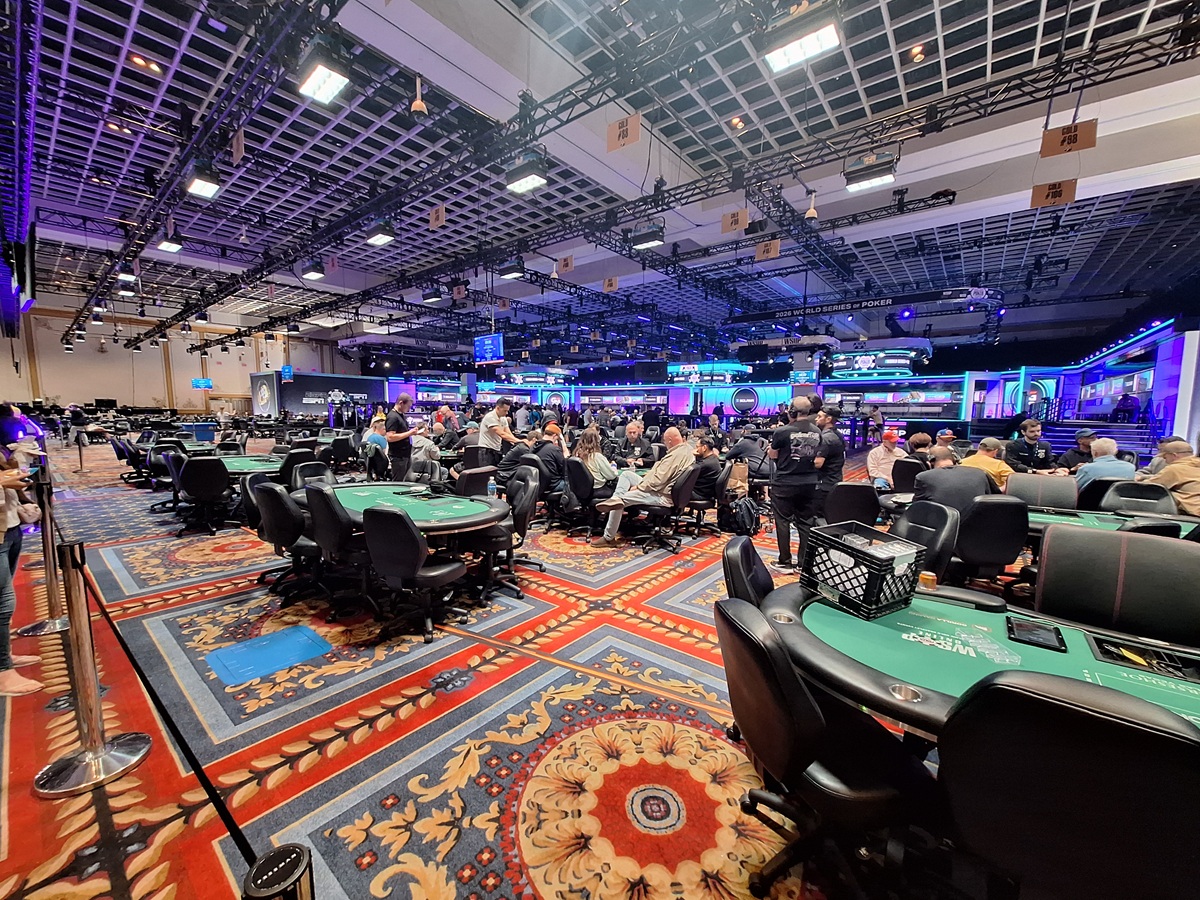
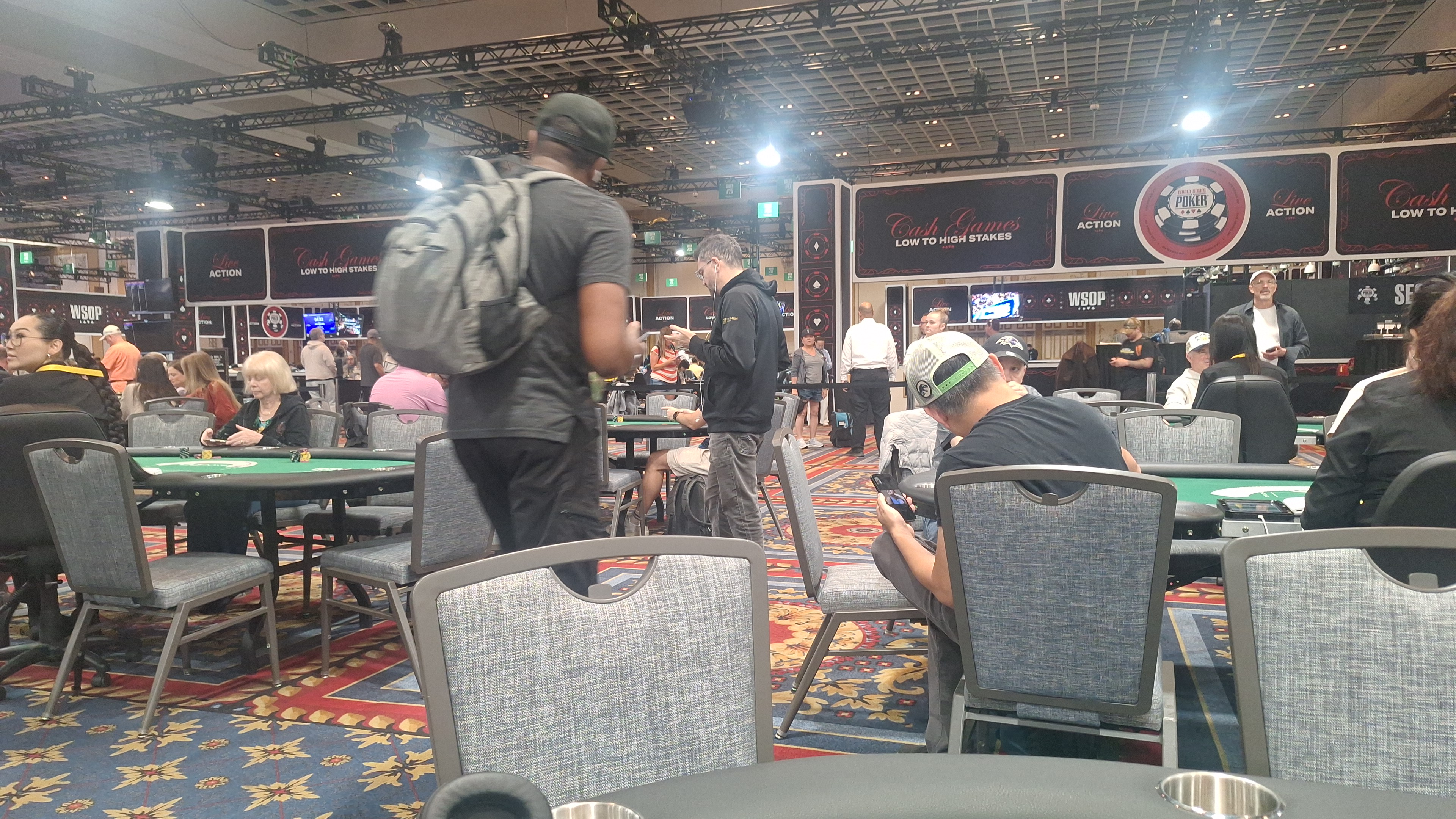
A wide view of the WSOP poker room during the $10,000 Stud H/L Championship
On the stone-cold bubble in the $10,000 Stud H/L

Well, I didn't play. After failing to cash in either tournament, I was too reluctant to put up the $10,000 buy-in. Instead, I spent Day 2 on the rail.

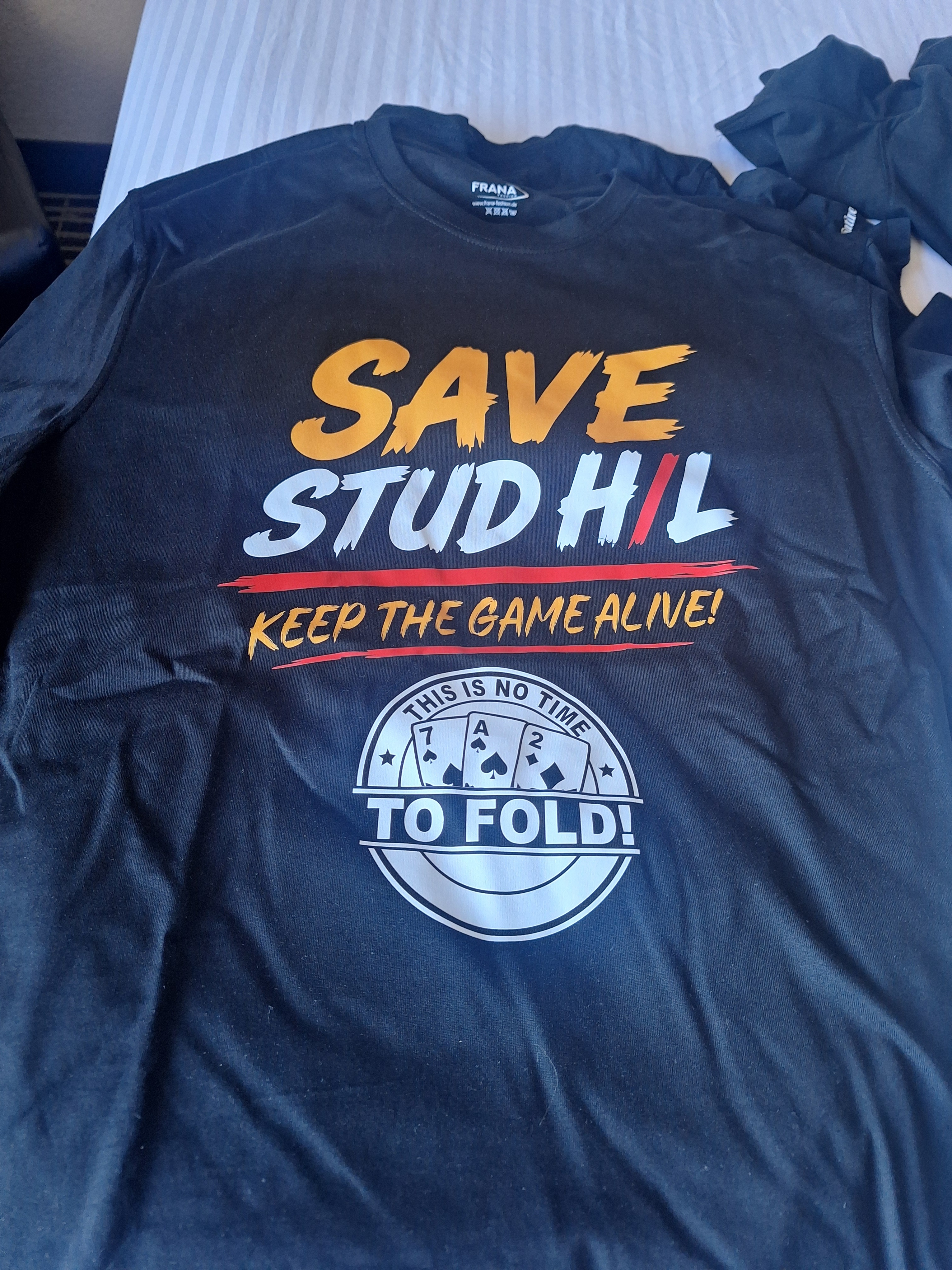
A friendly young guy came over and asked me about my T-shirt. We had a short chat, and he was curious about the A23 vs. A45 question on the back. Unfortunately, I watched him become the bubble boy a little later.

And me? I'm happy to be heading home now.

But I'll be back. Count on it.

The author standing in front of the giant illuminated WSOP letters, wearing the Save Stud H/L shirt
The WSOP and me

WSOP Event #74 – 8-Game Mix

I busted out of the tournament on Day 1 again, but it was an eventful day.

The People.

At some stage, Eli Elezra came to our table and I played for about 2 hours with him. Unfortunately, he ran quite well against me and eventually busted me in a NLHE hand (AQ < TT).

My Stud H/L shirt drew further attention. I got several real-life likes, and one player even approached me asking whether he could take a picture of my shirt because Stud H/L was also his favorite game.

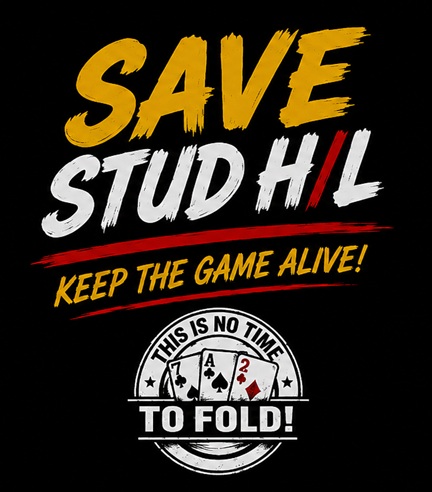
The Save Stud H/L t-shirt reading 'Keep the game alive! This is no time to fold!' with a 7-A-2 card badge

The other player who approached me was Daniel Negreanu, playing at a table next to me. When he spotted my shirt, he started singing: “Save Stud Hi Low, Save Stud Hi Low.” I immediately showed him the backside and asked him which hand was better (A23 or A45), to which he replied: “I don't give a ... – they're both good.” I like the pragmatic approach – but technically, A45 is a tad bit better.

I also briefly talked to Chris Vitch, thanking him for the Stud H/L content that he puts out on his YouTube channel DeathDonkey.

The Poker.

Meh. I was navigating, but the real heater never came. To my right was a gent who openly announced right away that he didn't know how to play all the variants and had come out because he just wanted to have some fun playing poker. Kudos to you, Sir (that was not a lie)!

Two seats to my right was Sascha Manns. You usually do not want him to your right – but the gent in between served as a good buffer since he called almost everything and ran insanely well – at least in the beginning.

I played a Razz hand against Manns when he was already short. He showed (??)27Q and bet into my (34)6KJ. Funnily enough, he had been talking about Razz before and said that it's usually expensive for him since he always assumes that his opponent paired up.

I think I cannot fold here. He had 2 BB behind, I can still make a really good runner-runner hand, and there is a good chance he indeed paired up the 2 (there were no other deuces out there). I called, and 6th came good for me. Now I had (34)6KJT against (??)27QK.

I bet. If he really paired up the 2, he cannot even call, but of course when he went all-in with his last bet, I knew he hadn't. Fortunately for me, he bricked the last card with his A572 draw.

Well, I won a few other hands as well but never had more than 40K from a 25K starting stack. Particularly in O8 and LTD, I did not hit anything.

Not going into whining mode here, though. Many hands could have gone better for me. There was one Stud H/L hand where I was a good favorite to scoop on 5th – when we were all-in – with AA346 against 99652, but my opponent managed to split.

Oops, now I am whining.

Well, having a larger stack would have made the AQ exit hand much harder to play. I raised to 2.2K from the button. After eyeballing my stack, Eli Elezra put me all-in from the big blind for about 17K more.

And my AQ never improved against his TT.

Elezra was a good sport and fun to play with.

WSOP Event #69 – $1,500 Stud Eights or Better

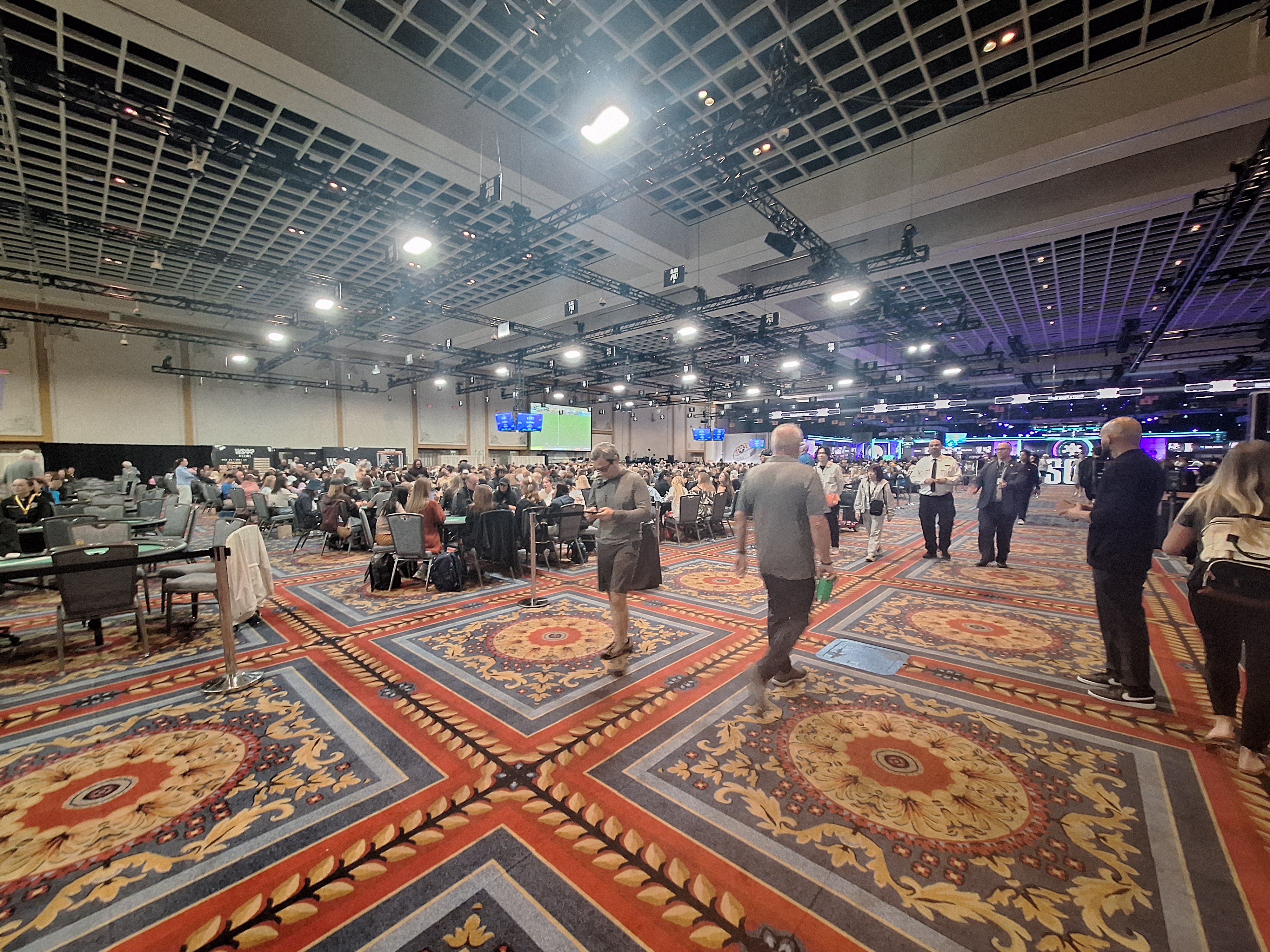
The packed WSOP tournament hall in Las Vegas
Inside the WSOP poker room with players at the tables

Unfortunately, my WSOP debut didn't go as planned.

I was on a heater... but only during the early stages of the tournament. And that's probably the worst time to run hot if the cards abandon you later on.

By the end of Level 5, my stack had grown to almost four times the starting stack.

Then my downfall began with a hand in which an opponent showing 3-4-8 and a high card found a wheel and a flush with the last card. I value-bet my pair of sevens and my 7-low on the river and ended up losing two big bets. Apart from winning a nice three-way pot where my wheel and another player's 4-8 straight split the bets of an opponent stubbornly chasing a full house against the capped betting, my stack more or less went straight from 96,000 down to 7,000.

I then survived three all-ins:

  • (3♠8♠J♠) vs. (T5)5– I made trip jacks and scooped.
  • (QT)T– I won the high half with queens up in a three-way pot.
  • (A4)8– I made a low and chopped with kings in another three-way pot after missing my gutshot wheel draw on the river.

Then came the final hand, and it was a brutal one.

I had recovered to 33,000 chips, which at that point was worth about four big bets. On 5th Street I held A-2-3-4-7 against one opponent showing A-8 and a high card, clearly playing for high, while the other opponent was showing A-7-5. I drove the action on 5th Street and was effectively all-in after that.

It turned out my opponent held (6-6) A-7-5 and needed two perfect cards to beat my smooth 7-low – with me already blocking a deuce, trey and four. Well... he got there, while I failed to catch either a five or a six.

That was the end of my tournament. There wasn't much I could have done differently, but it certainly wasn't the way I had hoped my first WSOP event would end.

Here we go!

The journey to Las Vegas has officially begun. First stop: Amsterdam, then on to Las Vegas. Tomorrow, the action starts right away with WSOP Event #69 – the $1,500 Seven Card Stud Hi-Lo 8 or Better Championship.

Wish me luck!

The author at the airport wearing a Save Stud H/L t-shirt, on the way to the WSOP in Las Vegas

That was SCOOP 2026

My journey through PokerStars' Spring Championship of Online Poker.

I officially had enough

Tournament poker and variance... thanks for nothing! The last two tournaments of SCOOP 2026 were once again perfect snapshots of how miserably this whole series has gone for me.

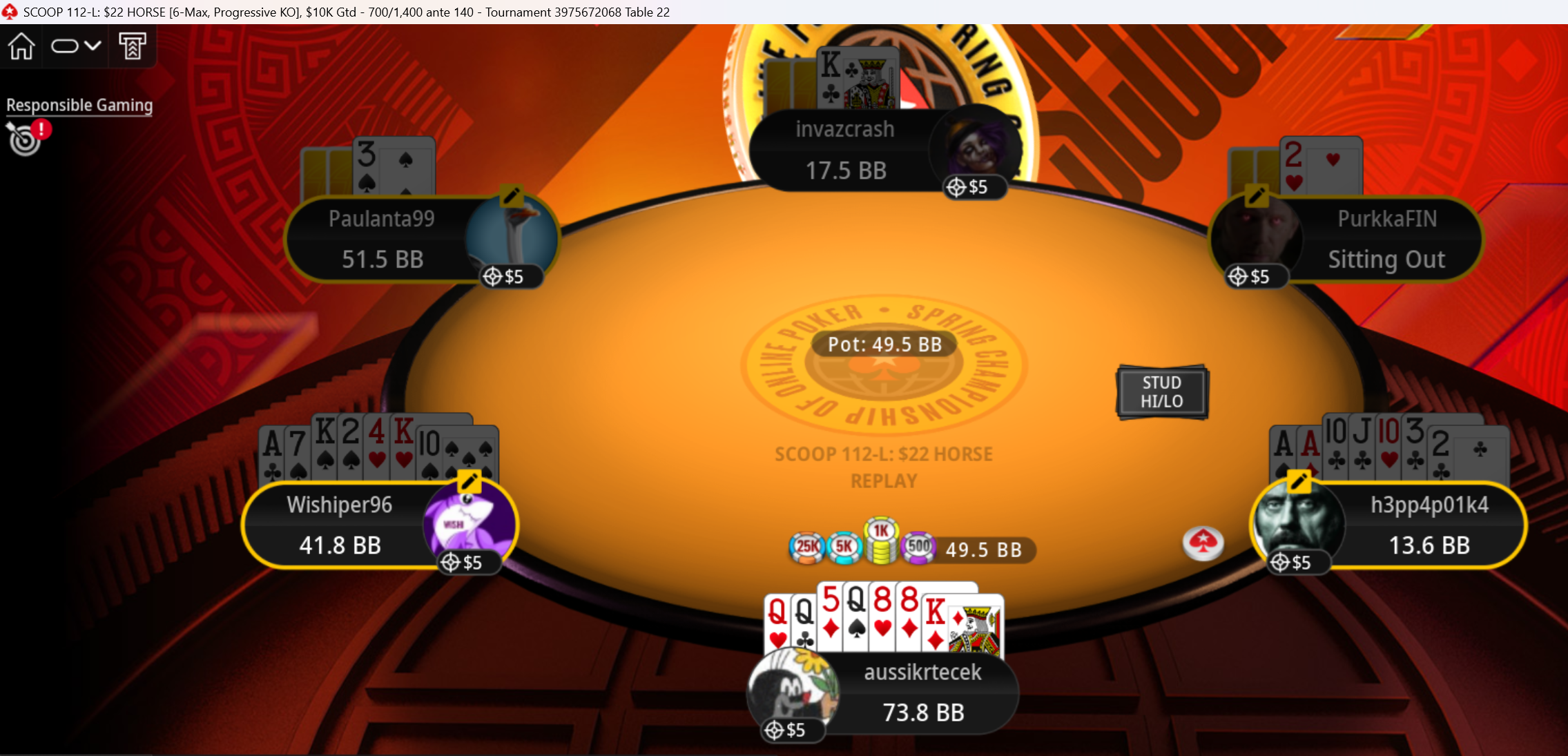
In the $22 H.O.R.S.E., I won a huge pot early on. With concealed queens in Stud H/L and two opponents I read absolutely correctly (to be honest, I had Wishiper96 on a flush draw, because who calls a 2-bet on 3rd street with (A7)K non-suited?). But I had h3pp's aces clearly on my radar, because no one ever 3-bets preflop after I re-raised with the open 5 and the open K called that 2-bet.

SCOOP 112-L: $22 HORSE Stud H/L - aussikrtecek with concealed trip Queens vs Wishiper96 and h3pp4p01k4 with Aces

In that hand, I absolutely maximized my profit (not re-raising before 5th), and I'm running so bad that after I bet on 7th, I was already expecting h3pp to now re-raise, because he must have caught another ace on the last card to make aces full.

Anyway, after that I was the big stack and for a long time at least the second biggest stack at my table. During that time, several bounties were awarded — but of course, every single one completely passed me by.

After that, PokerStars simply gave me absolutely nothing for 1.5 hours, as you can see from my chip graph. And once again, the shackles of tightness clicked in, because I was heading toward the bubble with a short stack. It was just disgusting.

Chip graph showing aussikrtecek (red) staying flat while average stack (blue) steadily increases over 3h 47min

So disgusting that I didn't even register for the $22 Stud H/L Weekly — my favorite tournament — because I simply had zero desire to play poker anymore.

Twice, PokerStars teased me a bit and let me climb up in chips slightly, only to then stick out its tongue again: "Ha, you thought so — not happening!"

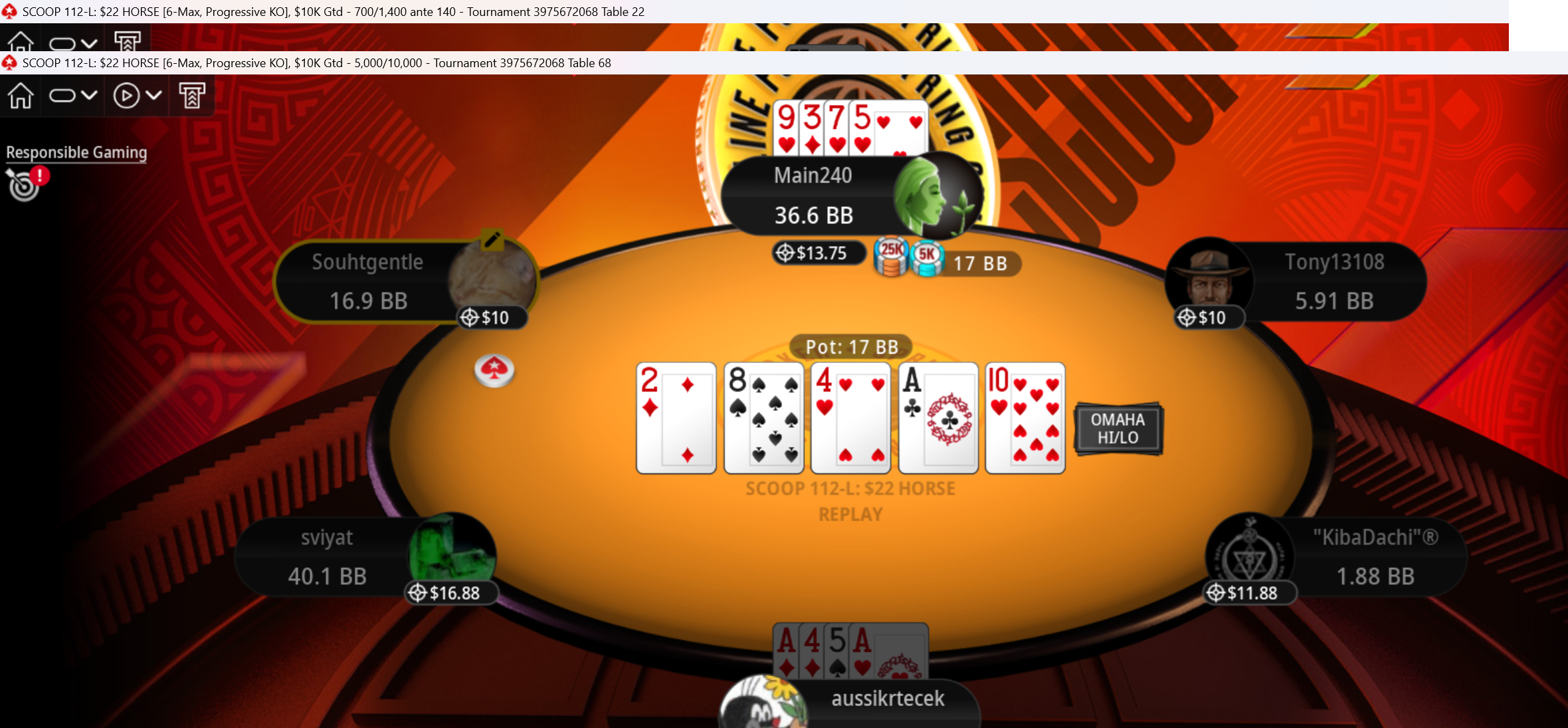
Here's a "completely standard" Omaha H/L hand where I only lost the minimum — LOL, once again perfectly played (and my opponent questionable) and the chips going to my opponent.

SCOOP 112-L: $22 HORSE Omaha H/L - aussikrtecek with A-4-5-A on 2-8-4-A-10 board vs Main240 with 9-3-7-5

My exit also came in Omaha H/L. I re-raised with KK45 double-suited against a stack that was even shorter than mine. A hand where it is actually not impossible to hit something. Two big stacks called the 3-bet with any four cards because of the bounties.

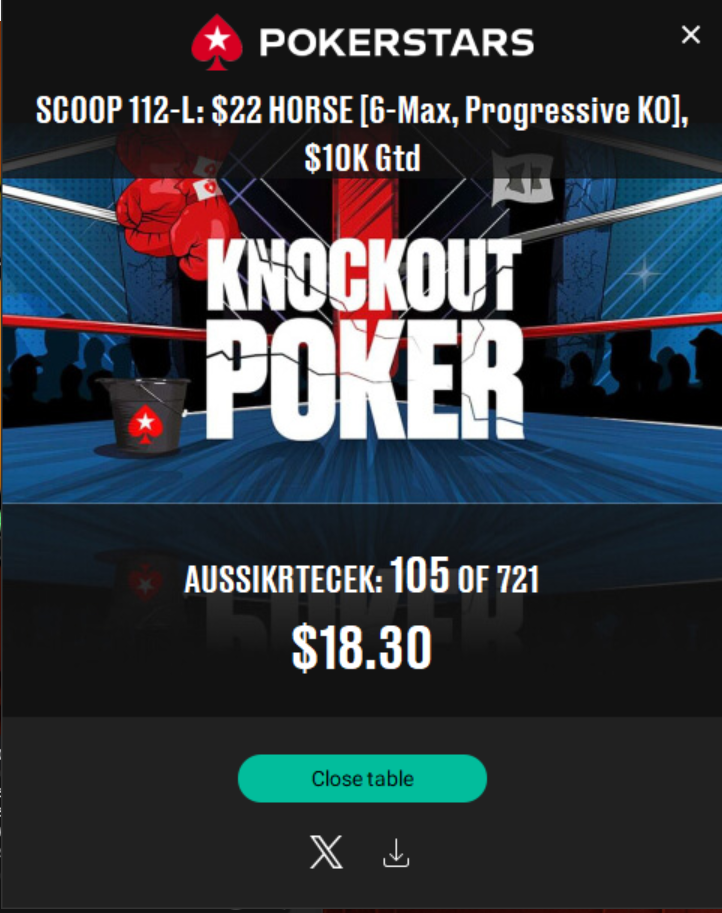
Sure, you could hit something (I think I made a pair of fours LOL), but it wasn't enough. So once again: min-cash (in the bounty, less than the buy-in) and no bounties.

PokerStars popup showing AUSSIKRTECEK: 105 OF 721, $18.30 in SCOOP 112-L: $22 HORSE Progressive KO

Then there's the $5.50 NLO8 KO Bounty. And that tournament is absolutely representative of my SCOOP.

Waited patiently for something... then finally got a nice hand: A334 double-suited. Hit nothing... lost 25% of my stack.

Then waited again. Next hand I played, I went all-in preflop. It's a coin flip (this time I even only had 47%), of course lost. Tournament over. F... you Poker!

Buy-ins today:$27.50
Wins today:$18.30
Net loss today:$9.20
Total buy-ins:$1,587.00
Total winnings:$337.80
Net balance:-$1,249.20

Poker is about correct decisions

Admittedly, things are running pretty damn awful for me right now. But what really matters is making the right decisions, especially during a downswing. The real danger isn't losing chips — it's losing confidence and starting to fold too much.

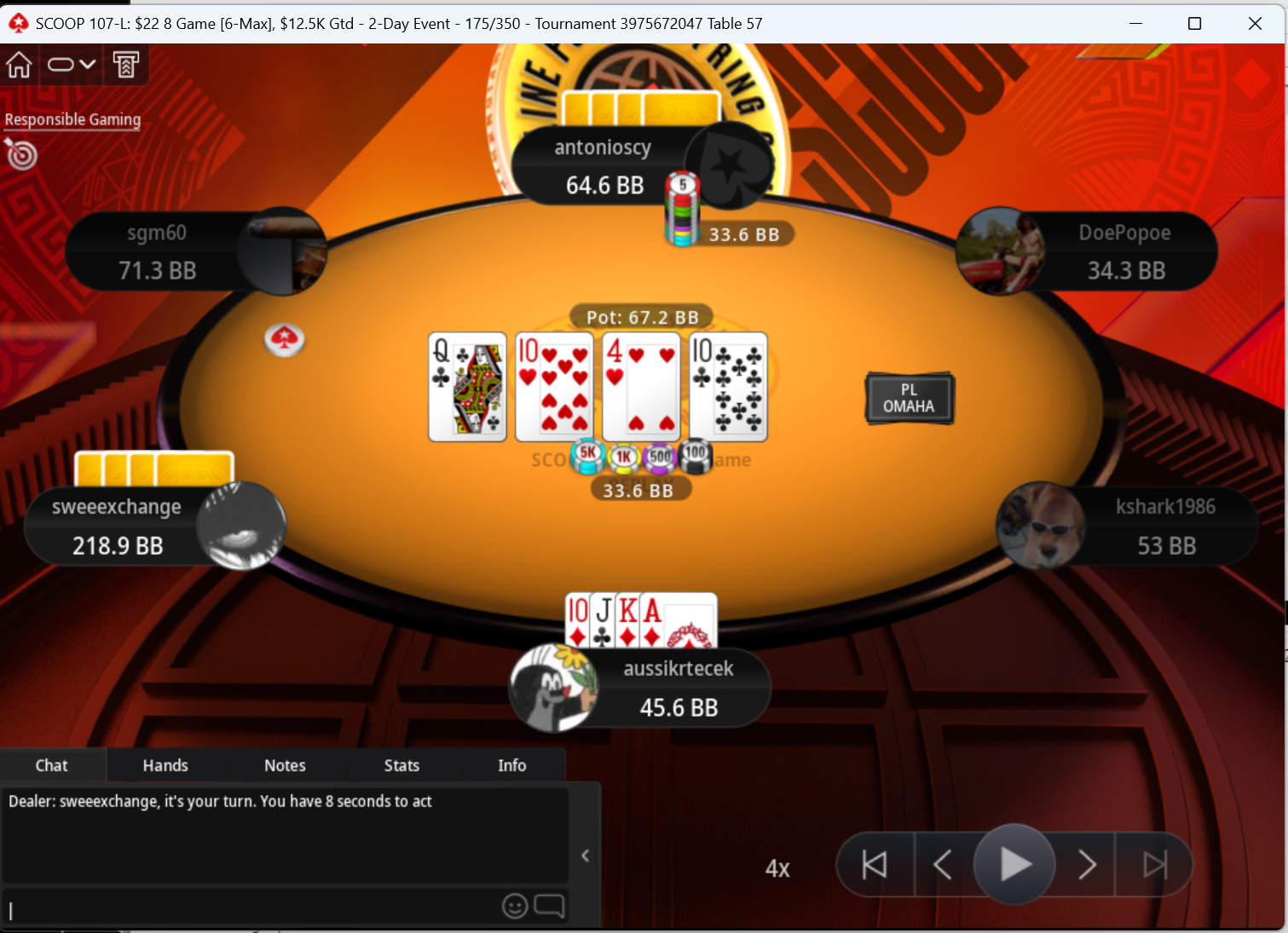
That's why I'm actually proud of my bustout hand today in the $22 8-Game. Let me walk you through my thought process — and why I'm convinced that jamming the turn was absolutely the correct play.

Here is the decision point: We are playing PLO. I raise 3BB with AKJT one-suited and get called by two players. The flop brings me second pair and a (tainted) nut wrap straight draw. This is no time to check, I bet half pot and get called by the player behind me and the small blind. Now another T arrives at the turn, giving me Trip tens and now - all of a sudden - the small blind donks pot.

SCOOP 107-L: $22 8-Game PLO round - aussikrtecek with 10-J-K-A one-suited facing pot-sized donk bet from antonioscy on Q-10-4-10 board

I do not have a boat. So yes — on paper, this could be a fold. This was also my first urge. Then I thought again and honestly, antonioscy's bet just screams fishy.

This doesn't look like a confident value line at all. It looks much more like: "Hey, the board paired — maybe I can just take it down here." Possibly backed up by something like a double-suited flush draw, trying to apply pressure.

Now here's the important part: I've played with antonioscy before. And I know he's capable of exactly this kind of move.

So initially, I was leaning toward a fold… …but then I paused and thought: "Wait a second… what is this really representing?" And the more I thought about it, the less it made sense as a strong hand. And even if he is boated up, very likely I still have outs hitting an Ace or King on the river. So I pulled the trigger.

Now enters the third player: sweeexchange. And I'll be honest — I didn't even fully account for him in that moment. Which, in hindsight, makes this hand even more absurd.

Because this guy was playing and calling everything. Basically treating the table like an all-you-can-eat buffet. He can basically call the flop with anything and I did not see him as a threat.

So for him, this must have felt like: "Early Christmas… and Easter… and my birthday… all at once." He's sitting there with the nuts… and the two players in front of him just decide to pile money into the pot for him. I mean… thank you for your service, gentlemen.

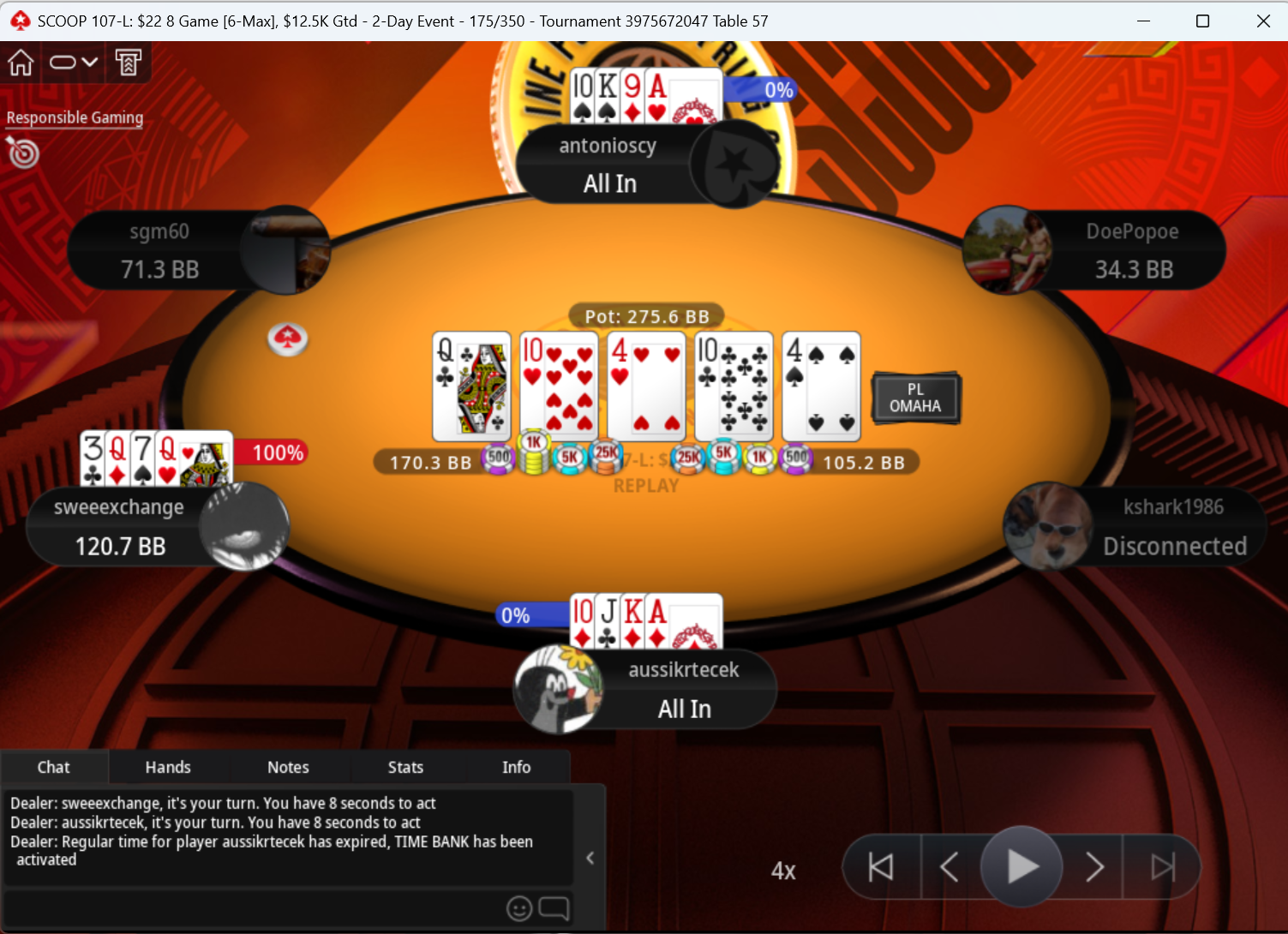
Of course, I ended up busting. Since antonioscy had the case T, I was even drawing dead. Naturally.

Same hand outcome - sweeexchange reveals Q-Q-7-3 for Queens full (100% nuts), antonioscy has 10-K-9-A (case ten), aussikrtecek all-in drawing dead at 0%

But here's the thing: I made the correct read. I trusted my experience against a specific opponent. I didn't let the downswing scare me into a weak fold.

And that's exactly the kind of decision-making that matters.

So yeah — results: brutal. But the play? On point.

Buy-ins today:$22
Losses today:$22
Total buy-ins:$1,559.50
Total winnings:$319.50
Net balance:-$1,240.00

And the bingo of Poker is ...

Did I say that PLO8 is the bingo of Poker? Well, that was close, but wrong! The bingo of Poker is obviously Badugi in its fixed-limit betting version. You want variance pure? Here you get it. It's not very helpful though if you're on a downswing anyway.

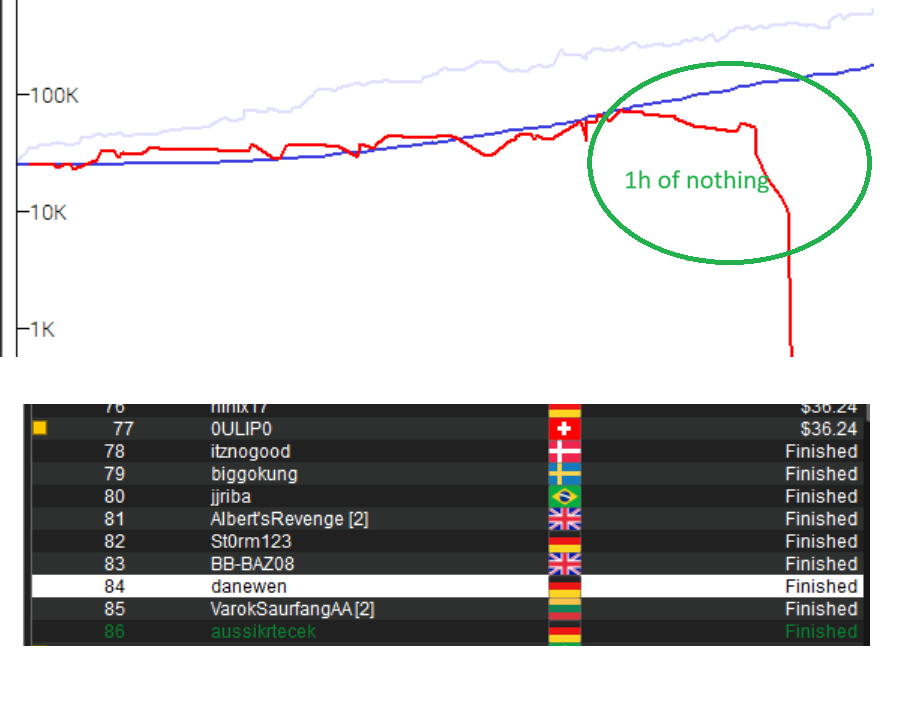
Well, together with Daniel we grinded over 3h and then we managed to bust both before the bubble. It was a good cruise until then as my chip graph shows. But then I was card dead for my last hour of play. Two times I got involved but had to fold early, bleeding chips.

The end arrived for me when I pushed my last 1.5BB with A46 from the Cutoff. Only the big blind called. To my surprise he stood pat from the first draw. That meant ... I had to draw a Club ... I had three attempts and before the first attempt it was basically a coin-flip.

Well, it is no surprise that I didn't catch the saving Clubs and my opponent's pat Q-Badugi busted me out of the tournament. Poker stays brutal to me.

Badugi tournament composite - chip graph showing 1h of card-dead play before busting, and standings showing aussikrtecek at 86th and danewen at 84th both finishing before the money bubble
Buy-ins today:$22
Losses today:$22
Total buy-ins:$1,537.50
Total winnings:$319.50
Net balance:-$1,218.00

Mincash Tuesday

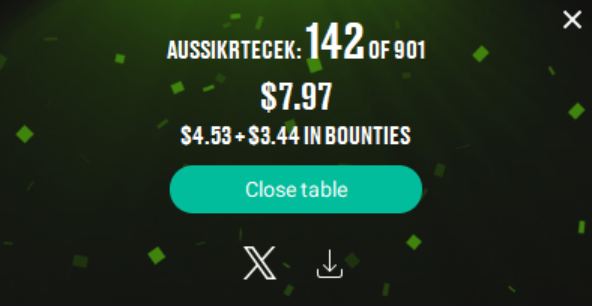
The real good run still didn't come. I planned to play the $55 2-7 Single-Draw but when I saw that it is a Knockout tourney I played only the $5.50. Went out well but then I again lost three medium pots in very close calls and then I was back to nursing a short-stack and the chains of tightness clicked again. After the min cash was won I lost a coin flip - a slight plus in this tourney as I also won two bounties.

PokerStars popup showing AUSSIKRTECEK: 142 OF 901, $7.97 ($4.53 + $3.44 IN BOUNTIES) in $5.50 2-7 Single Draw

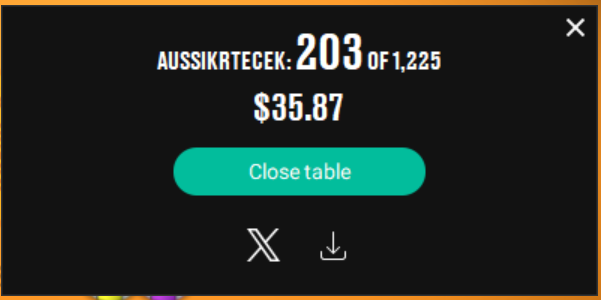
Then there was the "Bingo of Poker" tournament: The $22 PLO H/L.

I grinded my first bullet, but it went only in one direction - the usual one.

I was six times All-In, never as big underdog. I was slightly behind two times, slightly ahead twice and well ahead twice. The outcome was: 3 splits, 2x I was quartered, 1x I lost everything.

I late regged with the second bullet since it was very likely that I could cruise to the mincash because many players were already out. I even survived three All-In situations here, once I even doubled up!!! Amazing feeling.

After the bubble bursted ... guess what ... I lost the next coin-flip.

PokerStars popup showing AUSSIKRTECEK: 203 OF 1,225, $35.87 in $22 PLO H/L
Buy-ins today:$49.50
Wins today:$43.84
Losses today:$5.66
Total buy-ins:$1,515.50
Total winnings:$319.50
Net balance:-$1,196.00

A winning hand

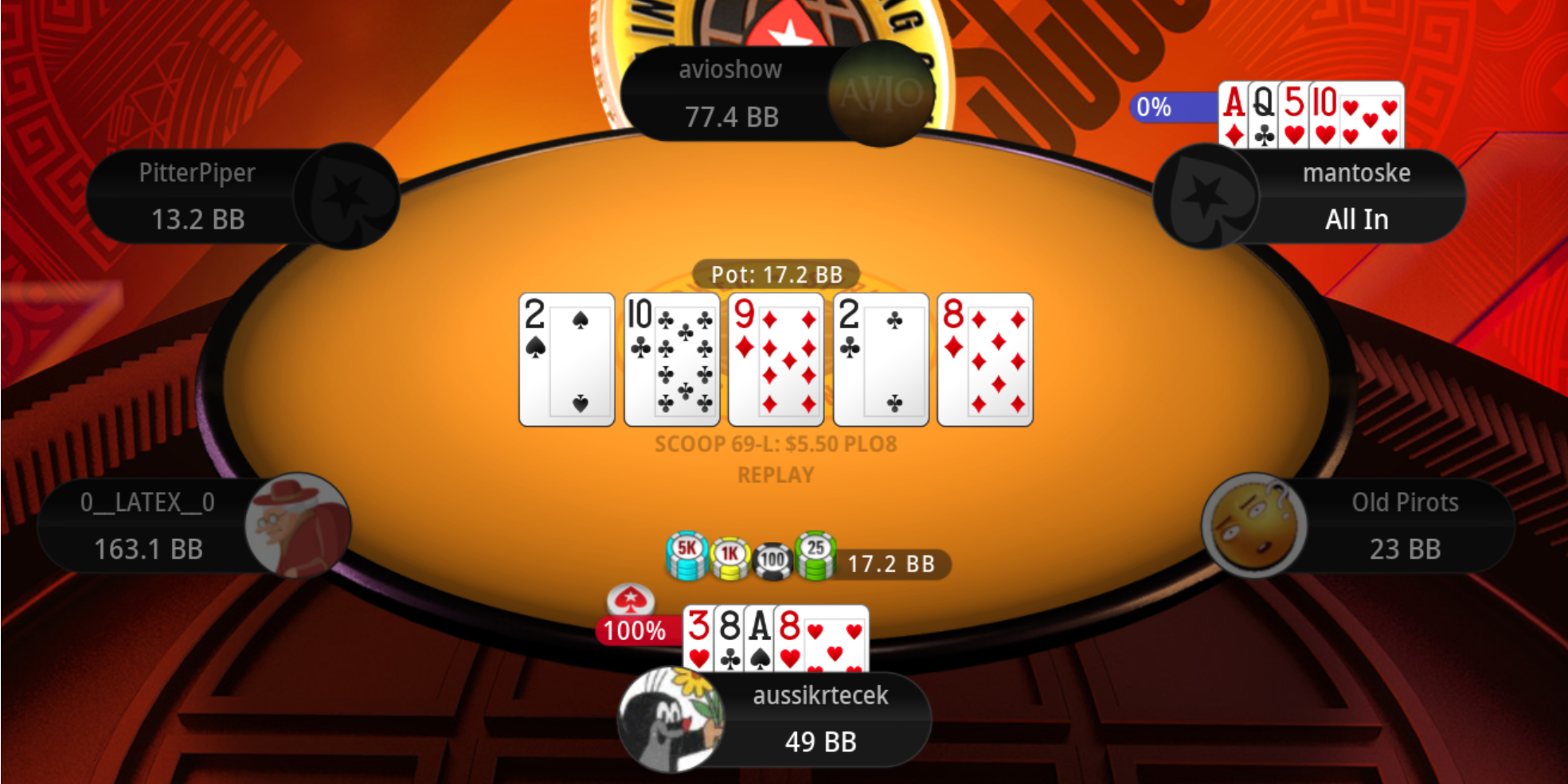
To not exclusively post hands that I lost, here is a hand that I won in the $5.50 PLO8 with the last card:

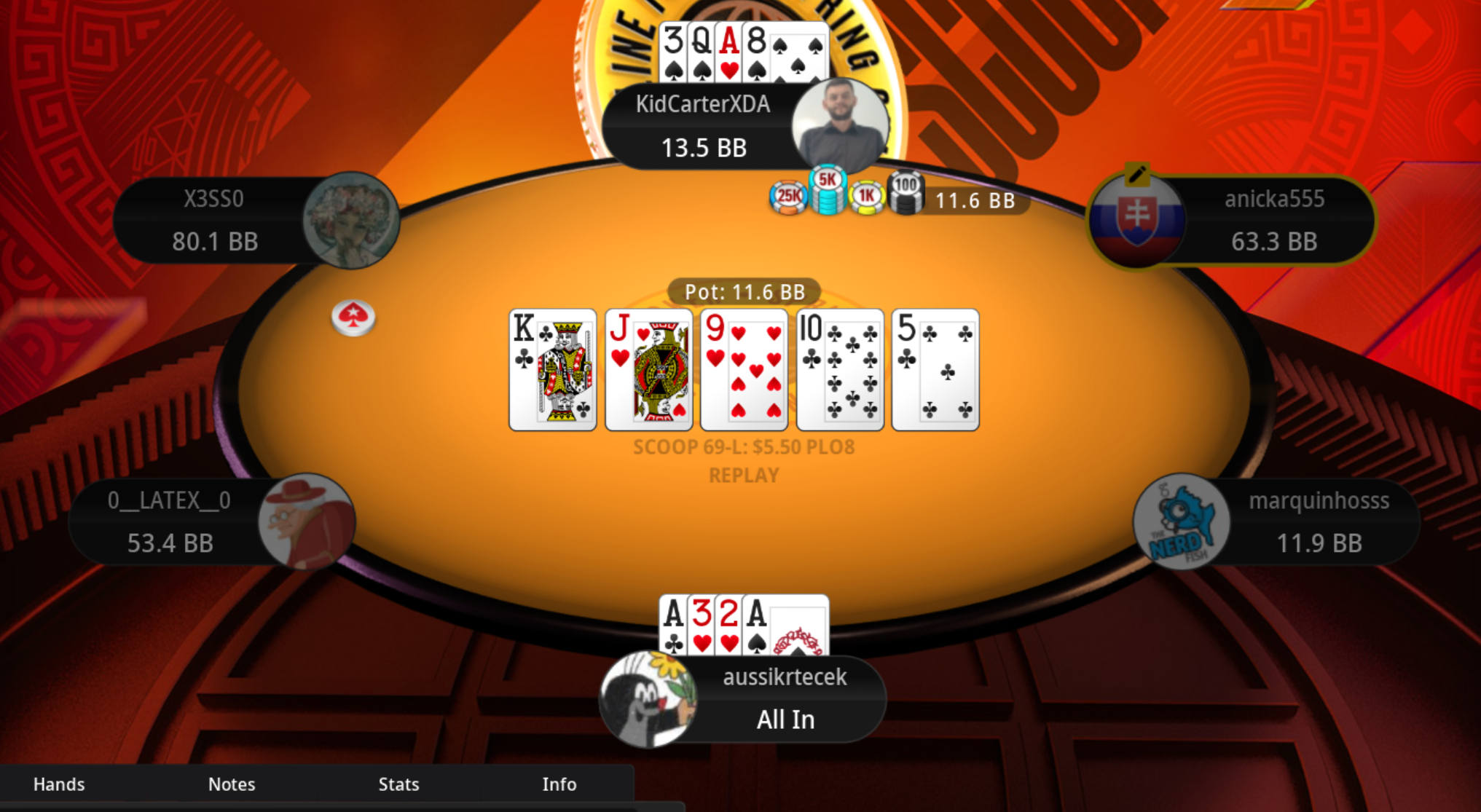
SCOOP 69-L: $5.50 PLO8 - aussikrtecek with 3-8-A-8 hits full house (eights full of twos) on river at 100% equity vs mantoske's A-Q-5-10

That was enough to cruise to a min-cash on my second bullet. However, the heater that you need to go deep in the tournament also never came here. I was zig-zagging between 0.5x and 2.5x starting stack, never more, never less. In the end I tried it with the best PLO8 starting hand (ok, it was not double suited) and this was the outcome:

SCOOP 69-L: $5.50 PLO8 - aussikrtecek all-in with A-3-2-A (premium PLO8 hand) on K-J-9-10-5 board that completely missed
Buy-ins today:$11
Wins today:$9.92
Losses today:$1.08
Total buy-ins:$1,466
Total winnings:$275.66
Net balance:-$1,190.34

When you play a tournament there are a few crucial hands that you have to win if you want to go deep

And if you're not winning them, you go out in flames. I played one crucial hand today:

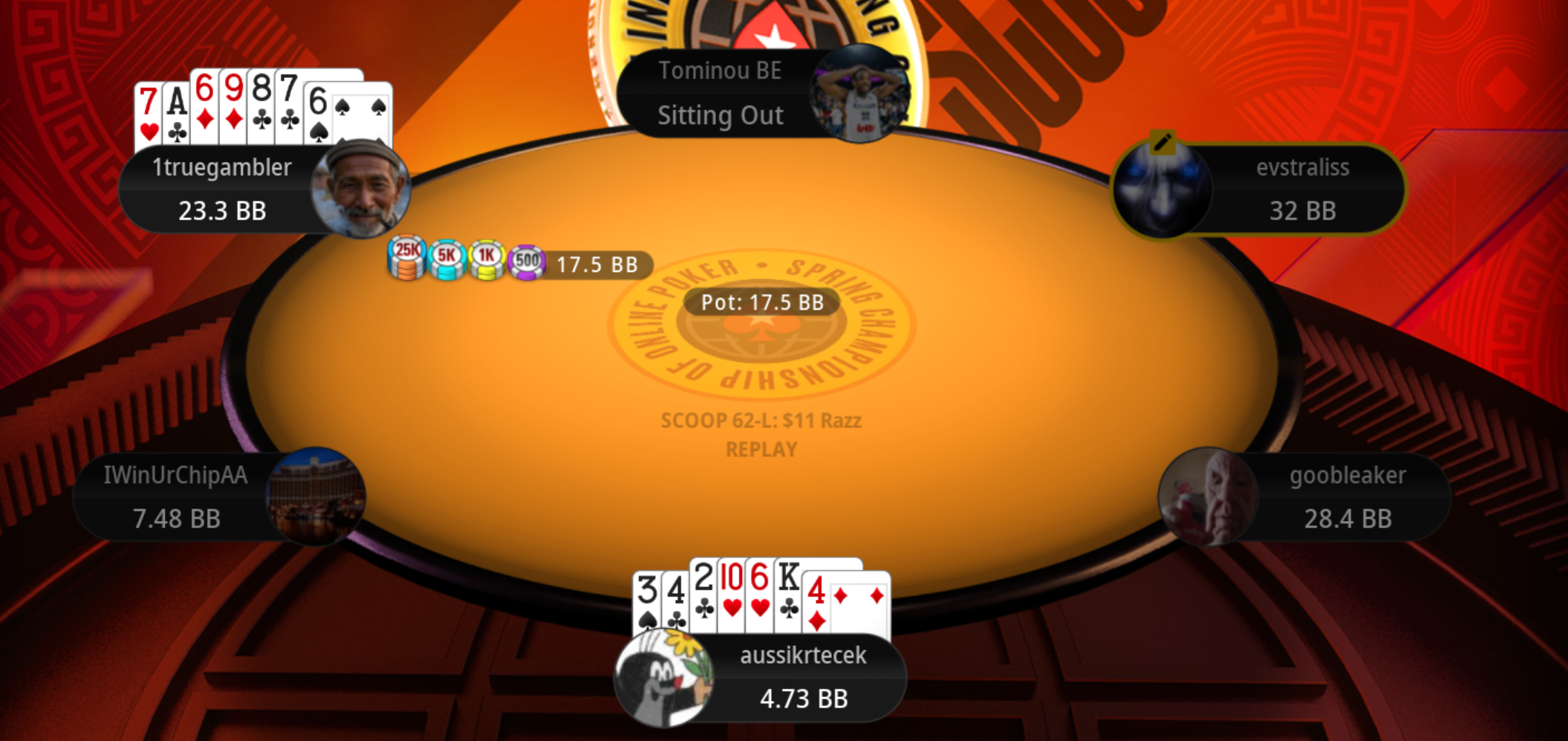
SCOOP 62-L: $11 Razz - aussikrtecek all-in with 3-4-2-10-6-K-4 vs 1truegambler's 7-A-6-9-8-7-6

This hand would have put me in contention but they just do not come along.

Buy-ins today:$11
Losses today:$11
Total buy-ins:$1,455
Total winnings:$265.74
Net balance:-$1,189.26

Rolled Up – Let's Get Going!

The heart of every Stud player beats faster when he sees this:

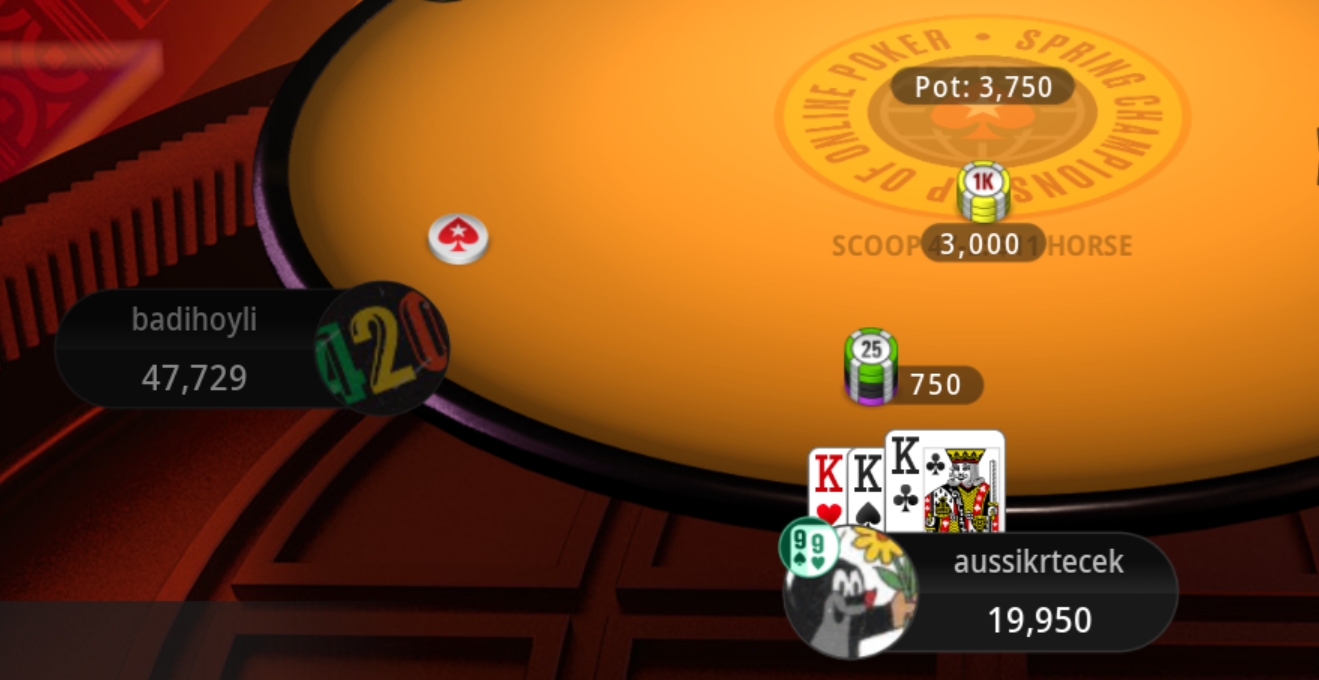
SCOOP HORSE tournament - aussikrtecek dealt KKK rolled up Kings on 3rd street

You think you're dreaming … until reality catches up with you:

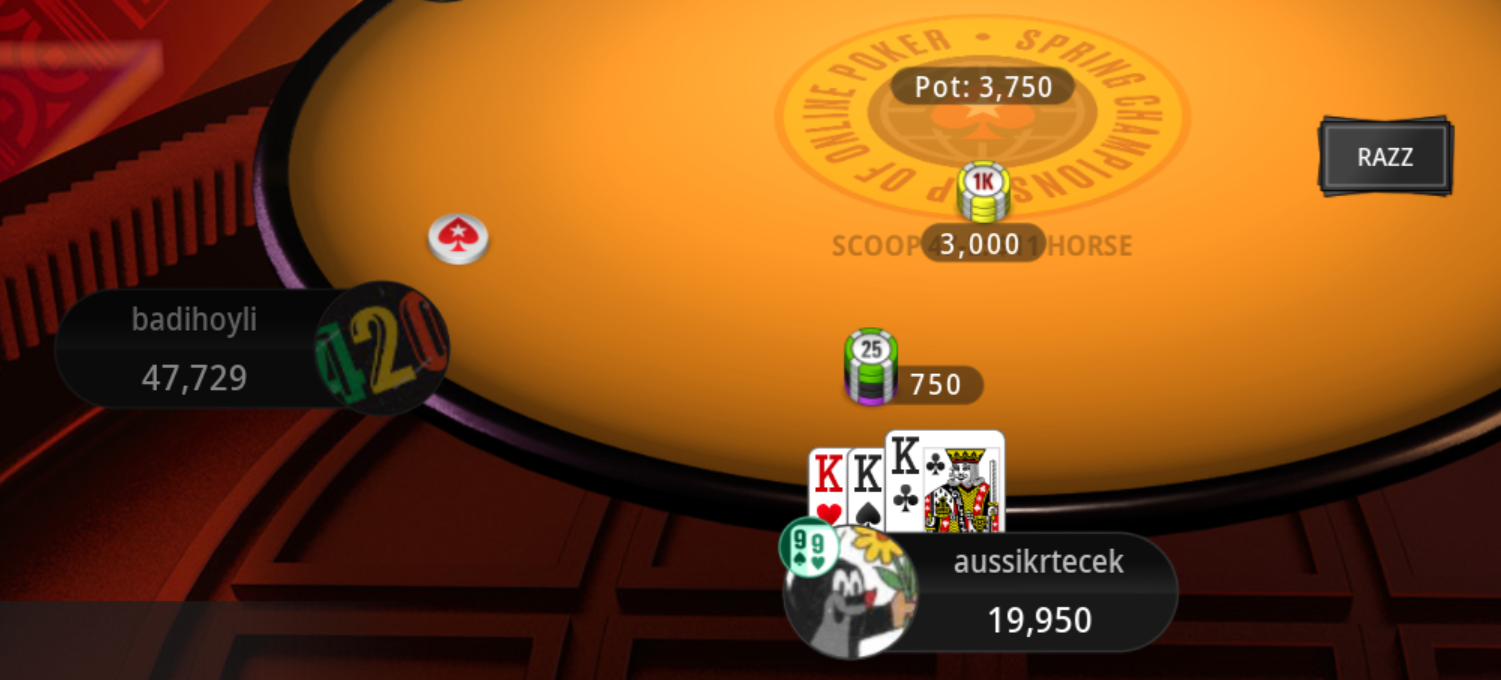
Same hand showing RAZZ indicator - rolled up Kings is the worst possible hand in Razz

And Razz is a funny game after all.

You start with (A-2)5 and get called by an 8. You're ready for a feast. Then you catch a King, he catches a 9, and bets into you.

Of course you cannot fold.

Then you pair your Ace on 5th street. Your opponent improves again and now you actually have to fold.

If that happens in two consecutive hands, and you're already late in the tournament, suddenly half your stack is gone.

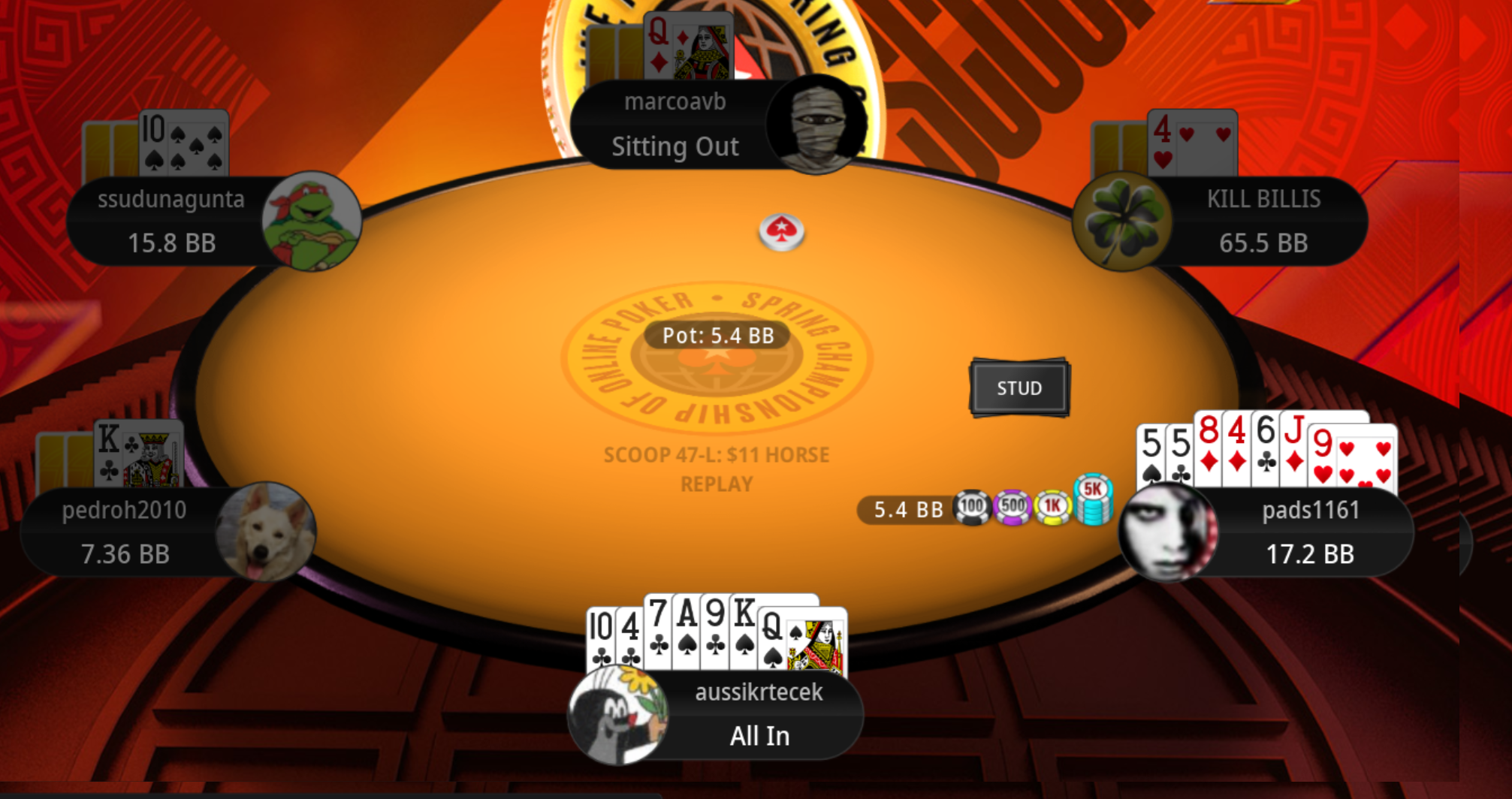
Then Stud comes around. You have to gamble a bit.

But the RNG once again says: Go home.

SCOOP 47-L: $11 HORSE Stud round - aussikrtecek all-in with straight draw vs pads1161 with pair of fives

I counted my outs before the last card. Yes, it was more than half of the remaining deck.

And yes — of course — I managed to brick completely.

Buy-ins today:$11
Losses today:$11
Total buy-ins:$1,444
Total winnings:$265.74
Net balance:-$1,178.26

Tournament poker is brutal

Poker can be absolutely brutal. You play two hours of flawless poker and the RNG just keeps sticking its tongue out at you.

Stud: Aces up... nope. Doesn't win, because your opponent spikes his gutshot straight on the river with three outs.

You start a hand of Limit Triple Draw with a premium one-card draw? Forget it. I pair three times and lose to an opponent who decides to stand pat with a Queen (!) before the last draw. And he's not even a favorite there, even if I draw again.

And then, as the opening and closing punchline of the tournament: I sit down at the table and who is sitting directly to my right? The player who has been running hotter than the sun for the past week and who has won three big MTTs in six days with his unconventional loose style ($22 Stud H/L, $109 Stud H/L, $215 8-Game).

So the first bad beat happens before the cards are even dealt.

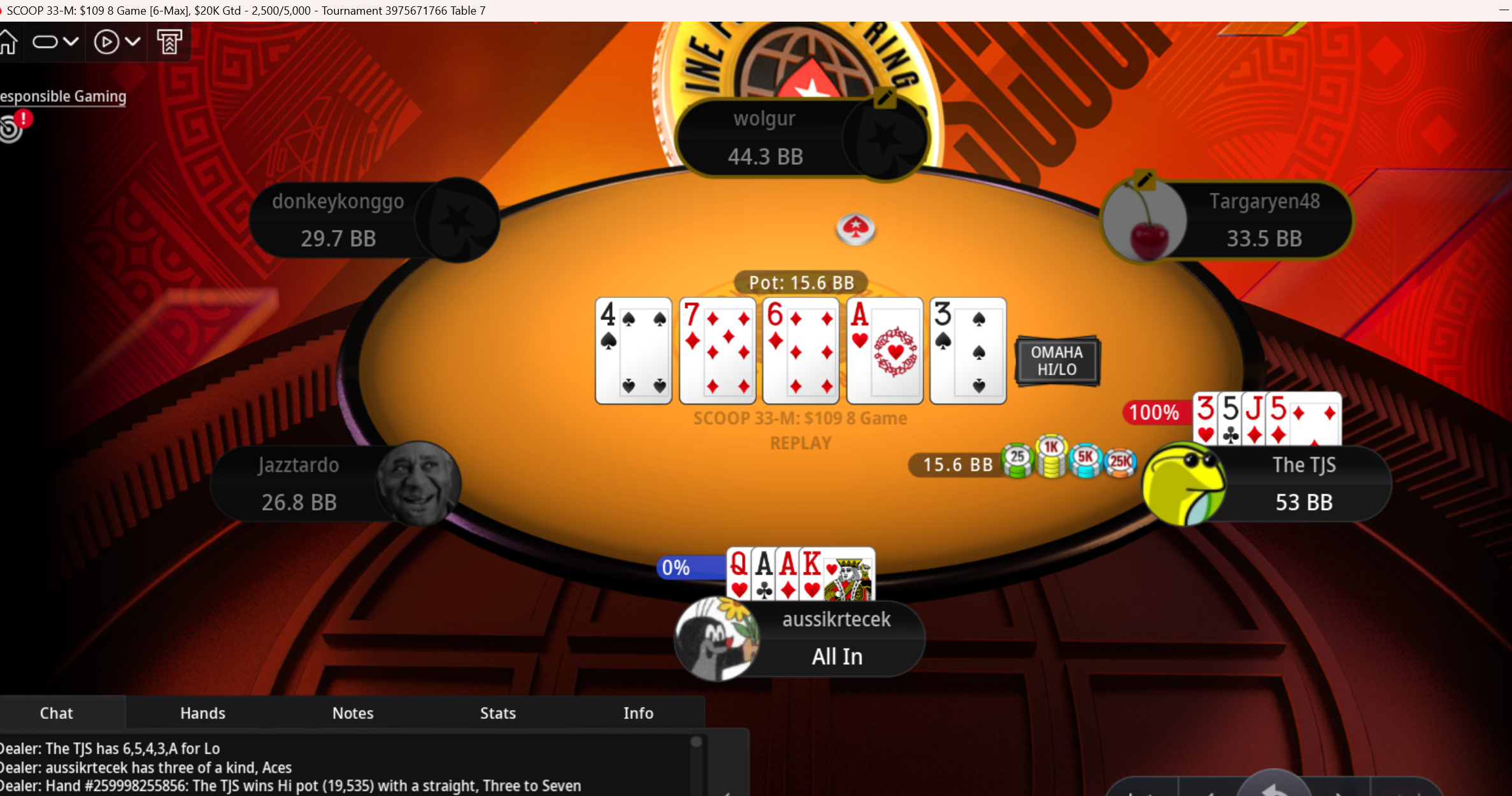
And of course, who ends up knocking you out of the tournament? After losing almost my entire stack in three consecutive Limit Triple Draw hands without making a mistake, I briefly double up in Fixed Limit Hold'em with a set before the final punchline arrives in this Omaha Hi/Lo hand: AKKQ one-suited.

For a short stack, that's a perfectly fine hand. The lack of low potential is compensated by the shallow stack (the implied odds against you aren't that bad). Of course, it would help if the flop didn't come low - preferably not three low cards. Flop: 4-6-7.

With the two loosest players at the table (Wolgur and The TJS), my hand is basically dead already. But there's one more twist to come: for probably the only time all tournament, a flop involving these two players actually gets checked through.

And of course the turn brings one of the only two cards in the deck that can bust me: a third Ace. Now there's no way I'm getting away from the hand anymore. The pot commitment is too big, there's a good chance my high hand is still best, and even if it isn't, I could still fill up to a full house on the river.

But of course The TJS already has a straight with 3-5-5-J. The river bricks completely and I'm out.

SCOOP 33-M $109 8-Game Omaha Hi/Lo - aussikrtecek all-in with QAKK at 0% vs The TJS with 3-5-5-J who has the nut straight

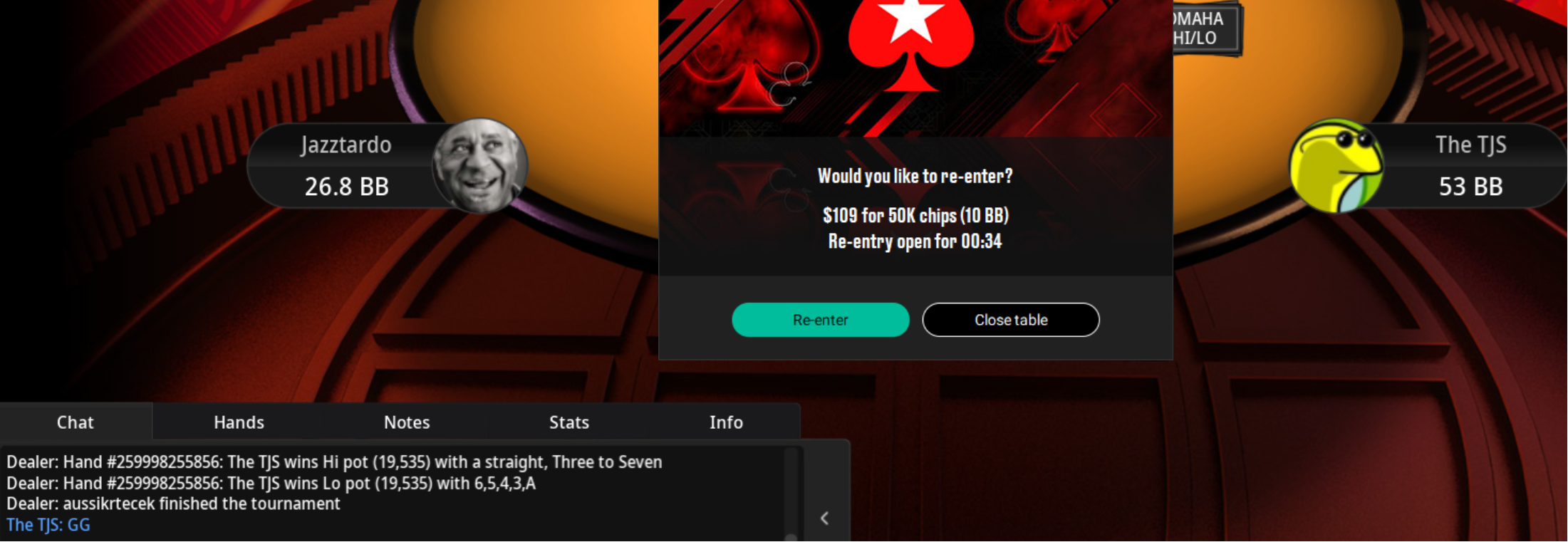
Even the player running hotter than the sun seems to notice how I've been running, and he sends me on my way with a slightly sympathetic "GG."

Re-entry popup with The TJS typing 'GG' in chat after busting aussikrtecek

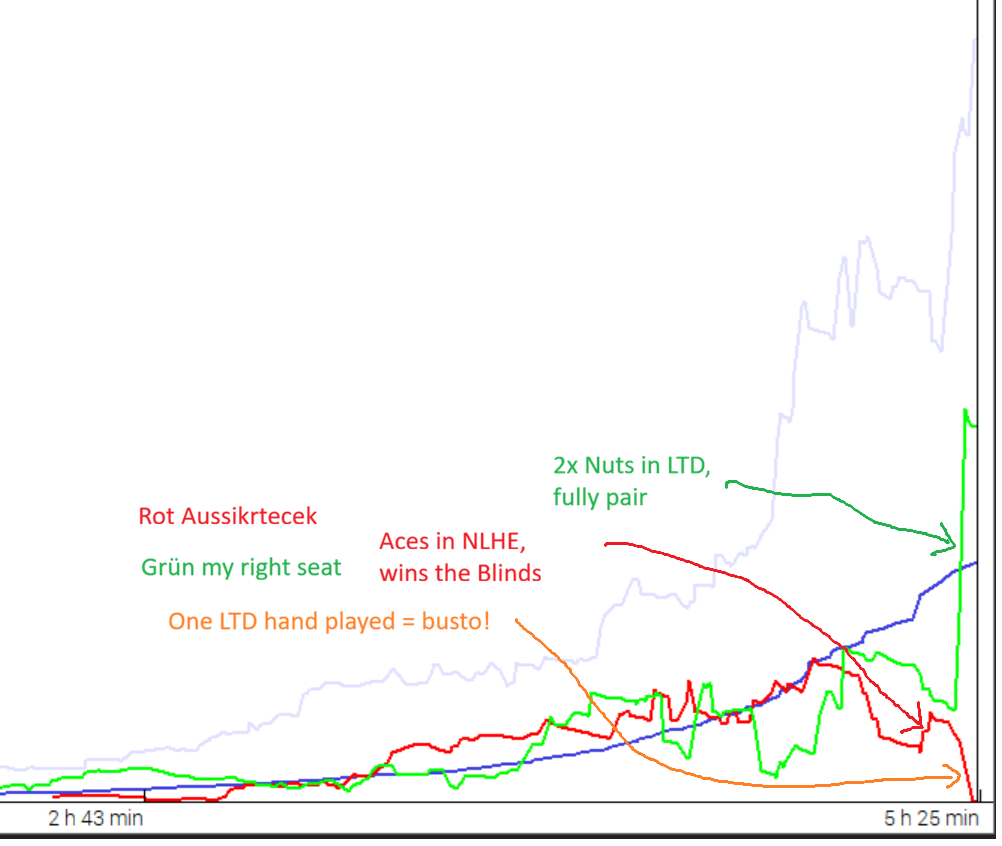
After a short break, I late regged the $11 8-Game and what a surprise: I had a good run at the start! Getting some hands, played good spots. But then the drought set in again: card dead. Then Aces in NLHE, min-raise, everybody folds. The next hand that I played was a LTD, blinds were already so big that it was clear that I will be committed in the hand and I lost it.

While the player to the right of me got twice the Nuts in LTD, fully paid out - all of a sudden he was 4th in the tournament. The variance is brutal: you outlast almost 98% of the field and still you get a bit short of 5x your buy-in back because the real money is only made on the final table. That's what you call top-heavy and that is where I unfortunately did not get today either.

Annotated chip graph showing brutal variance - aussikrtecek in red declining while player to the right in green gets 2x nuts in LTD
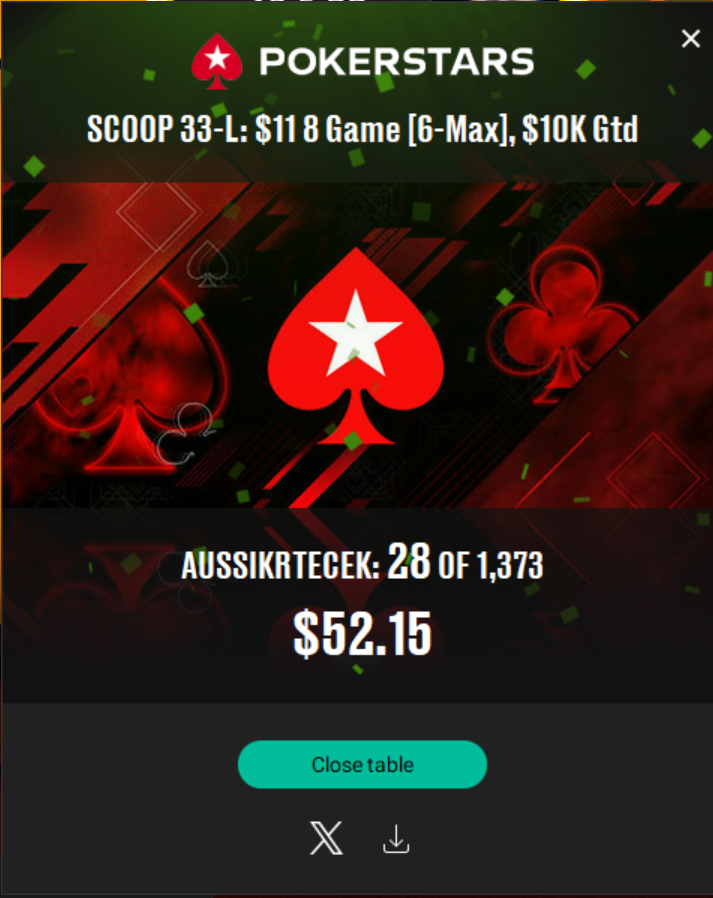
PokerStars popup showing AUSSIKRTECEK: 28 OF 1,373, $52.15 in SCOOP 33-L: $11 8-Game
Buy-ins today:$120
Wins today:$52.15
Total buy-ins:$1,433
Total winnings:$265.74
Net balance:-$1,167.26

The flips still do not want to come in

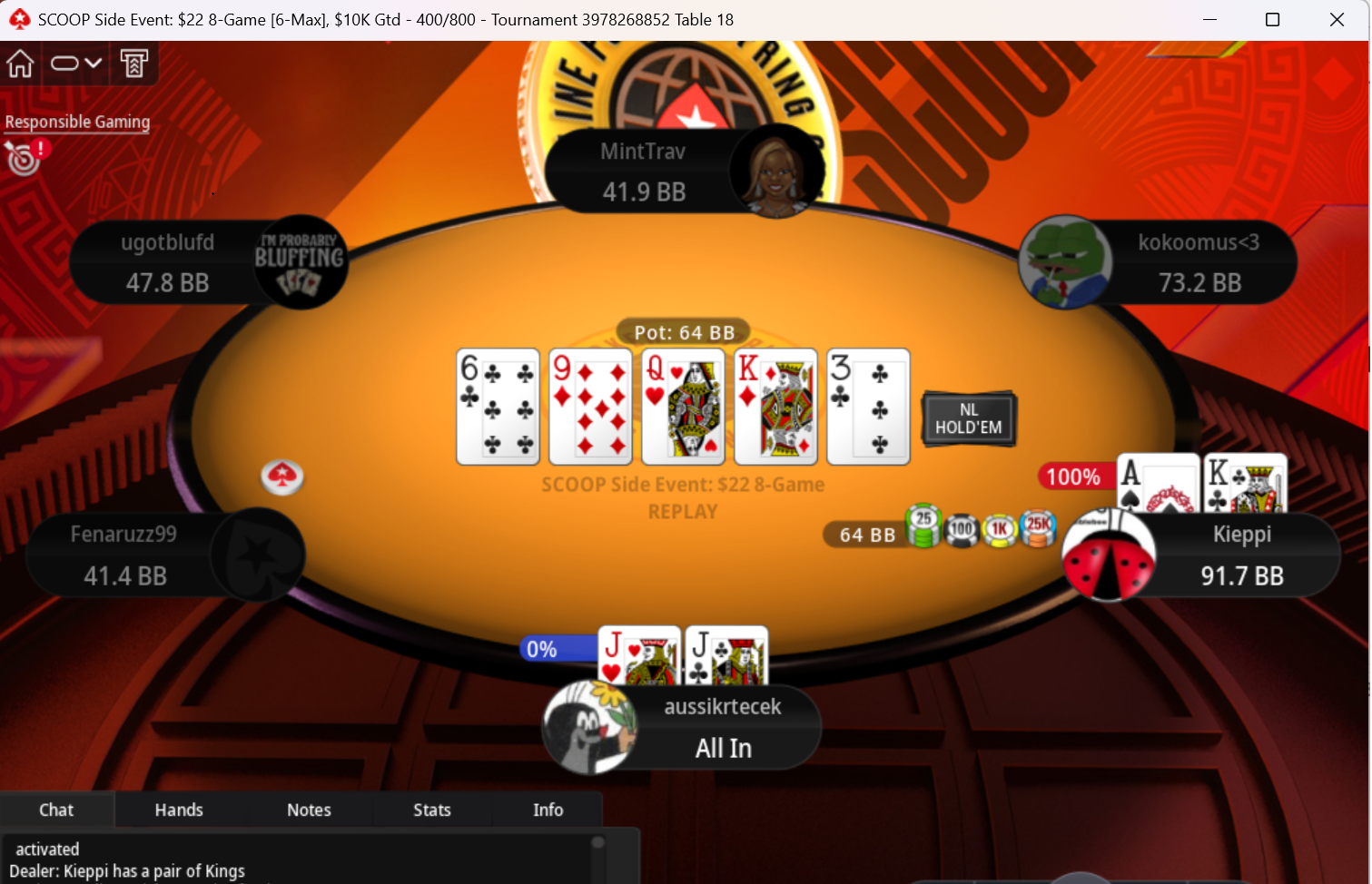
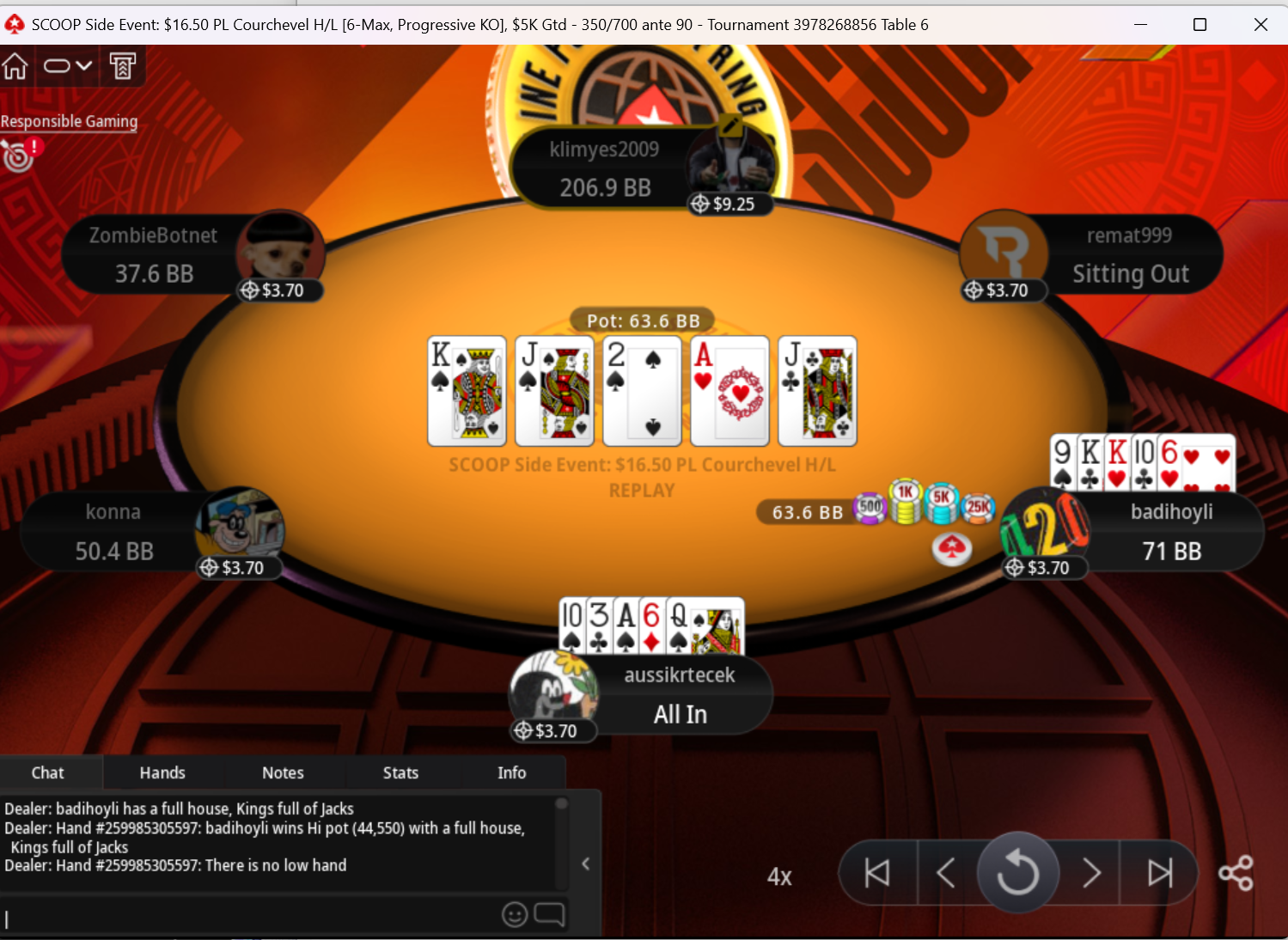
The flips still do not want to come in. $55 are added to the tally loss. :( One entry into the $22 8-Game (JJ < AK) and two entries in the $16.50 PL Courchevel H/L. Of course, the board has to pair here on the river against my Nut flush.

SCOOP Side Event $22 8-Game - aussikrtecek all-in with JJ at 0% vs Kieppi's AK at 100%, King hits on turn
SCOOP Side Event $16.50 PL Courchevel H/L - aussikrtecek's nut flush loses to badihoyli's full house (Kings full of Jacks) when board pairs on river
Buy-ins today:$55
Total buy-ins:$1,313
Total winnings:$213.59
Net balance:-$1,099.41

Cashed 2 out of 3 tourneys - but made net minus of $960

The day started like shit. Lost the first 4 hands in the $1.050 in close calls. Then, I had my only run-good phase, which was short-lived - and my stack grew to 130.000 with 100.000 starting stack. From there on it only spiralled downwards.

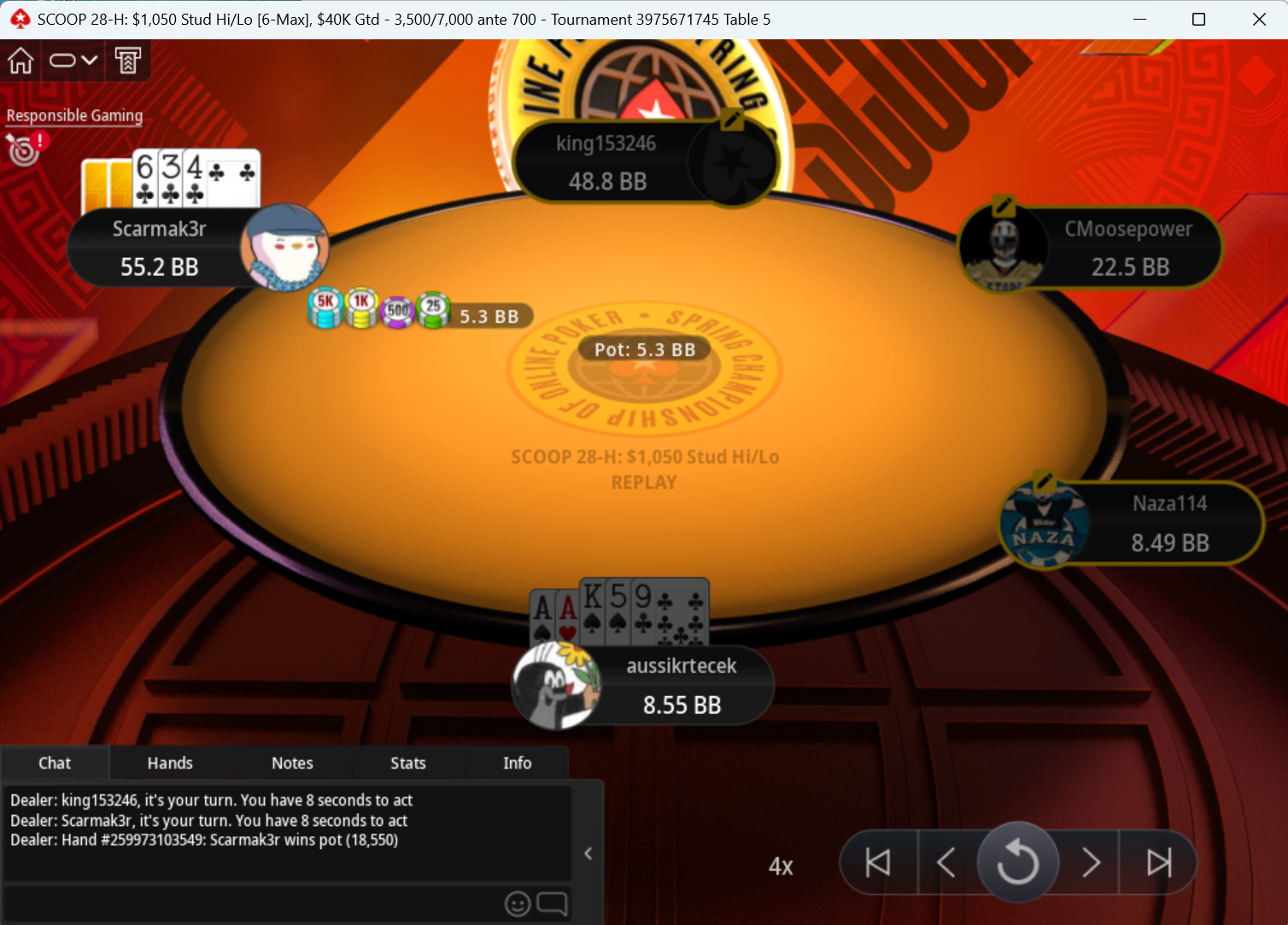
Scarmak3r was my nemesis and walked into one good setup against me after the other. I misplayed one hand where my Queens up loses to his Aces up - with the Aces buried in his hole - but I should have found a fold in this hand and could have saved 3 big bets, there at least. But Scarmak3r ran like god, I do not recall a single hand in which he bricked on one street. With my favorite hand being this hand here:

SCOOP 28-H $1,050 Stud H/L - Scarmak3r with 6-3-4 clubs vs aussikrtecek's A-A-K-5-9, drawing baby clubs

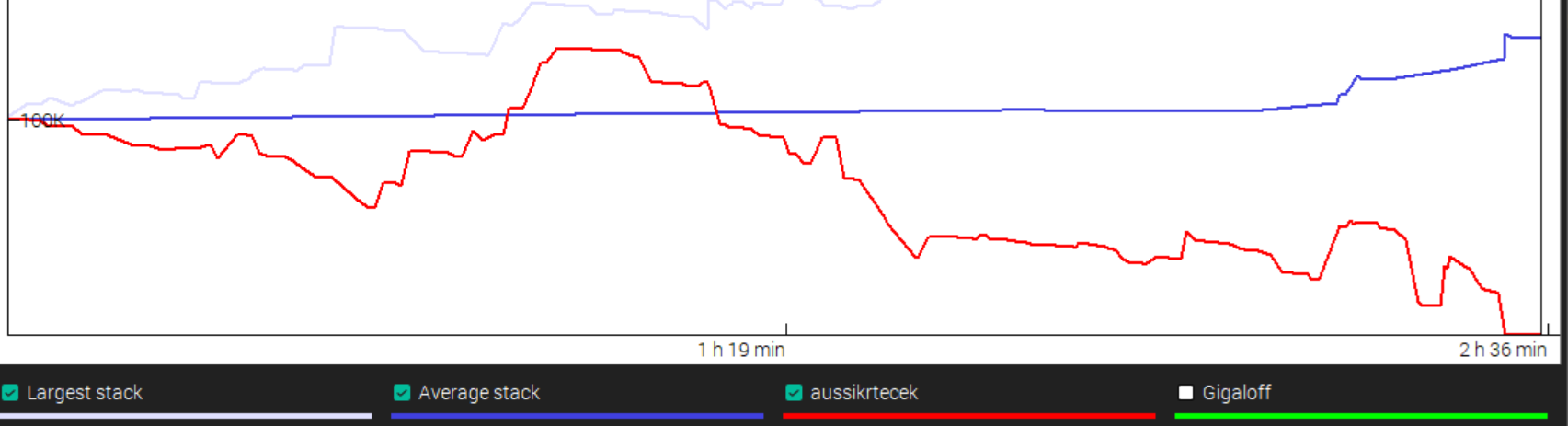
Daniel watched it together with me and before 5th street I announced that Scarmak3r will surely draw another baby Clubs, which, of course, he did! From the chip graph it is evident that I waited patiently after that but simply did not get anything - apart from two small hiccups.

Chip graph showing aussikrtecek declining from ~100K to bust over 2h36min in $1,050

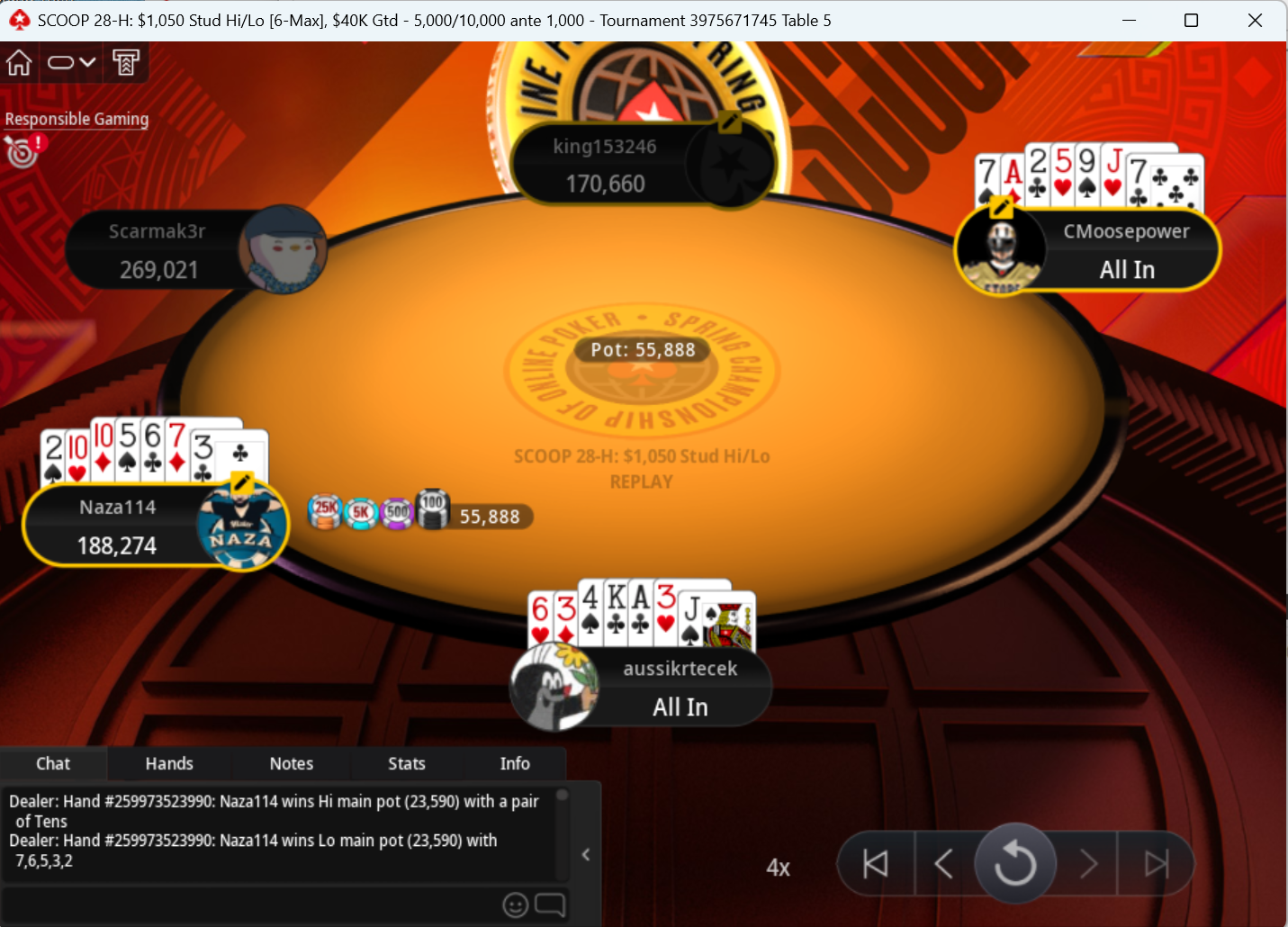
It was all over in this hand where I have lots of equity but again manage to brick everything by the river. :(

Exit hand from $1,050 - aussikrtecek all-in vs CMoosepower and Naza114, Naza114 scoops with pair of tens and 7-low

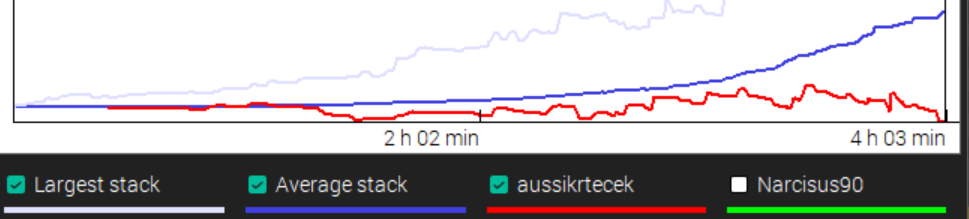
In the meantime I already said mentally Goodbye to the $109 tourney as well. At some point I was down to 8.000 from the 50.000 starting stack. But while it was still running like shit when I had a playable stack, for some reason I could not lose any All-Ins here. I nursed a short stack for 4.5h

Chip graph showing aussikrtecek nursing a short stack for over 4 hours in the $109

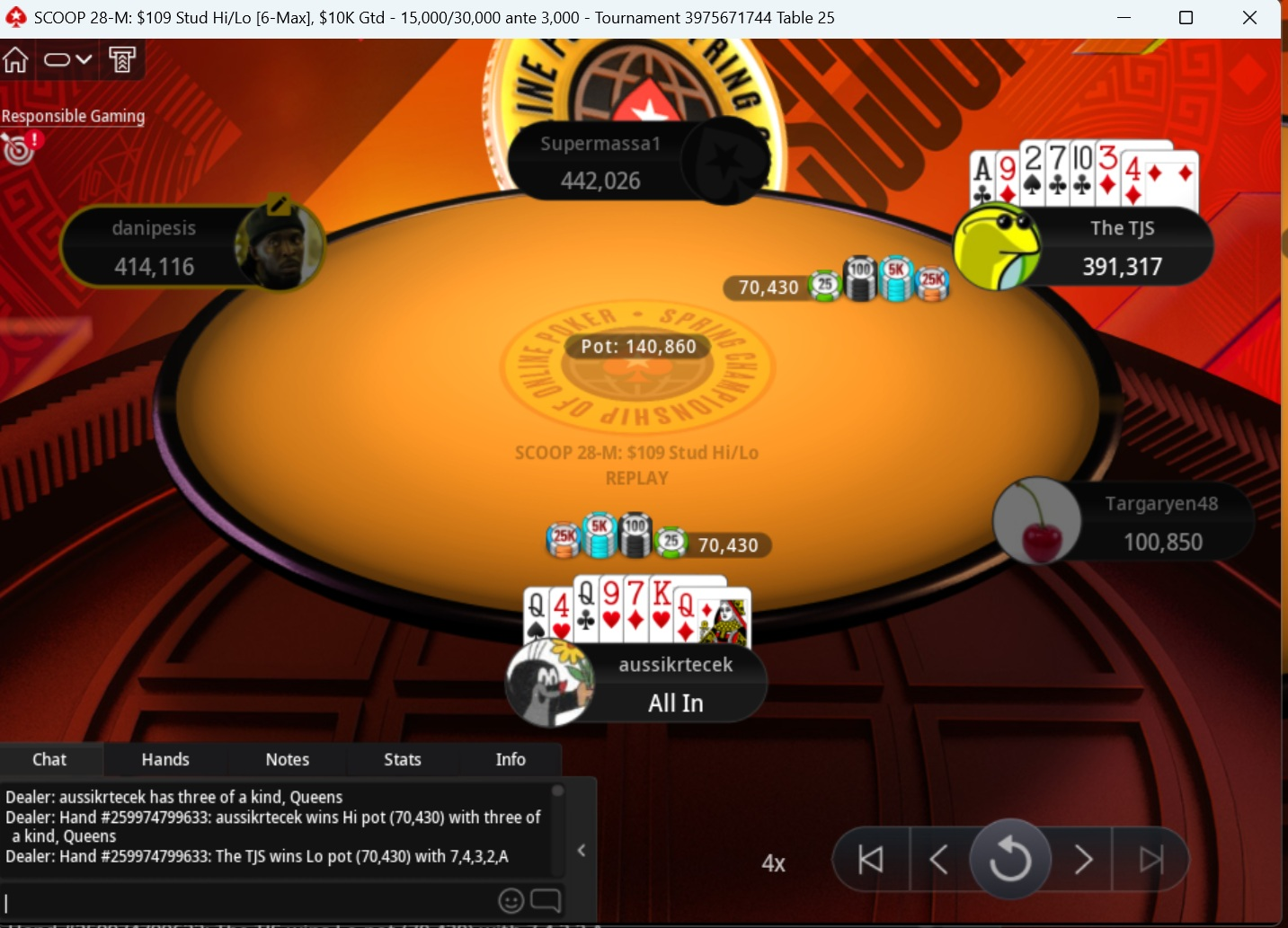
and after being denied a double up on the bubble twice because my opponents got lucky on the river twice by finishing a low for the split:

SCOOP 28-M $109 - aussikrtecek wins Hi with trip Queens but The TJS wins Lo with 7-4-3-2-A for split
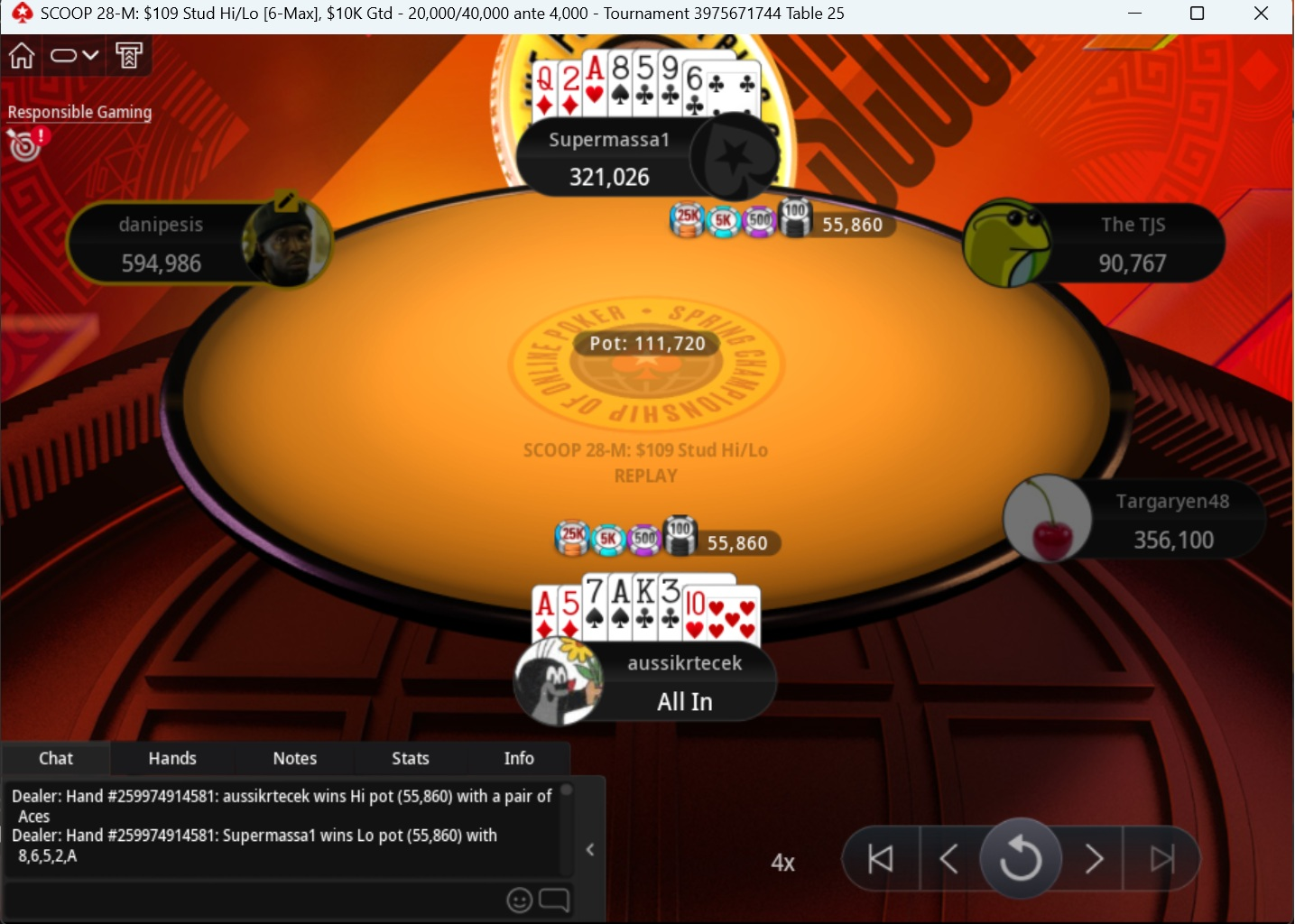
SCOOP 28-M $109 - aussikrtecek wins Hi with pair of Aces but Supermassa1 wins Lo for split

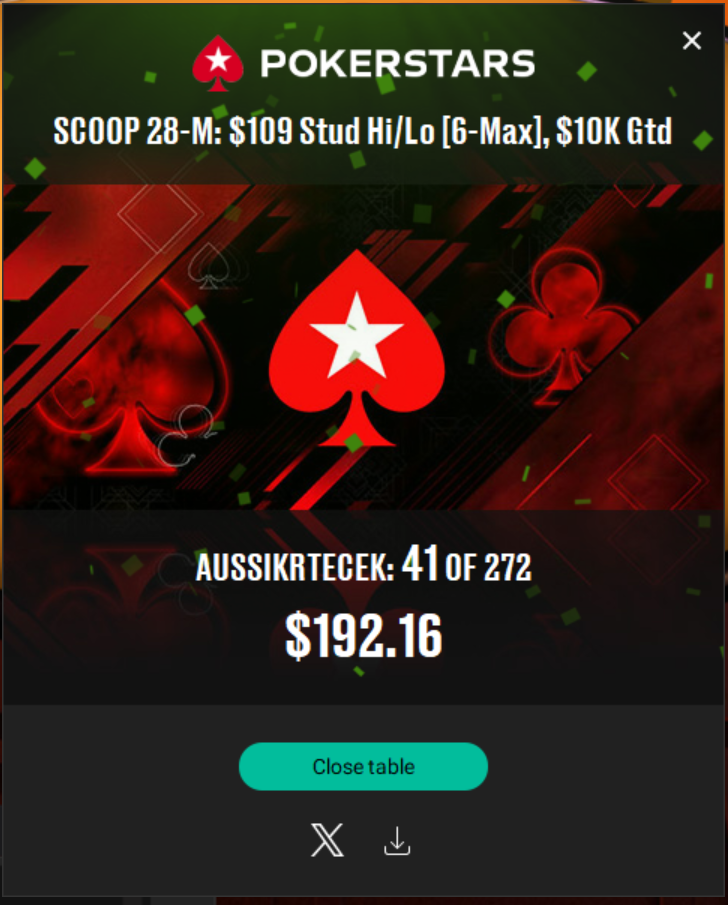
I became the first player in the money for the min-cash of $192.16.

PokerStars popup showing AUSSIKRTECEK: 41 OF 272, $192.16 min-cash in SCOOP 28-M $109 Stud H/L

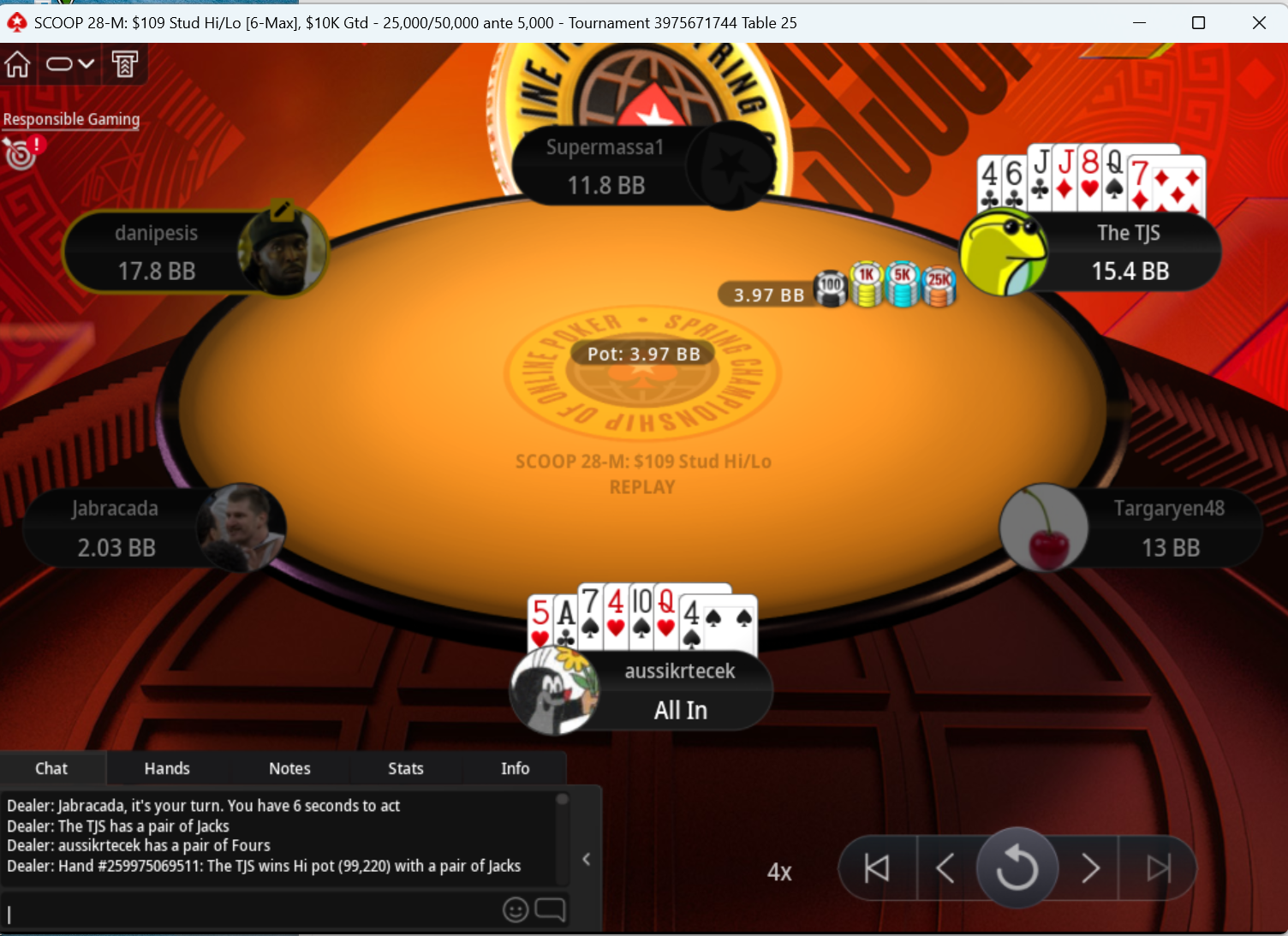
In my exit hand, TheTJS got lucky against me, again:

Exit hand from $109 - aussikrtecek with pair of fours loses to The TJS with pair of Jacks

And then, there was still the $11 in which I late registered. After a chip rollercoaster in which I unfortunately never managed to build a really big stack, I here cruised into the second lowest level of a min cash for $21.43. In my exit hand, I had two pairs 8s and 2s and a low draw while my opponent only had a pair of threes and a low draw and sure enough he drew a third three while I failed to make a low.

Well, it is annoying to cash in 2 out 3 tourneys but fail to do so in the big one. At least there is some money left on the bankroll so that the hope of binking a big payday is still alive! :)

Buy-ins today:$1,170
Total buy-ins:$1,258
Total winnings:$213.59
Net balance:-$1,044.41

SCOOP 22-L: $11 PLO 5-Card & $11 NLO8 - More Run Bad

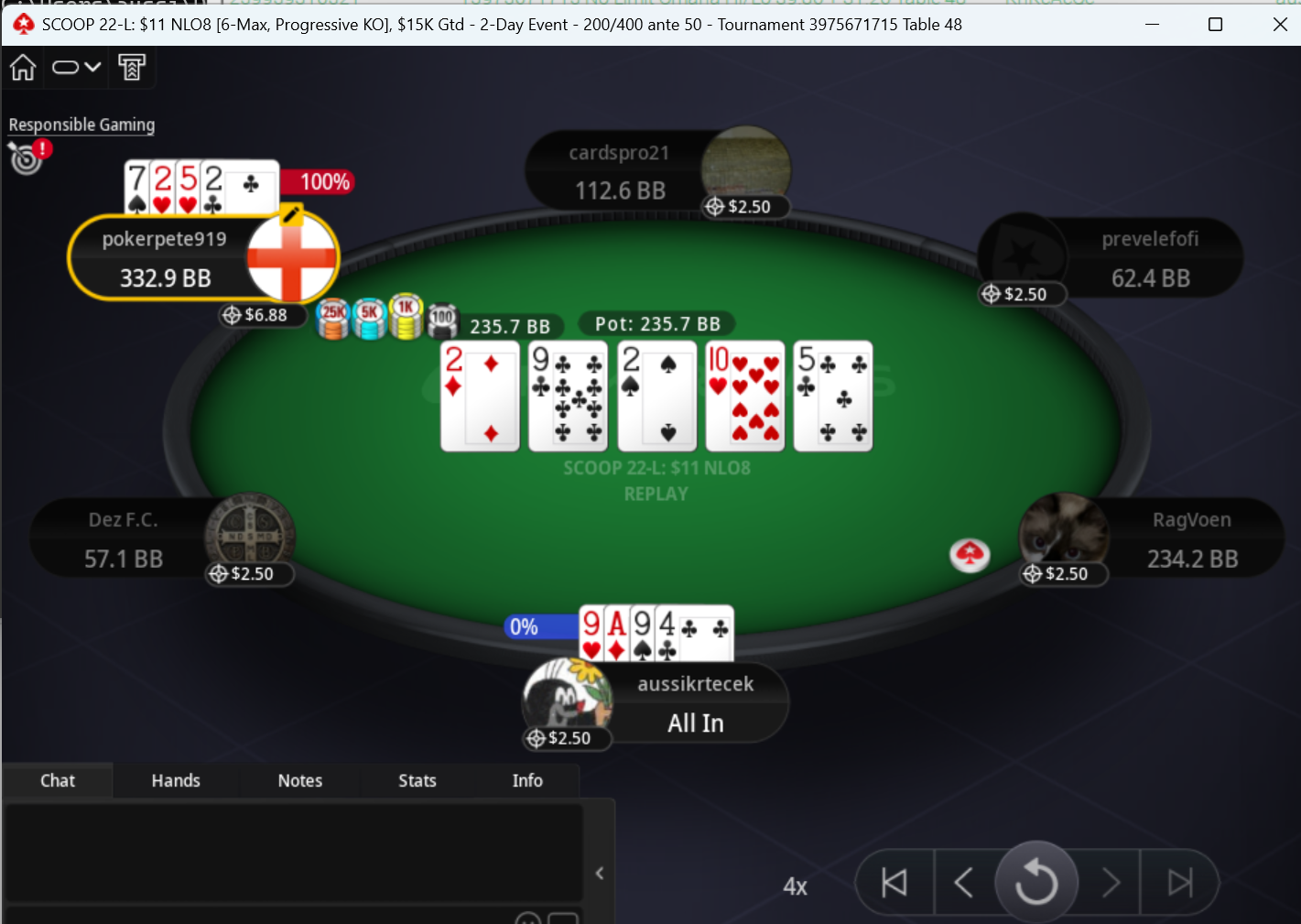
More run bad before the "main event": Two entries in the $11 PLO 5-Card and one in the $11 NLO8. Variance wasn't on my side. In the latter tournament I busted with top full house vs. Quads. Nothing you can do ... a simple cooler. Hopefully spared all the run good for tomorrows $1.050 Stud H/L. Probably gonna play the $109 as well.

SCOOP 22-L: $11 NLO8 table showing a brutal cooler - top full house (nines full of twos) vs. quad twos. All-in at 0% equity.
Buy-ins today:$33
Total buy-ins:$88
Total winnings:$0

SCOOP 10-L: $55 HORSE [6-Max] - Day 1

First tournament of 2026's SCOOP ended with no cash. A crucial Stud hand where I had Kings up and my opponent drew his straight on the river (pot for 2x starting stack) broke my neck and I did not recover from that.

SCOOP 10-L tournament lobby showing chip graph and final standings. SCOOP 10-L: $55 HORSE [6-Max], $15K Gtd - 2-Day Event, 557 entries.
Tourneys:1
All buy-ins:$55
Winnings:$0

Running Totals

20

Tourneys Played

$1,587.00

Total Buy-ins

$337.80

Total Winnings

-$1,249.20

Net Balance

Preserving a Beautiful Game

The Stud H/L Community

Stud Hi/Lo is one of the most beautiful poker variants — and also one of the most endangered. If we don't actively play it, talk about it, and keep improving, it slowly disappears.

Let's preserve the game we all love.

What This Community Will Become

This won't be a noisy "chat room." The goal is a high-signal hub for serious Stud8 thinkers.

Hand Discussions

Street-by-street, range-focused analysis. No results-worship — just better decisions.

Pre-Series Study Sessions

Online study sessions before SCOOP, WCOOP, and WSOP to sharpen your edge.

Strategy Experiments

Testing ideas for new variants — yes, including experiments like Stomaha H/L.

Advanced & Practical

A place for serious Stud8 thinkers — advanced, nerdy, and always practical.

Live Tournament Meetups

Get together for live tournaments and increase Stud H/L's standing in major series.

Hand of the Week

One curated spot, one tight discussion — quality over volume, always.

Ground Rules

Simple, but non-negotiable.
→

Critique lines, not people.

→

Bring ranges, logic, dead cards — not "I had a feeling."

→

The goal is better decisions, not louder opinions.

→

Keep it respectful, keep it sharp.

Help Shape the Community

Quick signals to help decide on formats and platforms. Send your answers with your join message.

Preferred table format?

Would you play a community home game?

Would you try Stomaha H/L?

What would you actually show up for?

Live Now

Join Us on Discord

The Discord is up and running. Join the community, meet fellow Stud H/L enthusiasts, and be part of this from the start.

The book remains the centerpiece. The community is the next layer.

Want in Early?

Join the founding group of serious Stud H/L players. Discussion, testing, and keeping Stud H/L alive — together.

Send an email with the subject line:

"Stud H/L Community"

Marc Benkert - Author

About the Author

Marc Benkert

By trade, I'm a software developer working in an algorithm-heavy environment. My poker journey began a few years after the Moneymaker boom. Like many players of that era, I started with No-Limit Hold'em and quickly discovered that understanding mathematics and strategy could create a significant edge.

aussikrtecek poker profile

You May Have Played Against Me

Back then, Double-or-Nothing tournaments were a goldmine. Most players had little understanding of Independent Chip Modeling (ICM), which left plenty of room for those who did.

But it wasn't long until I discovered where the real fun was: in the mixed games!

Razz, Stud, Omaha Hi-Lo, Stud8, Triple and Single Draw, Badugi — I loved the constant challenge of switching gears and learning completely different strategic frameworks. From the very beginning, I kept notes on opponents, tendencies, and recurring patterns across all variants.

There was one game, however, that I largely left alone:

Seven Card Stud Hi-Lo

Not because I disliked it.

Quite the opposite.

It was already my favorite game.

The problem was that Stud H/L seemed impossibly complex. Every decision depended on exposed cards, dead cards, scoop potential, board textures, and information that simply didn't exist in most other poker variants.

Stud H/L wasn't a game you could casually learn on a Sunday afternoon.

It felt like work.

A lot of work.

So for years, I mostly admired it from a safe distance.

The Plot Twist

About three years ago, I finally decided it was time to study the game properly.

My plan was simple:

  1. Buy an advanced Stud H/L book.
  2. Study it.
  3. Become a better Stud H/L player.

Unfortunately, the plan ran into a problem almost immediately.

There wasn't really an advanced Stud H/L book.

In fact, there was essentially one serious reference work: Ray Zee's excellent book on Stud Hi-Lo.

The only issue? It was already more than twenty-five years old.

That realization was both surprising and strangely fascinating.

How could one of poker's most sophisticated variants have almost no modern advanced literature?

The deeper I looked, the more obvious the answer became:

Because almost nobody fully understands the game.

Down The Rabbit Hole

What started as a study project quickly became an obsession.

I began building tools. Then databases. Then more tools. Then even more databases.

I analyzed starting hands, bring-in defense situations, scoop potential, isolation raises, tournament structures, player tendencies, and thousands of real hands.

Defense frequencies analysis chart

The deeper I went, the more I noticed that many commonly repeated "truths" about Stud H/L were either incomplete, highly situational, or simply wrong.

The game was far richer than most players realize.

And far more beautiful.

Why This Book Exists

Eventually I found myself in a slightly ridiculous situation.

I had spent years researching questions that nobody seemed to be writing about and building custom tools to answer them.

At some point, I realized I had accumulated enough material to write the advanced Stud H/L book I had originally been looking for.

So I did.

Not because I set out to become an author.

But because I wanted the book that I couldn't buy.

The book I was searching for three years earlier.

Save Stud H/L

The longer I studied Stud H/L, the more convinced I became that it is one of poker's hidden masterpieces.

It rewards observation. It rewards memory. It rewards discipline. It rewards creativity.

And unlike many poker variants, it continues to reveal new layers long after you think you've figured it out.

Save Stud H/L - Keep the game alive

Yet despite all that, the game continues to shrink. Fewer players. Fewer tournaments. Less content.

This website, this book, and the broader Save Stud H/L project all exist for the same reason:

To help keep one of poker's greatest games alive.

Because Stud H/L deserves better than becoming a forgotten footnote in poker history.

And because somewhere out there, another player is currently trying to find an advanced Stud H/L book.

I'd rather they have better luck than I did.

The Beauty of Stud H/L - Book Cover